
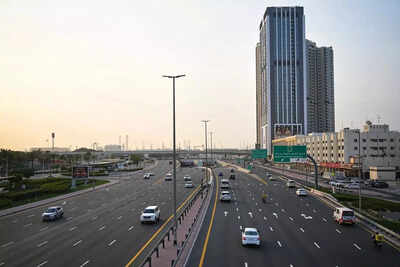
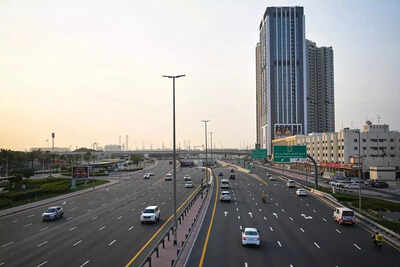
Yalla Habibi, Let’s GoThe National Emergency Crisis and Disaster Management Authority of the UAE had an important announcement to make on 9th March. They were going to change the alert tone between 10.30 pm and 9 am to a regular chime. Residents complained that the original alarm, a shrill siren, was causing anxiety. The government agreed.As a resident, I can attest to that. The alarm was triggering at bedtime. From the kids because of the noise. From me because I was afraid of how long sleep time would take.I don’t know many places where civil defence adjusts the sound design of a national warning system based on public feedback. Did someone at civil defence say, “Can we please make the safety alert slightly less stressful?” or, like distractors will say, it’s a sign of a country living in a bubble – that Habibi, is up for debate.Since February 28th, I have noticed three different types of narratives coming from people who don’t live here.First, there’s the gleeful commentary from part of the US, UK, India, and elsewhere, usually about Dubai, the UAE and the people who moved here to save tax. Particularly when amplifying rumours about Burj Khalifa being attacked. It wasn’t. It responded the next day by lighting its façade in the colours of the UAE flag.Second, there’s television news coverage, looping dramatic footage of interceptions and debris. This often comes 13 hours after an incident has been announced and contained.Third, there are parents and friends, who are panic-struck. They can’t reconcile what they see on television with what residents are saying.“How are you going to the mall?” they ask.As a couple with young children, we have our ready-to-go bag packed, the car tank full, and cash withdrawn for an emergency. And that’s about it. People are out for walks, they’re going to the gym, and as I write this, I see a gentleman, sunning himself on a rooftop pool.In Dubai, it’s been business as usual. Stand outside, stare at the sky for 10 mins and you will see at least 2 commercial aircraft either descending or taking off. EACH and every delivery service is working; there was an outage with Amazon initially, but local delivery service Noon is still delivering water and chocolates in under 15 mins. Everything from Dubai Chocolate to Sushi are being delivered, and there have been no reports of people hoarding essentials or supermarkets running out of supplies.Anywhere else in the world – Mumbai, New York, London, you’d hear sonnets about the ‘spirit of the city’. But when Dubai keeps functioning, somehow the narrative becomes, ‘they are living in a bubble’. The irony is hard to miss.It’s a city that also never stops moving; everyone is out drinking coffee, working, or on a date. Everyone is going somewhere, doing something. Not sitting at home, reading the news, and hyperventilating.Supermarkets are open. So are organic farmers’ markets. McDonald’s is open, so are craft coffee shops, offices are open, so are beach clubs. Roof-top pools are open, and so are outdoor cafes (despite it being Ramadan).Once, or sometimes twice a day, the Ministry of Defence issues a statement and an infographic; it’s coherent, well-designed, and echoes a city confident in its skin.The day after the first missile was launched, schools were closed until March 4. Then extended to the 6th. Then the spring break, originally scheduled for later in the month was simply brought forward. It happened quietly, without confusion or panic. Schools were closed. But kids’ activities, parkour classes, sports continued. Playgrounds never shut.A couple of days ago, debris hit a building in an upmarket part of Dubai called Dubai Marina, causing a small fire. Earlier in the conflict, something similar happened on the facade of the Burj Al Arab. But Dubai went to sleep, woke up, and Habibis and Habibtis went to work.Did people carry on because that’s the spirit of the city? Or because it’s an expensive city and people still have jobs to get to? Probably both. The same argument could be made for London, New York or Mumbai.I do think one thing is different in the UAE: there have been a slew of small, absurd-sounding, almost inconsequential measures in isolation. But oddly effective. For instance, a couple of days ago, at the peak of the crisis, an announcement was made – some banks would be open till midnight, and they were also waiving ATM withdrawal charges. A princely sum of 2.1 AED (About 50 rupees). It sounds trivial but it’s the kind of detail that tells you, someone is thinking about the small inconveniences too.Have my wife and I both acquired super hearing? Yes. Do we confuse trucks for Missiles and motorcycle exhaust for interceptions – sometimes. That’ll take some time to go away, but we’ll take it.The country’s attention to detail has been astounding. When the first missiles were launched, Abu Dhabi’s Department of Culture and Tourism issued a now viral directive to hotels – “extend the stay of travelers, send us the bill.”True, small measures don’t get a city back up on its feet; it needs to do that itself. But a slightly less shrill alert, regular, specific information helps. It’s the hand that dusts off your trousers. And let’s face it, we can always use a hand there, whether we trip or are targeted by 253 ballistic missiles, 1440 drones and 8 cruise missiles (as of March 9th 2026).Until then, the city continues. Everyone is on the streets telling everyone else, Yalla Habibi! (the only translation that comes close to this is Let’s Go, Let’s go!).