
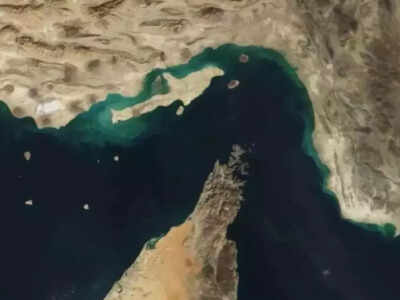
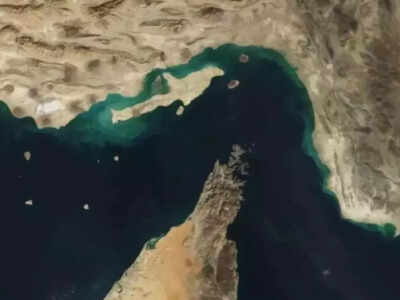
Before the US and Israel even launched strikes, Iran had a plan ready, and it didn’t solely rest on conventional firepower. The country has been quietly preparing to turn the Strait of Hormuz, a vital artery for the world’s oil supply, into a strategic lever, according to sources cited by Reuters. Any disruption to the vital passage ripples instantly through global energy markets.Iran’s approach builds on lessons from the 1980s “Tanker War” during the Iran-Iraq conflict, when attacks on ships turned the Gulf into a dangerous corridor, requiring US naval escorts. Today, the country has far more sophisticated, cost-effective options, including missile and drone arsenals capable of threatening shipping over a wide area. Recent strikes demonstrate how quickly Iran can disrupt movement without laying mines.“Iran is outgunned — there is no way it can defeat them in a direct confrontation,” said Ali Vaez, Director of the International Crisis Group’s Iran Project. Following a 12-day war last June, Tehran explored ways to extend any future conflict “in time and space.” Vaez told Reuters, “If Iran takes the global economy hostage, Trump would blink first.”
‘Goal is to create economic pain’
According to the sources, the Islamic Revolutionary Guards Corps (IRGC) had long prepared for a clash with Washington and Tel Aviv. The plan was activated on February 28, after Supreme Leader Ayatollah Ali Khamenei died on the first day of the conflict. Rather than confronting superior forces head-on, Iran aims to inflict economic and military pressure on the United States by targeting oil flows and striking US positions across the Gulf.“This is asymmetric warfare par excellence, in which Iran achieves outsized, even global effects through a small number of attacks that impose painful costs,” said Michael Eisenstadt of the Washington Institute. “The goal is to create economic pain, further undermining support for the war in the United States and increasing pressure on Washington to end it.”Tehran is dispersing attacks across the region using drones and low-cost missiles, tactics once carried out by proxies in Iraq, Yemen, Syria, and Lebanon. This decentralised “Mosaic” strategy spreads command and control to withstand any attempt to remove Iran’s leadership. Even after Khamenei’s death, Parliament Speaker Mohammad Baqer Qalibaf and national security chief Ali Larijani continue to direct operations from Tehran.Vaez criticised the US response as lacking preparation, saying Washington failed to anticipate drone attacks, shipping disruptions, and evacuation needs. While the United States could severely weaken Iran, a complete defeat would require a large-scale land invasion involving up to a million troops, a level of commitment it has shown little appetite for.For Iran, survival is the immediate objective. Beyond that, Tehran seeks to show that coercion, whether military, economic, or diplomatic, cannot force compliance. By controlling the Strait of Hormuz and expanding the battlefield far beyond its borders, Iran is betting it can outlast a militarily superior opponent.