
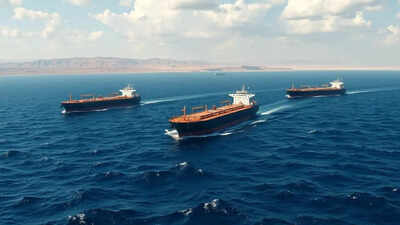
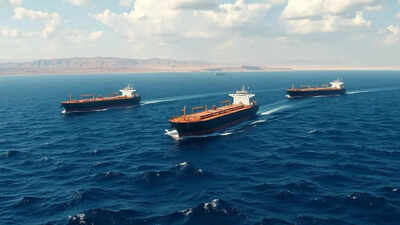
As the United States and Iran announced a temporary two-week ceasefire, a new flashpoint is now emerging. Tehran is seeking to levy toll fees on ships transiting the Strait of Hormuz, a proposal that could disrupt global trade flows and push energy markets into fresh uncertainty.
Why does the Strait of Hormuz matter?
The Strait of Hormuz is one of the most crucial maritime chokepoints in the world, both geographically and economically. At its narrowest, it is just about 34 kilometres wide, yet it carries nearly a fifth of the world’s oil supply. The waterway serves as the primary route connecting the oil-producing nations of the Gulf to global markets via the Indian Ocean.
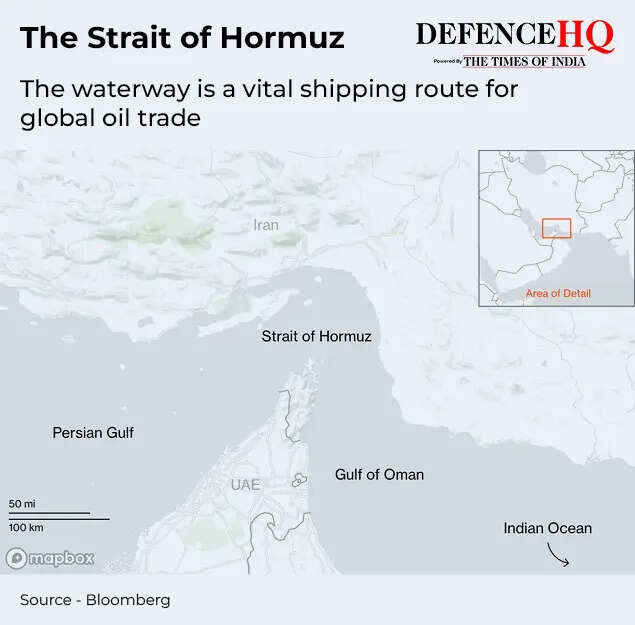
Beyond crude oil, vital commodities such as liquefied natural gas and fertilisers also pass through this corridor, making it indispensable to global trade.Any disruption in this narrow stretch of water has immediate ripple effects across energy markets, often pushing prices higher and triggering supply concerns worldwide.
What is Iran proposing?
Iran is now attempting to formalise its control over the Strait as part of a broader geopolitical strategy following weeks of conflict. As part of its proposals linked to a potential long-term peace deal, Tehran wants the authority to charge transit fees for ships passing through the Strait of Hormuz.According to officials, these charges would not be fixed but could vary depending on the type of vessel, the nature of its cargo and prevailing conditions.Iran is also working on a framework that could require ships to obtain permits or licences before being allowed to pass, in coordination with regional mechanisms that may involve Oman, Reuters reported. Iran’s deputy foreign minister Kazem Gharibabadi said last week that the country’s parliament is already drafting a bill that would give legal backing to such a system. This indicates that the move is not merely rhetorical but part of a structured plan to regulate and monetise traffic through the Strait.
What has happened so far?
Since the conflict began, Iran has significantly tightened its grip over the Strait. The Islamic Revolutionary Guard Corps restricted maritime movement, allowing only a limited number of vessels to pass. There have been instances of ships being fired upon or warned, leading to a sharp drop in traffic.Shipping activity has remained severely constrained, with only a handful of vessels, often linked to Iran or its allies successfully navigating the route.
.
There have also been reports suggesting that some ships may have paid large sums, possibly running into millions of dollars, to secure safe passage.This disruption has already contributed to volatility in global oil prices, which had surged sharply before easing on ceasefire hopes.
What international law says?
The legality of Iran’s proposal is highly contested under international maritime law. The United Nations Convention on the Law of the Sea (UNCLOS), which governs global ocean rules, clearly states that straits used for international navigation must allow free and uninterrupted transit passage.Under this framework, countries bordering such straits cannot impose fees simply for allowing ships to pass through. They are permitted to levy charges only for specific services, such as piloting or tug assistance and even those must be applied uniformly without discrimination.A general transit toll, as being proposed by Iran, would therefore run contrary to widely accepted international norms. However, enforcement of such laws remains complicated, particularly because neither Iran nor the United States has formally ratified UNCLOS, even though both have historically adhered to its principles.
Why is enforcement complicated?
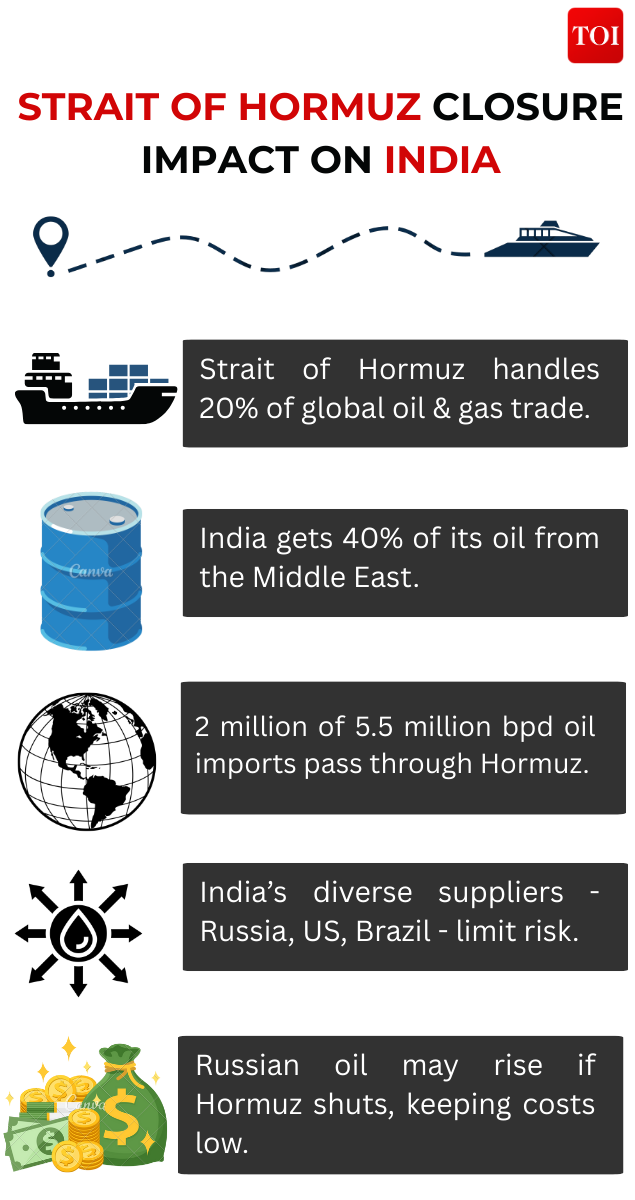
International law in maritime spaces largely depends on consensus and cooperation rather than strict enforcement mechanisms. While over 170 countries have ratified UNCLOS, its effectiveness relies on nations choosing to comply.Experts warn that any move by Iran to impose tolls could challenge the existing global order at sea. If such a precedent is set, other countries controlling key maritime chokepoints could be tempted to follow suit, potentially fragmenting established norms of free navigation.The situation is further complicated by the fact that military options to enforce free passage would be difficult and risky. The geography of the Strait, with its narrow lanes and Iran’s mountainous coastline, gives Tehran a strategic advantage, allowing it to target vessels from inland positions.The proposal has triggered strong reactions from across the world. The United States has made it clear that free flow of oil through the Strait must remain non-negotiable in any agreement with Iran. Gulf nations, which depend heavily on this route for their energy exports, have also voiced concern.The United Arab Emirates has stated that the waterway cannot be controlled or “held hostage” by any single country, while Qatar has emphasised that all nations have the right to free navigation through the Strait. India, too, has rejected the idea of tolls, calling such claims baseless and reiterating that international conventions do not permit such levies.
Are such tolls common elsewhere?
The concept of charging for passage exists in global shipping, but only in specific contexts. Man-made canals like the Suez Canal in Egypt and the Panama Canal impose transit fees because they are engineered waterways maintained by the countries that operate them.Natural straits, however, are treated differently under international law. Passage through them is generally free to ensure smooth global trade. Even in cases like the Turkish straits, only limited service-related charges are allowed, not blanket tolls for transit.The Strait of Hormuz falls firmly into the category of natural international waterways, which is why Iran’s proposal stands out as unprecedented in modern times.
Strategic motives behind Iran’s move
Iran’s push to introduce tolls appears to be driven by a combination of economic and geopolitical objectives. By leveraging its geographic control over a critical chokepoint, Tehran could generate revenue while also gaining strategic leverage over countries dependent on energy supplies passing through the region.There are also indications that Iran may use such measures as a counter to Western sanctions, effectively turning the Strait into a tool of economic pressure.An adviser to Iran’s supreme leader said “a new regime for the Strait of Hormuz” will follow the war’s eventual end, allowing Tehran to apply maritime restrictions on states that have sanctioned it.“By using the strategic position of the Strait of Hormuz, we can sanction (the West) and prevent their ships from passing through this waterway,” Mohammad Mokhber said, according to Mehr news agency.
Impact on global markets
Even the possibility of tolls has significant implications for global markets. Additional costs on shipping would likely translate into higher oil and gas prices, increased insurance premiums and broader supply chain disruptions.While analysts suggest that the immediate impact of tolls may be smaller than the price spikes caused by outright conflict, the long-term effect could be more persistent, as markets factor in a permanent risk premium associated with the Strait.
Are there alternatives to the Strait?
Alternatives to the Strait of Hormuz are limited and far from ideal. Other routes, such as those passing through the Red Sea via the Bab el-Mandeb Strait, come with their own security risks. Longer detours significantly increase both time and cost, making them impractical for large-scale energy transport, Reuters reported. This lack of viable alternatives is precisely what makes the Strait so strategically important and why control over it carries such global consequences.
The bottom line
Iran’s proposal to charge tolls for passage through the Strait of Hormuz represents a significant shift in how one of the world’s most vital waterways could be governed. While the current ceasefire offers temporary relief, it has also opened the door to a broader debate about control, legality and the future of global shipping norms.(with inputs from agencies)