
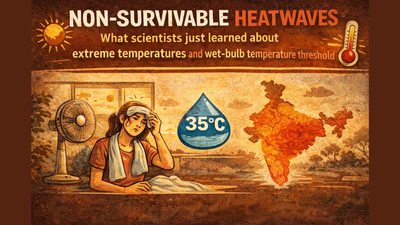
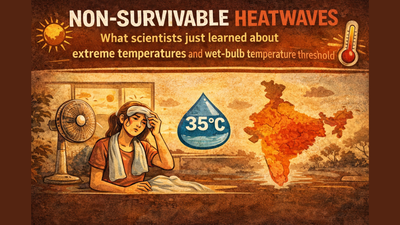
The old rule for deadly heat was simple enough: if the wet-bulb temperature hit 35°C, that’s when humans can’t survive. That’s been the standard for years. But a team of researchers just threw that number into question, and what they found is honestly pretty concerning, especially if you’re older or someone who spends time outside in intense heat.A new physiology-based model called HEAT-Lim shows that heat stress thresholds may actually be cooler and drier than what scientists previously thought. Think about what that means. If we’ve been using the wrong temperature as our danger mark, we’ve probably been ignoring serious risks for a long time now. The researchers looked back at six historical heat events where things got really bad, either the weather was unusually extreme or a lot of people died from heat, and they analyzed whether deadly conditions had actually been reached, based on this newer understanding of how human bodies break down in heat.The findings, published in Nature Communications weren’t reassuring. Non-survivable conditions are already occurring during present-day heat events, all of which are below 35°C wet-bulb temperature. So the scary part is this: we’ve hit lethal heat conditions during recent heat waves, but they all fell below what we’ve been treating as the absolute danger threshold. That’s like finding out your smoke detector doesn’t actually go off until the house is already on fire.
What is wet-bulb temperature?
Wet-bulb temperature is a way of measuring heat that combines temperature and humidity. It tells us how well your body can cool itself by sweating.When humidity is low, sweat evaporates easily and your body cools down.When humidity is high, sweat doesn’t evaporate well and your body struggles to cool itself.What does 35°C wet-bulb mean? A wet-bulb temperature of 35°C is considered a critical survival limit for humans. At this point:The air is so hot and humid that sweating stops being effectiveYour body can no longer lose heatYour core temperature keeps rising, even if you’re resting in the shade with water“Heat stress limits for human survivability have been previously defined by a 6-hour exposure to a wet-bulb temperature of 35oC. However, the recently developed physiology-based HEAT-Lim model demonstrates that environmental heat stress thresholds may be cooler and drier than previously thought,” the researchers have said. Why “6-hour exposure”? If a person is exposed to these conditions for around 6 hours, the body is likely to overheat to dangerous or fatal levels, even without physical activity.
Why older people face the greatest risk
When the researchers dug into who’s actually affected most by these deadly heat conditions, one group stood out: regularly exceeded deadly thresholds for older people directly exposed across all events. This makes sense if you think about it. Your body’s ability to regulate temperature doesn’t stay the same as you get older. Older folks lose some of their natural cooling ability, whether that’s sweating effectively or keeping blood flow to the skin where it needs to be.
Dry heat is just as deadly
Here’s something most people don’t realize: you don’t need humid, sticky heat to kill someone. Extremely hot yet dry conditions are found to be just as deadly as hot and humid conditions. This is actually huge because it means parts of the world we might not typically worry about, places that get hot but don’t get humid, are just as dangerous. A dry 50°C day in parts of the Middle East or Central Asia can be just as lethal as a humid 35°C day in South Asia or Southeast Asia. The body hits its limit either way.In humid conditions, sweat doesn’t evaporate well, so your body temperature climbs. In dry conditions, your body might lose water so fast through sweating that you get severely dehydrated before you even realize how hot you are. The researchers point out that increasingly accurate physiology-derived methods are important for figuring out what’s actually dangerous when we’re assessing heat risk in the future. Because the stakes are high. Misunderstanding when conditions become deadly means we’re probably not warning people in time, not opening enough cooling centers, not making the right emergency plans.
Poll
Do you believe the current heat stress thresholds used by authorities are adequate?
The takeaway here is uncomfortable: heat is already getting deadly, it’s doing it at lower temperatures than we thought, and the people we should be most worried about—older folks who can’t escape the sun—are already dying from it. The science is now better. The question is whether we’re actually going to listen.