
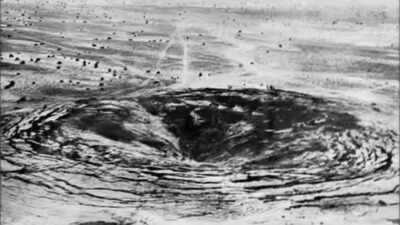
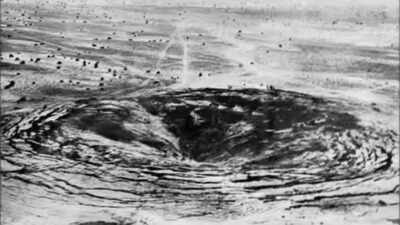
At 8:05am on May 18, 1974, the stillness of the deserts north-east of Jaisalmer was shattered as the earth shook under the tremendous force of India’s first nuclear test. With the press of one button, India became the sixth country, after the US, Russia, UK, France and China, to have harnessed the power of the atom for its defence.The test, conducted at the Pokhran Test Range in the Thar Desert of Rajasthan, was called a ‘Peaceful Nuclear Explosion’ (PNE), signalling India’s intention to project the programme as non-aggressive. India had been forced to act after China tested a nuclear weapon in 1964, less than two years after a bloody conflict with India, US-based publication National Interest reported.Pokhran-I, as the test came to be known, made India the first country outside the five permanent members of the UN Security Council to test a nuclear device.India had received fissile material for its nuclear weapons through the CIRUS (Canada India Reactor Utility Services) reactor at the Bhabha Atomic Research Centre (BARC), which it had received through the Atoms for Peace Programme, as per the Atomic Archive. The use of fissile material from the programme to make weapons-grade plutonium prompted the formation of the Nuclear Suppliers Group to check the proliferation of nuclear material.India then paused its nuclear weapons programme after Pokhran-I due to fears of international sanctions, economic isolation and a souring of relations with the United States, according to the Nuclear Weapons Archive (NWA). New Delhi was forced to reconsider its options after tense military standoffs with China in 1986 and Pakistan in 1987, the NWA reported.
Pokhran-II : Operation Shakti
India waited almost a quarter of a century before testing five nuclear devices on May 11, 1998, again at the Pokhran Test Range. Codenamed Operation Shakti, the tests were a defining moment for India’s strategic programme. The five devices were designated Shakti-1 through Shakti-5:Pokhran-II cemented India’s position as a nuclear power and triggered sanctions from the United States and other countries, though these were eventually eased. India has since expanded its nuclear arsenal and developed indigenous missiles, including the Agni series, capable of delivering nuclear payloads across the region. The country has also built a fleet of indigenous nuclear-powered submarines that act as a potent deterrent and a symbol of India’s technological prowess.