
The BJP government in West Bengal has, within days of assuming office, rolled out a series of high-impact administrative, welfare and governance decisions aimed at signalling a policy break from the previous Trinamool Congress regime. The measures span welfare restructuring, recruitment reforms, reservation policy changes, scrutiny of caste certificates, educational directives and anti-corruption action. The government has simultaneously attempted to strengthen nationalist symbolism in institutions while tightening administrative oversight in welfare delivery and reservation systems. Many of the moves carry both political and legal significance, especially those linked to OBC reservation, caste certificate verification and investigations into alleged corruption under their predecessor.
‘Chicken’s Neck’ corridor transferred to Centre
The West Bengal government approved the transfer of seven key national highways in the Siliguri Corridor, popularly known as the ‘Chicken’s Neck’, to central agencies, a move aimed at strengthening connectivity and facilitating faster movement of armed forces through the strategically sensitive stretch linking the Northeast to mainland India.
Ayushman Bharat to be implemented
The newly formed BJP government in West Bengal announced the implementation of the Centre’s flagship Ayushman Bharat health insurance scheme during its first cabinet meeting on May 11. Under Ayushman Bharat, eligible families receive annual health insurance coverage of up to Rs 5 lakh for secondary and tertiary healthcare treatment at empanelled hospitals.West Bengal had previously stayed out of the centrally sponsored scheme under the Trinamool Congress government, which instead operated the Swasthya Sathi programme. The decision marks a significant policy shift by aligning the state with one of the Union government’s flagship welfare schemes. Along with Ayushman Bharat, the cabinet also discussed implementation of other central schemes and administrative measures, including border fencing-related land transfer to the BSF and recruitment reforms.
Annapurna Yojna replaces Lakshmir Bhandar
The West Bengal government notified the Annapurna Yojna on Wednesday, replacing the flagship Lakshmir Bhandar scheme introduced under the previous TMC government. Under the new programme, eligible women aged between 25 and 60 years will receive a monthly assistance of Rs 3,000 through Direct Benefit Transfer into Aadhaar-linked bank accounts. The scheme excludes permanent government employees, pensioners and income tax payers. Existing Lakshmir Bhandar beneficiaries will automatically migrate to the new scheme, though names identified as dead, shifted, duplicate or deleted during voter verification exercises will be removed. The government has also linked the scheme to electoral verification processes, making it politically significant. An online portal for fresh applications is scheduled to open from June 1, with district magistrates and Kolkata civic authorities designated as sanctioning bodies for applicants.
Vande Mataram made mandatory in schools
The School Education Department directed all state-run and state-aided schools to mandatorily sing Vande Mataram during morning assemblies through a communication issued on May 13 and implemented from May 18 onward. School authorities were instructed to ensure participation by all students and maintain video documentation as proof of compliance.The move adds the national song to the existing assembly practices where schools traditionally sang only the national anthem, Jana Gana Mana, and in recent years, the state song Banglar Mati Banglar Jol. The decision carries strong symbolic and ideological significance as the BJP government has framed it as an effort to strengthen patriotism and respect for national symbols. However, the move has also generated debate among sections of teachers and civil society over implementation logistics and concerns about compulsion in educational institutions.
Land transfer for India-Bangladesh border fencing
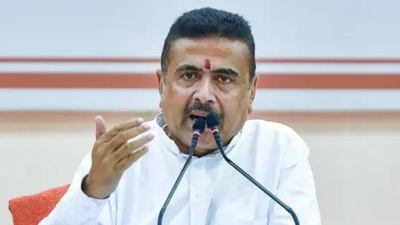
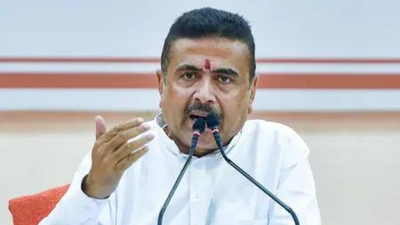
The West Bengal government on May 11 initiated the process of transferring land to the Union Ministry of Home Affairs for the Border Security Force to complete fencing along unfenced stretches of the India-Bangladesh border, the CM had announced earlier this month.Announcing the decision after the first cabinet meeting of the new government, CM Suvendu Adhikari said the required land would be handed over within 45 days. The move comes amid prolonged judicial scrutiny over delays in border fencing projects in the state. According to data placed before the Supreme Court by the Union government, around 435 km of the border remains unfenced, with more than 286 km pending primarily because of land acquisition issues. The Calcutta high court had also directed the state earlier this year to expedite transfer of acquired land to the BSF.
OBC reservation revised for 66 communities
The government notified 66 communities under the Other Backwards Classes category, restoring a 7 per cent reservation framework following a Calcutta High Court order that had struck down earlier TMC-era OBC notifications. The decision, formally notified on May 19 and implemented publicly on May 20, affects government jobs and educational admissions. The revised list includes communities such as Kurmi, Kapali, Teli, Yadav and several Muslim groups including Hajjam (Muslim), Pahadia Muslim and Jolah (Ansari-Momin). The move is significant because it rolls back the previous 17 per cent reservation structure and aligns the state policy with the High Court’s directive that benefits already enjoyed by the affected groups should continue without disruption.
Free bus travel for women
The state cabinet, on on Monday approved free bus travel for women in state-run transport services. The move is being projected as a major women-centric welfare measure aimed at reducing daily commuting costs and increasing workforce participation. The scheme is expected to cover government-operated buses across urban and rural routes. It was announced as part of the government’s first major welfare package after assuming office.
Upper age limit for government jobs increased
On May 18, the Finance Department formally increased the upper age limit for recruitment to state government posts by five years, fulfilling one of the BJP’s major promises to job aspirants. Under the revised rules, the upper age limit is now 41 years for Group A posts, 44 years for Group B posts and 45 years for Group C and D posts. For recruitments through statutory bodies, government companies and local authorities, the age limit has been uniformly fixed at 45 years. Existing relaxations for Scheduled Castes, Scheduled Tribes, OBCs and differently-abled candidates will continue. The first recruitment process expected to benefit from the decision is the ongoing Assistant Professor recruitment in government-aided colleges, for which the application deadline will also be extended. The move is aimed at expanding employment opportunities for candidates who had previously crossed the age threshold during years of delayed recruitment and stalled examinations in the state.
Free bus travel for women
The West Bengal cabinet approved free bus travel for women in state-run transport services on Monday as part of a set of early welfare measures announced after the new government assumed office. The scheme will apply to government-operated buses across urban and rural routes in the state. According to officials, the initiative is aimed at easing commuting costs for women who rely on public transport for work, education and daily travel. The decision is expected to impact a large section of regular commuters, particularly in Kolkata and district towns where state transport services form a major part of public mobility. The announcement came alongside other welfare measures, including the rollout of the Annapurna Yojna. Detailed operational guidelines and implementation modalities for the transport scheme are expected to be issued by the Transport Department separately.
Prosecution sanctioned against Sandip Ghosh
The West Bengal government sanctioned the prosecution of former R G Kar Medical College and Hospital principal Sandip Ghosh on May 19 in connection with alleged financial irregularities linked to procurement and administrative practices during his tenure. The sanction was granted under provisions of the Bharatiya Nyaya Sanhita, Prevention of Corruption Act and Prevention of Money Laundering Act after examination of FIRs and investigation records. The case gained national prominence following the rape and murder of a doctor at the hospital in 2024, which subsequently triggered wider investigations into alleged corruption within the institution. The CBI and Enforcement Directorate are probing the matter after the Calcutta High Court ordered an inquiry.
Re-verification of caste certificates issued since 2011
The West Bengal government ordered a state-wide re-verification of all caste certificates issued since 2011, with the Backward Classes Welfare Department issuing directions to district magistrates on May 15. The exercise covers nearly 1.69 crore Scheduled Caste, Scheduled Tribe and OBC certificates, including those distributed through Duare Sarkar camps during the previous TMC regime. The government has alleged large-scale irregularities and fraudulent issuance of certificates over the past 15 years, with ministers claiming that fake beneficiaries availed reservation and welfare benefits illegally. Officials have been instructed to scrutinise certificates and cancel those found to have been issued through false information or procedural violations.
Scrapping religion-based aid schemes
The new government had also announced that several religion-specific welfare and grant schemes introduced during the TMC regime would be discontinued. Though details are still emerging, BJP leaders said the move was aimed at ending what they described as “appeasement politics” and shifting towards religion-neutral welfare delivery. The decision is politically significant because it directly targets one of the BJP’s central campaign themes in Bengal.