
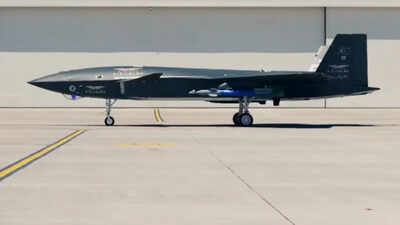
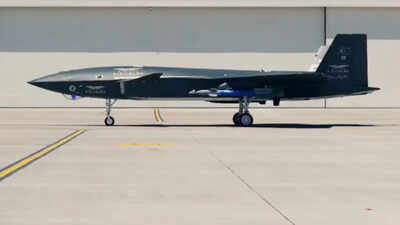
The unmanned fighter aircraft has successfully completed firing tests with the LGK-82 and TEBER-82 precision-guided munitions, while utilizing Aselsan’s Electro-Optical Targeting System (EOTS) for target detection, tracking and designation. Bayraktar Kizilelma represents Turkey’s most ambitious leap into the realm of unmanned combat aviation, designed as a stealthy, jet-powered platform capable of air-to-air and air-to-ground missions. With a maximum take-off weight of six tonnes and the ability to carry a diverse payload of precision-guided bombs and missiles, it is envisioned as a force multiplier for the Turkish Air Force. Its integration of advanced avionics, autonomous mission systems, and compatibility with carrier operations underscores its role as a next-generation unmanned fighter, bridging the gap between smaller drones and manned aircraft.Turkey’s experience in drone development has been transformative. Beginning with the Bayraktar TB2, which gained global recognition during conflicts in Syria, Libya, Nagorno-Karabakh and Ukraine. The TB2’s affordability, reliability and combat effectiveness made it a sought-after platform on the lobal market. The success of this platform not only bolstered Turkey’s defence industry but also reshaped modern warfare by demonstrating how relatively inexpensive drones could neutralise armour and air defence systems. Building on this foundation, Turkey has moved into larger, more capable platforms like the Akinci and now the Kizilelma, positioning itself as a leader in unmanned combat aviation.Pakistan too is an export customer of Turkish drones. The Pakistani armed forces extensively used the Turkish Yiha drones to target India during the active phase of Operation Sindoor. The Pakistanis also use Baykar’s Anka, Akinci and Bayraktar TB-2 drones. Turkey and Pakistan have been expanding their defence relationship. Both nations are also working towards establishing a drone production line in Pakistan.India has embarked on a parallel journey with its Combat Air Teaming System (CATS) program, spearheaded by Hindustan Aeronautics Limited. At the heart of this initiative is the CATS Warrior, a loyal wingman drone designed to operate alongside and subservient to manned fighters. Equipped with AI-driven autonomy, GPS-independent navigation and precision strike capabilities, the Warrior is intended to extend the reach and survivability of manned aircraft. India’s approach emphasizes indigenous development, aiming to reduce reliance on foreign systems while building a robust ecosystem of unmanned combat platforms. The program reflects India’s recognition that future air warfare will hinge on manned-unmanned teaming, where pilots act as mission commanders directing swarms of autonomous assets.Other nations are also advancing loyal wingman concepts. The United States has ordered two different types of Collaborative Combat Aircraft (CCA). Australia, in partnership with Boeing, has unveiled the MQ-28 Ghost Bat, a modular loyal wingman platform already undergoing trials. Europe, too, is exploring similar systems within the framework of future combat air programs. Collectively, these efforts highlight a global shift: air forces are preparing for an era where unmanned wingmen will not only augment traditional fighters but redefine the conduct of aerial warfare.