
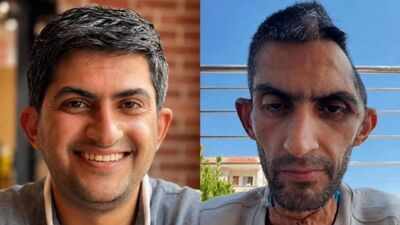
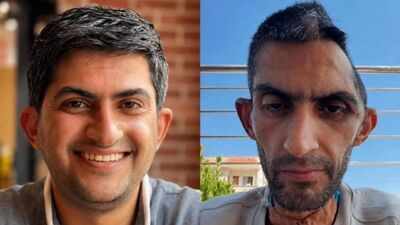
Two photographs of Palestinian journalist Mujahid Bani Mufleh, one taken before his detention and another after his release from Israeli custody, have drawn fresh attention to allegations surrounding conditions inside Israeli prisons. Citing his case, the Palestinian Prisoner’s Society (PPS) said the journalist’s dramatic physical deterioration reflects the treatment endured by many Palestinian detainees, an allegation that has renewed scrutiny of Israel’s prison system.In a statement issued on Wednesday, the PPS described Bani Mufleh’s condition as evidence of what it called the “slow and direct killing” of Palestinian prisoners. The organisation said his case was not an isolated one but representative of thousands of detainees who, it alleged, had been subjected to systematic abuse, including torture and medical neglect, while in Israeli custody.Israeli authorities placed Bani Mufleh under administrative detention in June 2025 and released him in January 2026. According to the PPS, he suffered a severe brain haemorrhage two days after his release and was rushed to hospital in critical condition. He subsequently underwent several surgeries and continues to receive treatment for complications the organisation says were linked to his detention.In a testimony shared after his release, Bani Mufleh described what he said were the physical and emotional hardships of his imprisonment. He said he learned the meaning of hunger when “a morsel of bread becomes a distant dream”, and the meaning of humiliation when the most basic aspects of daily life were taken away and placed entirely under the control of prison authorities.He also said he experienced “the cruelty of nights when hours become a heavy burden of suffering, worry, and fear of the unknown”, adding that his prolonged medical treatment taught him “the meaning of helplessness, when even the simplest daily movements become an achievement worthy of celebration.”According to Bani Mufleh, the experience fundamentally changed his appreciation for everyday necessities, including adequate food, clean drinking water, freedom of movement, safe sleep and the ability to live with dignity.The PPS said it has documented hundreds of former detainees leaving Israeli prisons in severely deteriorated physical and psychological condition. It alleged that many such cases remain unreported because former prisoners and their families fear re-arrest, while others have died shortly after their release from complications linked to their detention.The organisation also said the conflict has seen an unprecedented increase in the targeting of Palestinian journalists, claiming that more than 245 journalists have been arrested since the start of the war, alongside hundreds killed in Gaza.Bani Mufleh, a father of three from Nablus in the occupied West Bank, said he was transferred between several detention facilities, including Megiddo and Negev prisons.He further alleged that he witnessed the deaths of two fellow detainees while in custody, claiming one died after being sprayed with pepper spray and another, identified only as Ahmed, died after reportedly requesting medical treatment following an attack by a police dog. These allegations have not been independently verified.Israel has previously rejected allegations of systematic abuse of Palestinian detainees and has maintained that its detention policies, including the use of administrative detention, are carried out in accordance with Israeli law and security requirements.