
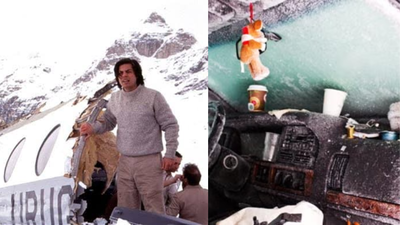
In December 2011, a 44-year-old Swedish man named Peter Skyllberg disappeared while driving through the country’s frozen north. Weeks passed with no sign of him as winter temperatures plunged well below freezing. Then, in February 2012, a group of snowmobilers spotted what looked like the roof of a car protruding from a snowdrift. Digging through nearly a metre of snow, they made an astonishing discovery: inside sat the missing driver, alive but severely weakened after spending almost two months trapped inside the snow-covered vehicle with little or no food. His extraordinary survival stunned doctors and scientists alike, raising questions about how the human body can endure prolonged starvation and extreme cold under exceptional circumstances.
Snowmobilers uncovered the buried car after noticing something unusual beneath the snow
Peter Skyllberg, a 44-year-old Swedish man, had apparently become stranded on a remote road after his vehicle was immobilised by heavy snowfall during late December.As reported by the BBC, over the following weeks, repeated snowstorms gradually buried the car beneath roughly one metre of snow, leaving only a small portion visible above the surface. On 17 February 2012, passing snowmobilers noticed the unusual shape beneath the snow and stopped to investigate. After digging into the drift, they found the driver sitting inside the vehicle, barely able to move or speak but still conscious. Emergency responders transported him by helicopter to hospital, where doctors began treating him for severe dehydration, malnutrition and hypothermia.
Doctors believed melted snow and an extremely slow metabolism helped keep him alive
Medical specialists estimated that the man had survived for close to two months with virtually no food. According to doctors treating him, he is believed to have survived primarily by melting and drinking snow, preventing fatal dehydration while his body relied on stored fat reserves for energy. Physicians also suggested that prolonged exposure to cold may have pushed his body into an extreme energy-conservation state, dramatically slowing metabolism and reducing calorie requirements.Rather than freezing, the man may have benefited from the very snow that trapped him. The thick blanket of snow covering the vehicle acted as a natural insulating layer, shielding the interior from the harshest outdoor temperatures and helping maintain a more stable environment than the open air outside.
The case challenged assumptions about the limits of human survival
Although humans can survive for weeks without food under certain conditions, surviving for nearly two months in such an isolated environment is exceptionally rare.Doctors involved in the case described the survival as extraordinary, noting that each situation depends on numerous factors, including hydration, body fat, physical activity, environmental conditions and underlying health.The Swedish case also highlighted the protective role snow can sometimes play. While heavy snowfall often creates life-threatening situations, deep snow can also trap pockets of relatively warmer air, reducing heat loss in much the same way that insulated shelters or snow caves protect mountaineers during winter storms.
One of the most remarkable modern survival stories
The man’s identity was never widely publicised, and after receiving medical treatment he gradually recovered from the ordeal.His case remains one of the most extraordinary documented examples of human endurance in modern times. Rather than surviving through extraordinary supplies or specialised equipment, he endured weeks of isolation using little more than melted snow while remaining inside a vehicle buried beneath winter drifts.The incident continues to fascinate survival experts and physicians because it demonstrates how, under exceptional circumstances, the human body can adapt far beyond what most people would consider possible. It also serves as a reminder of both the dangers of remote winter travel and the remarkable resilience that can emerge when survival depends on conserving every possible ounce of energy.