
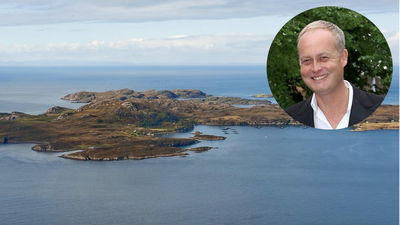
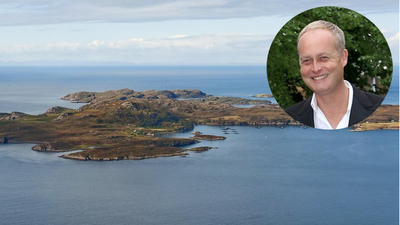
When billionaire hedge fund manager Ian Wace bought Tanera Mòr in Scotland’s remote Summer Isles in 2017, the 800-acre island had little resemblance to the thriving community it had once been. Its historic buildings had fallen into disrepair, its population had dwindled and much of the land had become overgrown. Wace paid about £1.7 million for the island, equivalent to roughly $2.2 million at the time, but instead of turning it into a private luxury retreat, he began a vast regeneration project. The initiative has since involved around £100 million, or about $135 million, and includes restoring buildings, planting more than 100,000 trees, reviving traditional crafts, rebuilding farmland and creating new communal spaces. The project is also designed to support the wider Scottish Highlands community.
How a billionaire bought a $2.2 million island and turned it into a $135 million revival project
Tanera Mòr is the largest of Scotland’s Summer Isles, located off the country’s north-west coast near the Coigach peninsula. Wace first saw the island advertised for sale in 2013 but did not purchase it immediately, and it remained on the market for several years before he eventually bought it in 2017. According to the Financial Times, Wace returned to the island and felt it was “dying”, but instead of viewing its decline as irreversible, he saw an opportunity to rebuild it while preserving its history and natural landscape. The project has since grown into a roughly £100 million regeneration effort covering buildings, infrastructure, environmental restoration, employment and community initiatives.Tanera has a history stretching back centuries and was once an important centre of Scotland’s herring industry. Its herring station dates to 1784, when the island became a base for processing and exporting fish, and at the height of its activity around 120 people worked there. However, the fishing industry eventually declined, while migration, economic changes and wider historical events further reduced the island’s population. Over time, many buildings were abandoned and the community that had once supported the island disappeared, leaving Tanera with a shrinking population and a landscape that increasingly required investment and restoration.
More than 50 buildings have been restored
A major part of the regeneration has involved bringing Tanera’s neglected buildings back into use. According to the island’s own records, more than 50 buildings have been restored, including historic cottages and other structures that had fallen into disrepair. Rather than replacing the island’s character with large modern developments, the project has attempted to retain and restore existing structures while adapting them for modern use. The regeneration has also created roughly 4.5 miles of roads, along with paths and other infrastructure needed to reconnect different parts of the island and support the growing number of people working and staying there.
More than 100,000 trees have been planted
The transformation has also extended across Tanera’s natural landscape, with the project reporting that more than 100,000 trees have been planted as part of efforts to restore woodland and expand habitats. The restoration programme has included eight ponds and the planting of hundreds of native aquatic plants, creating around 1.5 million litres of freshwater pond habitat. About 28 acres of historic agricultural land have also been reclaimed, while old orchards, pastures and other areas of the island are being restored. The wider objective is to rebuild habitats while making the island’s land more productive and resilient.
Traditional Scottish crafts are being revived
The regeneration project has also attempted to bring back traditional skills associated with the region. Two historic herring luggers, the Clan Gordon and St Vincent, were acquired and restored, with Tanera saying local boatyards contributed around 16,000 hours of skilled work to the vessels. A restored loom is being used to produce Tanera tweed, while workshops have introduced activities including sailmaking, breadmaking, art, writing, flower arranging and land management. These efforts are intended to preserve traditional knowledge while giving people working on the island opportunities to learn and practise skills that were once closely connected to life in the Scottish Highlands.
New community spaces are changing the island
Instead of creating a collection of isolated private residences, the project has developed shared spaces intended to support a functioning community. A former quarry has been transformed into an operational centre containing offices, accommodation and workshops, while other facilities include a pub, chapel, art studio, cinema, gym and sauna. A communal cookhouse also provides a central gathering point for people working and staying on the island. The approach reflects Wace’s wider ambition to restore not just Tanera’s buildings but also the social life that disappeared as the island’s original population declined.
The island now welcomes public-service workers
One of the most unusual parts of Tanera’s transformation is its programme for people working in demanding public-service roles. The island has hosted workers from professions including the NHS, police and armed forces, giving them an opportunity to spend time away from their normal working environments. Tanera says more than 1,300 public-service workers have taken part in restorative stays since the programme began. Guests can also participate in activities connected with the island’s regeneration, including gardening, tree planting, path building and other practical work, combining a period of rest with involvement in the restoration of Tanera itself.
The revival has created jobs in the Highlands
The project is also intended to provide employment and economic opportunities in one of Scotland’s more remote regions. Tanera says more than 60% of its full-time workforce comes from the Scottish Highlands, while around 150 people can be working and staying on the island at a given time. The project says it wants to create longer-term opportunities rather than rely entirely on temporary construction work, with the broader ambition of encouraging people to remain in or return to the Highlands. The scale of the operation represents a major change from the handful of people associated with Tanera when Wace purchased the island.
The project has expanded beyond the island
Wace’s plans eventually grew beyond Tanera Mòr itself and into the surrounding Coigach region. In 2024, almost 8,000 acres of mainland land were gifted to the Coigach Community Development Company, according to the Financial Times. The wider programme has also involved restoration work at properties including Achnahaird Farm, while the historic Summer Isles Hotel is undergoing a major refurbishment and is expected to reopen in 2027. The expansion means the project is no longer focused solely on restoring one island, but is increasingly connected to the economic, cultural and environmental future of the surrounding Highlands community.
Tanera is now part of a charitable trust
In 2020, Tanera was transferred into a charitable trust, giving the project a formal structure around its broader objectives. The island now describes its work through three central themes: regeneration, resilience and restoration. These include rebuilding infrastructure, restoring natural habitats, creating employment, preserving heritage and providing restorative experiences for public-service workers. As a result, Tanera is not simply being developed as a billionaire’s private retreat. Instead, the project is attempting to combine private funding with charitable activity and long-term environmental and community goals.
From a declining island to a living community
Tanera Mòr’s transformation is still underway, but the scale of the change since 2017 is striking. An island once marked by abandoned buildings, declining population and neglected land now has restored homes and communal spaces, new infrastructure, revived traditional crafts, regenerated farmland and more than 100,000 newly planted trees. What began with Wace’s purchase of the island for about $2.2 million has evolved into a regeneration project involving around $135 million, making Tanera an unusual experiment in whether a remote island can be brought back to life by rebuilding its environment, economy and community at the same time.