
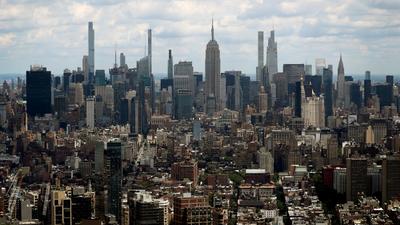
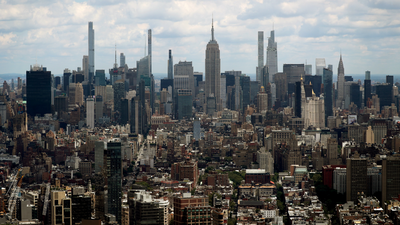
Owning a high-value home in New York City without living there as a primary residence could now mean an additional tax bill. But determining which properties qualify for the new surcharge has proved more complicated than the basic idea of taxing luxury second homes suggests.The so-called pied-à-terre tax, backed by Mayor Zohran Mamdani, applies to certain expensive properties that are not their owner’s primary residence. The measure is aimed at raising about $500 million annually for the city.According to news agency AP, the rollout has already triggered confusion among property owners, particularly because of the way luxury homes are often owned or occupied. A group of homeowners has also challenged the city’s implementation in court.
Which properties are covered by the new tax?
The surcharge applies to one-, two- and three-family homes valued at more than $5 million, as well as condominiums and co-ops valued at $1 million or more, if those properties are not a person’s primary residence.The measure is intended primarily to cover owners who maintain homes in New York City while living elsewhere for most of the year and therefore do not pay New York City income taxes.US President Donald Trump, whose primary residence is now in Florida, has said he was looking into whether federal intervention could stop the tax. His Manhattan penthouse could be subject to the measure.However, the value of a property alone does not determine whether the surcharge applies. The ownership and occupancy arrangements can also become important.
Why determining who is liable is complicated
Luxury properties are frequently held through trusts and limited liability companies, arrangements that can make it more difficult to establish who owns a property or who actually lives there.Trusts can be used to hold property and allow it to pass more easily to family members, while LLCs can shield an owner’s identity.Other arrangements can create additional complications. A property owner may allow a distant family member to stay in a second home without formal documentation. Similarly, a property may be rented out while the tenant does not have documentation establishing that the apartment is their primary residence.Gary Bingel, a state and local tax expert and partner at EisnerAmper, said the issue becomes more complicated when the ownership and occupancy arrangements are examined in detail.“It seems very simple but the more you dig into it, the more nuances you look at, the more complicated it gets,” Bingel said, as cited by AP.Mark Limardo, a partner at Manhattan law firm Herrick who focuses on taxes, also pointed to difficulties around documentation.“Those situations make it difficult to prove people are in there,” Limardo said. “The concept is simple, but the ownership rules and the documentation rules have made it very complicated.”
City sends notices to 17,000 properties
The city has said its finance department has experience examining complex ownership structures and that property owners can provide evidence showing that a property is their primary residence or qualifies for an exemption.The administration has sent notices to about 17,000 properties that it suspected could be subject to the tax. Owners were given the opportunity to apply for exemptions.Mamdani announced the notices in a social media post, saying owners of second homes worth more than $5 million should check their mail when they returned to New York.The city later extended the deadline for exemption requests after some property owners said they had received notices in error or had difficulty navigating the process.Receiving a notice does not by itself establish that a property owner will ultimately have to pay the surcharge, as owners can seek an exemption.
Homeowners challenge the rollout in court
The tax has also triggered legal action from a group of homeowners who argued that the city had not done enough to determine which properties would actually be liable and had instead placed the responsibility on property owners.A judge temporarily paused the process this week, but the city moved to appeal. The tax effort can therefore continue while the legal dispute is considered.The litigation could also extend to individual property owners whose exemption applications are rejected.Stewart Sterk, a real estate law professor at Cardozo School of Law, said he expected further legal challenges because of the large number of properties involved and the different arrangements linking owners and occupants to those properties.“This is going to be a subject of litigation for quite a while,” Sterk said.
Why the tax is facing wider scrutiny
The rollout has also created tensions between the city administration and wealthy property owners.Mamdani highlighted the measure in a video featuring hedge fund CEO Ken Griffin and a Manhattan penthouse he bought for around $239 million.Griffin later described the decision to publicly draw attention to one of his homes as “frightening”, particularly following the killing of UnitedHealthcare CEO Brian Thompson in the same neighbourhood.The city also published an online list of property owners it said could potentially be subject to the tax, including names, addresses and property values. The city is legally required to publish the list, but some wealthy property owners criticised it as public shaming or doxing.The central issue remains the city’s effort to identify which high-value properties are genuinely being used as second homes and which qualify for an exemption based on their ownership or occupancy arrangements.