
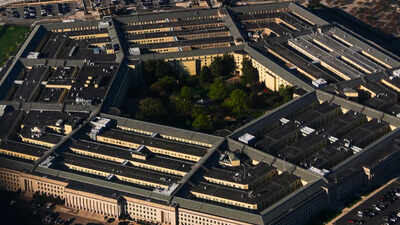
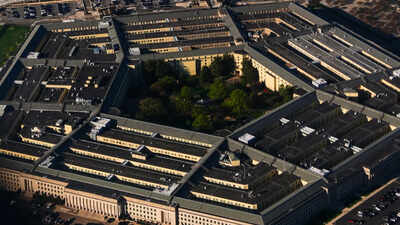
The Pentagon is weighing whether the United States should maintain a smaller military presence in the Persian Gulf after the Iran war, as per a Washington Post report. The scale of damage to American bases has forced Washington to reconsider a decades-old security posture in the region.The discussions are still at an early stage and do not amount to a formal review ordered by Defense Secretary Pete Hegseth. Instead, the Pentagon’s policy office, along with the Joint Staff and US Central Command, is assessing what America’s military footprint could look like once the fighting ends, including whether heavily damaged bases should be rebuilt in their current form.The US normally stations about 40,000 troops across nearly 20 sites stretching from Jordan to Oman, with some of its largest and most permanent facilities located in the Persian Gulf. Bahrain hosts the headquarters of the US Fifth Fleet, while Kuwait, Qatar and other Gulf states host major American Army and Air Force assets.But the war has exposed the vulnerability of those bases to Iranian missile and drone attacks. More than 200 US facilities have been damaged or destroyed during the conflict, according to the Post, while six American service members were killed in a March strike on a military facility in Kuwait.The Pentagon has also burned through more than 1,000 sophisticated air-defence interceptors while protecting American forces, putting additional pressure on stocks of Patriot and Terminal High Altitude Area Defense missiles.The scale of the damage has opened what officials describe as an opportunity to reconsider where and how US forces are stationed. Some Pentagon discussions have focused on moving troops and equipment farther west, including to Jordan, Israel or the Red Sea coast of Saudi Arabia, where they could be less exposed to Iranian attacks launched from across the Gulf.A person familiar with the US posture adjustments told the Post that some moves away from major Gulf facilities could continue even after the war. “Iran thinks we are in the traditional places,” the person said. “And we are not.”The debate also reflects a broader divide inside the Trump administration over the role of US military power overseas. Some officials and policymakers argue that Washington should reduce security commitments in the Middle East and redirect resources towards defending the US homeland and deterring China, while more hawkish voices are pushing for a stronger US presence elsewhere in the region, including Israel.One proposal has called for closing bases within easy striking range of Iranian missiles and drones, such as those in Kuwait, and shifting forces from the UAE, Jordan and Bahrain to more secure locations. Another has advocated moving additional US military assets to Israel’s Ovda Airbase.That proposal, however, has faced opposition inside the administration amid concerns that a larger American presence in Israel could create counterintelligence vulnerabilities, particularly as the Pentagon has grown increasingly concerned about Israeli espionage.For America’s Gulf partners, a major US drawdown could carry significant consequences. Gulf states have relied on American forces for decades for their security, and replacing that protection with domestic military capabilities or partnerships with other powers could take years.Still, a smaller US troop presence would not necessarily mean an end to the broader security relationship. Gulf states could continue to rely on Washington for weapons sales, intelligence sharing and other forms of military cooperation even if fewer American troops remain stationed on their territory.The Pentagon has estimated that the Iran war will cost around $37.5 billion by the end of September, but that figure does not include the cost of rebuilding damaged bases. With reconstruction decisions still pending, the war could therefore force Washington to make a much bigger choice than simply how much it spends repairing damaged facilities: whether some of those bases should be rebuilt at all.Any permanent change to the US military posture in the Middle East remains far from certain and would require approval from senior administration officials. But the Pentagon’s deliberations signal that the war may have created an opening for Washington to rethink one of the most entrenched features of its military strategy in the region.