
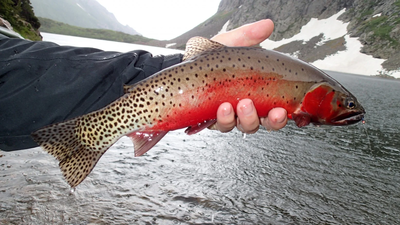
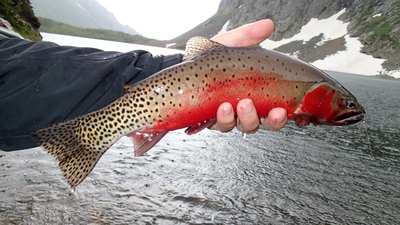
A major conservation effort launched in 2002 has restored New Mexico’s official state fish to more than 120 miles of connected mountain streams, marking one of the largest native fish restoration projects in the United States. For more than two decades, state and federal conservation agencies have worked to remove non-native predators and restore high-altitude habitats across northern New Mexico and southern Colorado. According to the New Mexico Department of Game and Fish (NMDGF) and the US Fish and Wildlife Service (USFWS), the effort has re-established a self-sustaining population of Rio Grande cutthroat trout (Oncorhynchus clarkii virginalis) across the Rio Costilla basin.The native trout is easily recognised by the bright red mark beneath its lower jaw. It once lived across thousands of miles of cold-water streams in the Rio Grande and Canadian River basins. But by the late 20th century, habitat loss, logging, major wildfires, drought and competition from non-native fish had badly reduced its range. Biologists estimated that the fish survived in only about 10 per cent of its original habitat before active recovery efforts began. The decline was largely caused by non-native game fish introduced during the 19th and 20th centuries to support sport fishing. Introduced rainbow trout bred with native cutthroat trout, weakening the pure genetic line. Brown trout and brook trout also competed with Rio Grande cutthroat trout for food, spawning areas and shelter.
Chemical treatments and fish barriers secure watershed
To reverse the decline, NMDGF joined forces with the US Fish and Wildlife Service, the US Forest Service, Turner Enterprises and Rio Costilla Park management to carry out the Rio Costilla Native Fish Recovery Project. The project covered a huge 190-square-mile watershed in the Sangre de Cristo Mountains, including high-elevation streams, glacial lakes and smaller tributaries. Restoring the native fish required removing non-native trout from selected waters. Teams used chemical treatments, mainly rotenone, to kill the invasive fish. Rotenone breaks down quickly in natural water when exposed to sunlight and stops fish from absorbing oxygen through their gills. It does not leave long-lasting toxic residues in the surrounding water.To stop non-native fish from swimming back into restored areas, engineers built concrete and rock barriers at key points along the streams. The barriers allow water to continue flowing downstream while creating drops that invasive trout cannot cross when moving upstream.Once stream sections were isolated and cleared, biologists returned genetically pure Rio Grande cutthroat trout. Some came from state fish hatcheries, while others were moved from remaining wild populations in isolated headwater streams.
Multi-agency work spans two decades
The restoration was carried out in careful stages across several sub-watersheds, including Comanche Creek and Costilla Creek, as well as high-elevation alpine lakes such as the Latir Lakes complex. According to US Fish and Wildlife Service reports, the project required close cooperation across public, private and tribal lands. Field teams carried out seasonal electrofishing surveys for years to measure fish numbers, check genetic purity and monitor the health of aquatic insects and other organisms. Overall, the Rio Costilla project restored pure Rio Grande cutthroat trout populations across 120 miles of connected streams and 18 high-mountain lakes. The connected system allows fish to move between main rivers and smaller tributaries, giving them greater protection from threats such as severe drought and ash flows after wildfires.The scale of the project remains unusual in North American fisheries management. Instead of creating small, isolated areas where fish could be wiped out by a single disaster, conservation teams restored a large network that allows natural movement and genetic exchange without constant human intervention. NMDGF biologists said keeping the watershed connected was important for the trout’s long-term survival. By linking high-altitude spawning streams with main river channels, fish can move to deeper pools during extreme cold and find cooler water during periods of summer heat.
Secure future without federal listing
The recovery of larger, stable populations also played an important role in federal reviews. In 2014, after examining restoration work by NMDGF and its partners, the US Fish and Wildlife Service decided that the Rio Grande cutthroat trout did not need to be listed as an endangered species under the Federal Endangered Species Act. The agency pointed to large-scale habitat restoration in the Rio Costilla basin and conservation agreements between different agencies as important factors in securing the species’ future without federal protection. The conservation system developed in New Mexico has since provided a model for other western states working to restore native salmonid species, including cutthroat trout subspecies in Montana, Wyoming and Utah. Today, state managers allow regulated catch-and-release fishing and limited harvest in some restored stream sections, reopening historically important fishing waters to anglers for the first time in generations. NMDGF continues to monitor the Rio Costilla basin, maintaining fish barriers, checking water quality and making sure non-native trout do not return to the restored habitats.