
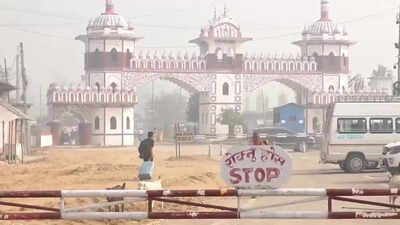
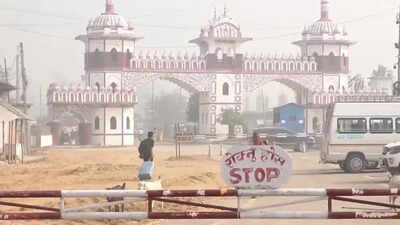
NEW DELHI: The rape and murder of a three-year-old girl in Nepal’s Bara district, around 25km from Raxaul in Bihar, triggered demands for the death penalty in parliament after days of protests, even as the principal suspect is a 16-year-old boy who, if convicted, would be sentenced under Nepal’s juvenile justice law. Lawmakers sought constitutional changes to allow capital punishment for heinous crimes, while RSP law minister Sobita Gautam and home minister Sudan Gurung told parliament that the govt could not introduce it without first amending the Constitution.The girl disappeared from Jeetpur-Simara on Aug 16 and her body was recovered two days later from an abandoned house near her home, leading to demonstrations in Simara, Kathmandu and other parts of Nepal. Police identified her teen neighbour as the principal suspect and widened the investigation, taking nine people into custody amid questions over whether officers had responded quickly enough after the family reported her missing.The killing dominated parliament proceedings, with ruling Rastriya Swatantra Party (RSP) lawmaker Afsana Banu demanding an amendment to Article 16(2), which prohibits capital punishment, and calling for Nepal to reconsider its international commitments against the death penalty. “No international treaty or law can stand above citizens’ safety. Concern for the human rights of criminals cannot come at the cost of victims’ rights and justice,” she said, urging her govt to amend the Constitution to allow death penalty for heinous crimes.Other RSP lawmakers questioned whether the existing legal framework provided adequate punishment in such cases. Anushka Shrestha said, “A person should not escape severe punishment for a heinous crime merely because the perpetrator is a minor,” while arguing that punishment for rape needed review. Shraddha Kunwar raised a separate constitutional argument, asking whether parliament should focus only on the prohibition on death penalty or also ensure women’s constitutional right to live with dignity.Gautam, however, told parliament that Article 16(2) explicitly barred Nepal from making any law providing for capital punishment and pointed to the country’s international human rights commitments. “No matter how intense public anger becomes, our govt cannot legislate beyond the Constitution,” she said. Nepal constitutionally abolished capital punishment in 1990 and retained the prohibition in its 2015 Constitution.The suspect’s age presents a separate legal issue even as lawmakers debate capital punishment. Under Nepal’s Children Act, 2018, anyone below 18 is dealt with under juvenile law, and an offender aged 16 to below 18 can receive two-thirds of the punishment prescribed for an adult. For adults, Nepal’s criminal law provides for imprisonment for the remainder of natural life for murder committed after rape, the maximum punishment available under the existing constitutional framework.Following days of protests, govt reached a three-point agreement with the victim’s family and formed a seven-member Garima Nyaya Sankalpa Samiti under law ministry, giving it seven days to recommend changes concerning sexual violence and offences against women and children.