
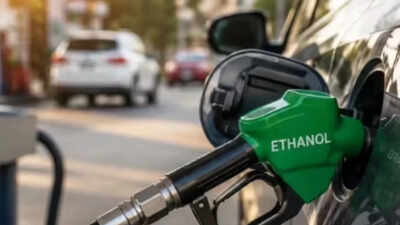
NEW DELHI: The Supreme Court on Monday refused to entertain a plea seeking mandatory disclosure of the exact ethanol content in petrol at fuel stations and on fuel purchase receipts.A bench of Justices MM Sundresh and PB Varale dismissed the plea filed by advocate Narendra Goswami, while granting him liberty to approach the concerned high court.The Attorney General for India, R Venkataramani, appearing for the Centre, argued that the petition was a proxy litigation, as the court had already dismissed a similar petition on the issue.“The petitioner wants government of India to be answerable to him,” the AG submitted, as quoted by PTI.Meanwhile, Goswami contended that he has the right to know the content of the petrol given. “Not only me but citizens at large should be informed about the composition of the fuel given to them,” he submitted.The plea sought directions to petrol pumps to prominently display the precise percentage of ethanol blended with petrol. It also sought that the ethanol content be specifically mentioned on receipts and invoices issued to consumers at fuel stations and an official vehicle-wise compatibility database covering different ethanol blends, based on factors such as manufacturer, model, engine type and year of manufacture.“Direct the respondents (Centre and others) to prepare and publish within a stipulated time an official, public, vehicle-wise compatibility database searchable by manufacturer, model, engine type and year of manufacture, indicating the suitability or otherwise of various ethanol blends for each vehicle,” Goswami added in his plea.
Share your thoughts in the comments
Be respectful · TOI community guidelines
The plea also called for an independent expert committee, including representatives from the petroleum and road transport ministries, the Bureau of Indian Standards and independent automobile engineers, to assess the real-world compatibility of E20 with existing vehicles.The committee was also asked to examine the impact of E20 on fuel efficiency, engine life and maintenance costs, warranty and insurance, emissions, water consumption in ethanol production, and food-security concerns.The petitioner further sought a national consumer disclosure protocol for ethanol-blended petrol and a transparent transition framework for older or incompatible vehicles, including the possible availability of lower-ethanol petrol where feasible.