
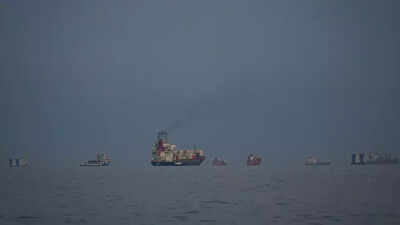
NEW DELHI: India is deploying additional warships in the Arabian Sea and the Gulf of Oman to ensure safe passage for its fuel and LPG carrying vessels as tensions escalate around the Strait of Hormuz, Bloomberg reported citing sources.The Indian Navy has positioned more than half a dozen warships, including logistics vessels, as a precautionary measure.
The ships will remain east of the Strait of Hormuz and will not enter the sensitive waterway. Their primary role will be to escort Indian vessels to safer waters in the northern Arabian Sea, the people familiar with the matter told the agency.The deployment comes as India anticipates that Iran may allow more fuel tankers to exit the strait. In recent days, New Delhi has already secured safe passage for two state-owned LPG tankers and is in talks with Tehran to facilitate movement of more vessels.
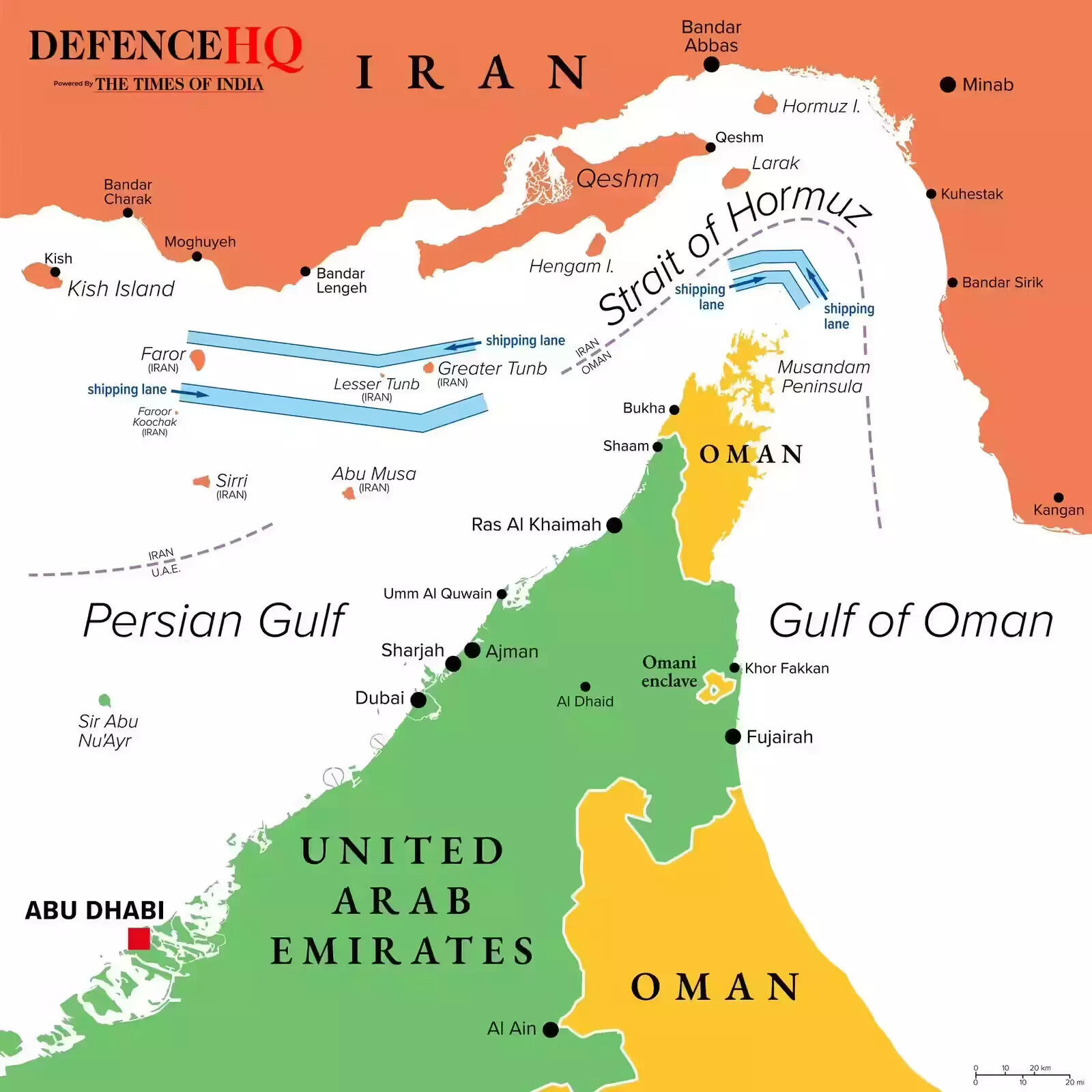
The Strait of Hormuz has effectively been shut since US-Israel airstrikes on Iran in late February, triggering supply disruptions. India, which relies heavily on the region for energy imports, has been particularly affected, with about 90% of its LPG imports sourced from the Middle East.India has not directly responded to US calls for allied naval participation in securing the strait. External affairs ministry spokesperson Randhir Jaiswal said the issue was not discussed with Washington “in a bilateral setting.”The current deployment is part of Operation Sankalp, launched in 2019 to safeguard Indian merchant shipping and maritime interests in the Gulf region.According to government data, 22 India-flagged vessels remain stranded in the Persian Gulf, carrying critical energy supplies. These include LPG carriers, LNG tankers, crude oil ships, and other cargo vessels.Earlier in the day, the shipping ministry spokesperson, Rajesh Kumar Sinha said that, “India’s 1.67 million tonnes of crude oil, 3.2 lakh tonnes of LPG and about 2 lakh tonnes of LNG are stuck on the 22 Indian-flagged ships stranded in the Persian Gulf, waiting to transit through the Strait of Hormuz.” He added that all 611 seafarers onboard these vessels are safe. Efforts are underway to secure safe passage for the ships.The Strait of Hormuz, a narrow but vital link between the Persian Gulf and open seas, handles nearly one-fifth of global oil shipments. Its closure has disrupted global energy flows, with nearly 500 tanker vessels currently stranded in the region.India imports around 88% of its crude oil, 50% of its natural gas, and 60% of its LPG. A significant portion of these supplies, up to 95% of LPG and about 30% of gas, typically pass through the strait.While crude oil disruptions have been partly offset by alternative sources such as Russia, West Africa and the US, supplies of LPG and gas have been hit, especially for industrial and commercial users.Earlier, under the watchful eyes of the Indian Navy, two Indian-flagged LPG tankers belonging to Shipping Corporation of India (SCI), Shivalik and Nanda Devi, have successfully crossed the Strait of Hormuz and reached India. Another Indian-flagged oil tanker, Jag Prakash, which is carrying gasoline from Oman to Africa, has also set sail from east of the Strait of Hormuz.