
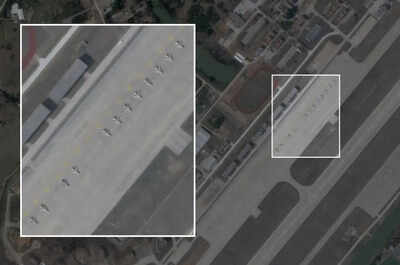
China has reportedly converted around 200 of its outdated supersonic Shenyang J-6 fighter aircraft into attack drones and deployed them across six air bases near the Taiwan Strait, according to a study by the US-based Mitchell Institute for Aerospace Studies.Satellite images included in the institute’s February report, titled “China Airpower Tracker,” show planes resembling the J-6—jets that originally entered service with the Chinese air force in the 1960s.
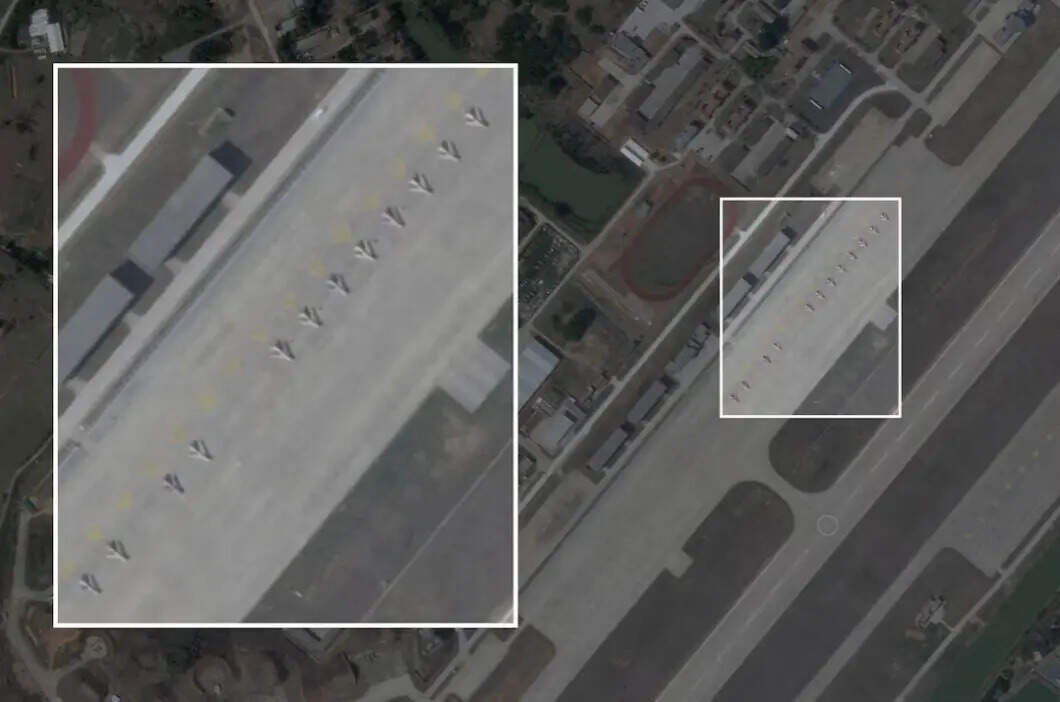
Satellite image of obsolete Chinese J-6 fighters converted into drones and stationed at airbase in Fujian province (Reuters)
Following their reported conversion into drones, these aircraft have been spotted at five bases in Fujian Province and one in Guangdong Province.
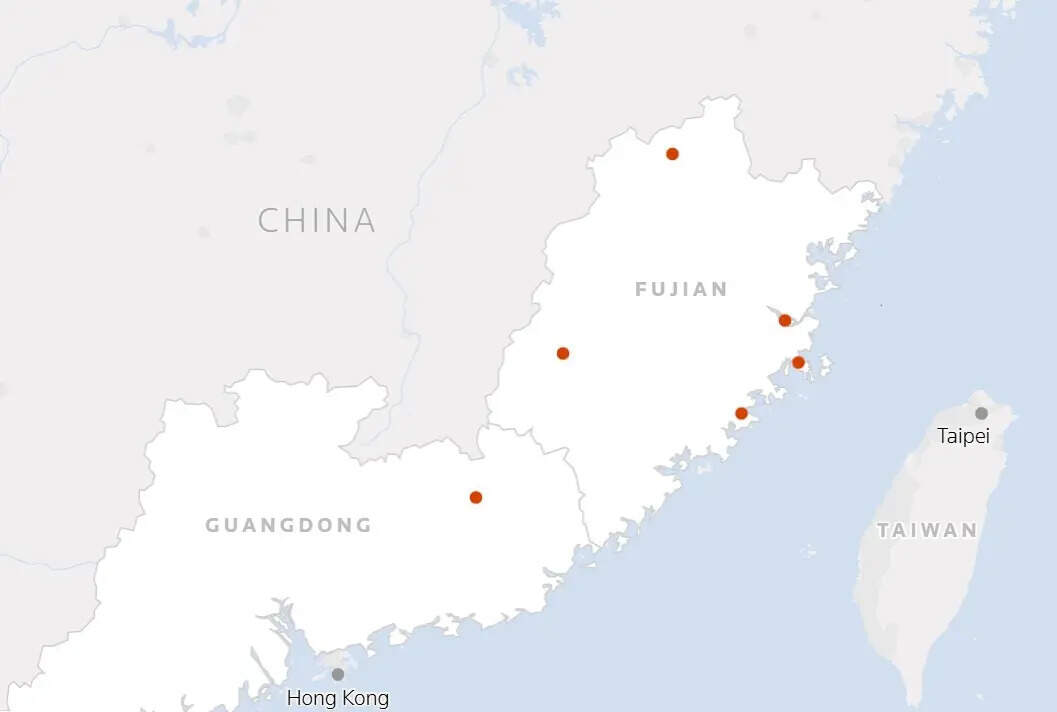
Fujian and Guangdong provinces are close to Taiwan (Reuters)
In the event of a potential Chinese invasion of Taiwan, these converted drone aircraft could be deployed in the initial phase of the assault, flying directly into designated targets, according to report author, J Michael Dahm, a senior fellow at the Mitchell Institute in Arlington, Virginia.He added that these platforms would function more like cruise missiles than traditional unmanned aerial vehicles, rather than operating as autonomous or remotely piloted systems.“They will be used to strike targets in Taiwan, the US, or allied forces in large numbers, effectively overwhelming air defences,” Dahm, a former US naval intelligence officer, told Reuters.However, he noted that the airfields closest to the Taiwan Strait—where the modified J-6 drones are based—would themselves be vulnerable to counterattacks from Taiwan and its allies in the event of a conflict.“The idea is to launch all the drones in the first hours of a People’s Liberation Army operation,” Dahm said.The drone variant of the Shenyang J-6 has been designated the J-6W.China investing heavily in military drones to ‘seize’ Taiwan by forceChina dominates the global commercial drone market and is also investing heavily in military drone technologies as it builds the capabilities it says are needed to take control of Taiwan by force if required.Beijing considers Taiwan part of its territory and has never ruled out the use of force to assert control. Taiwan rejects these claims, maintaining that only its people can decide the island’s future. Earlier this month, the US intelligence community assessed that China is not currently planning to invade Taiwan in 2027. This contrasts with the Pentagon own recent annual report, which stated that Beijing aims to develop the capability to fight and win a war over Taiwan by that year.A senior Taiwanese security official said the primary purpose of such drones would be “to exhaust Taiwan’s air defence systems in the initial wave of an attack.” The official added that intercepting them would create a cost-efficiency dilemma, as expensive missiles may be required to neutralize relatively low-cost targets at range.In a report presented to parliament this week, Taiwan Ministry of National Defense outlined plans to accelerate the acquisition of next-generation counter-drone systems.Taipei’s Institute for National Defense and Security Research, its national think tank, has earlier described such drone deployments as “a form of asymmetric warfare that cannot be ignored.”China developing new dronesChina is also developing a new generation of unmanned aerial vehicles, including a stealth attack drone that experts say could operate from an aircraft carrier. Military attachés and security analysts say Beijing is already testing UAVs in deception operations, in what may be rehearsals for a potential invasion of Taiwan.The twin-engine Shenyang J-6 was originally derived from the 1950s-era Mikoyan-Gurevich MiG-19. This aircraft, along with other Soviet-designed models, formed the backbone of China’s fighter fleet until the mid-1990s, according to United States Air Force Air University.In September last year, the PLA Air Force showcased one of the converted jets at the Changchun Air Show in northeast China. An information board displayed alongside the aircraft identified it as a J-6 UAV.According to the display, the fighter’s cannons and other onboard systems had been removed and replaced with an automatic flight control system and terrain-matching navigation technology. The UAV reportedly made its first successful flight in 1995 and can be used both as an attack platform and as a training target for fighter pilots, anti-aircraft units, surface-to-air missile systems, and radar operators.