
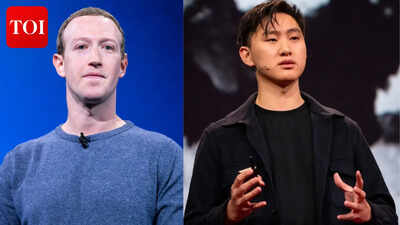
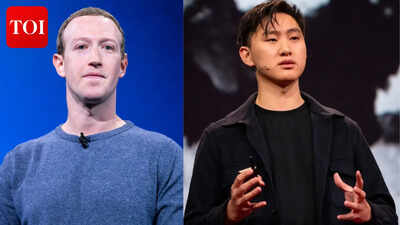
Meta CEO Mark Zuckerberg has quietly begun dismantling the power structure he built around Alexandr Wang, his $14 billion bet to lead the company’s AI push—evidence that the billionaire entrepreneur is losing faith in the 28-year-old data labeling entrepreneur he once courted with homemade soup deliveries and hundreds-of-millions-dollar compensation packages. Nine months after Wang arrived to oversee Meta Superintelligence Labs with absolute control over the company’s frontier AI models, Zuckerberg is now routing engineering talent, data pipelines, and model evaluations around him entirely. The Avocado and Mango models Wang promised will be built on infrastructure he doesn’t control. The researchers he hired report to other executives. And the guy who held a $29 billion stake in Wang’s Scale AI startup is quietly building what amounts to a backup plan—one that suggests the entire experiment has already failed.The shift crystallized Tuesday when Meta announced a new applied AI engineering organization led by Maher Saba, a long-time Reality Labs executive now reporting directly to Chief Technology Officer Andrew Bosworth. The structure itself tells the story: Zuckerberg is bypassing Wang’s Superintelligence Labs to build a parallel engineering powerhouse designed to feed his core AI models data, tooling, and evaluations faster than Wang’s team can consume them. It’s organizational restructuring as a soft firing—Wang keeps his title and access while losing every lever that actually matters.
The parallel org charts reveal the real power play
When Zuckerberg hired Wang in June to oversee Meta Superintelligence Labs, the structure looked clean: Wang would own the entire AI research and development stack. Today, that model is fragmenting. Saba’s new team will have a deliberately flat structure—up to 50 individual contributors for every manager—designed to move faster than traditional bureaucracy allows. It’s the opposite of the centralized, ego-driven approach Wang brought to the table.The Wall Street Journal reported the internal memo outlining Saba’s mandate: build “the data engine that helps our models get better, faster.” That language matters. Zuckerberg isn’t just creating another team. He’s creating an engine designed to make Wang’s job harder if he doesn’t perform, and easier to replace him if he does.This comes nine months after Zuckerberg began questioning whether hiring Wang was a mistake. According to reporting from the Financial Times and New York Times, Wang quickly clashed with longtime Meta lieutenants Chris Cox and Andrew Bosworth. Wang wanted to focus purely on catching up to OpenAI and Google’s models. Cox and Bosworth wanted to use Instagram and Facebook data to build products people would actually use. Wang complained to associates that Zuckerberg’s oversight felt suffocating. Meanwhile, Yann LeCun—Meta’s chief AI scientist and Wang’s theoretical superior—walked out in November rather than report to him.
The highest-paid executive now has isolation instead of influence
When Zuckerberg first tapped Wang, he reportedly offered compensation packages worth hundreds of millions to top researchers. Wang was positioned as untouchable—the genius billionaire who would crack superintelligence. Instead, he’s become isolated. The TBD Lab sits in a glass box next to Zuckerberg’s office. Only two of roughly 100 researchers left when their equity vested in November. The turnover numbers sound good on paper. They’re not. It’s what you’d expect from a team nobody can leave.Now, with Saba’s new organization reporting to Bosworth instead of Wang, the engineering talent will flow around Wang instead of through him. The Avocado and Mango models Wang was promised will be trained on data pipes Saba controls. The tooling researchers use will come from Saba’s team. The feedback loops that actually turn capable models into leading ones will be managed one level below Wang’s authority.Zuckerberg has always favored control over decentralization. When his bets don’t work—the metaverse, early Llama iterations—he reorganizes to take power back. With Wang, he’s doing the same thing, just quietly enough that the young entrepreneur might not notice until he tries to move.The reorganization proves it: Zuckerberg is already planning for a Meta AI future that doesn’t depend on the man he paid more to hire than most companies are worth.