
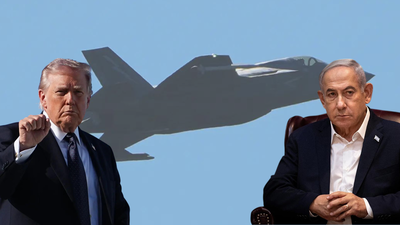
One week into what Donald Trump described as a “four-week operation” against Iran, the war already looks far messier than the confident timelines suggested in Washington. When US and Israeli forces launched Operation Epic Fury on 28–29 February, the opening strikes were designed to decapitate Iran’s leadership and cripple its military infrastructure. American bombers and cruise missiles hit dozens of targets, senior commanders were reportedly killed, and Iran’s Supreme Leader Ayatollah Ali Khamenei was confirmed dead. Yet over a week later the conflict shows no sign of ending.Missiles continue to streak across the Middle East. Iranian drones buzz over Gulf cities. Bahrain, Iraq, Jordan, Kuwait, Oman, Qatar, Saudi Arabia and the UAE have all reported incoming strikes. Western air defences have intercepted most of them, but not all. Fires have broken out near oil facilities, flights have been briefly halted in Dubai, and several missiles have reached Israeli urban areas.Instead of the swift decapitation strike some in Washington envisioned, the conflict is settling into a grinding contest of endurance. As former US President Dwight D. Eisenhower once observed, “plans are useless, but planning is indispensable.”The contrast with the lightning American operation in Venezuela only weeks earlier could not be clearer. There, a single raid toppled Nicolás Maduro’s government in just over two hours. Iran, by contrast, has absorbed the initial blows and continues to fight back.Iran, it turns out, is not Venezuela.
From Caracas to Tehran: Lightning versus marathon
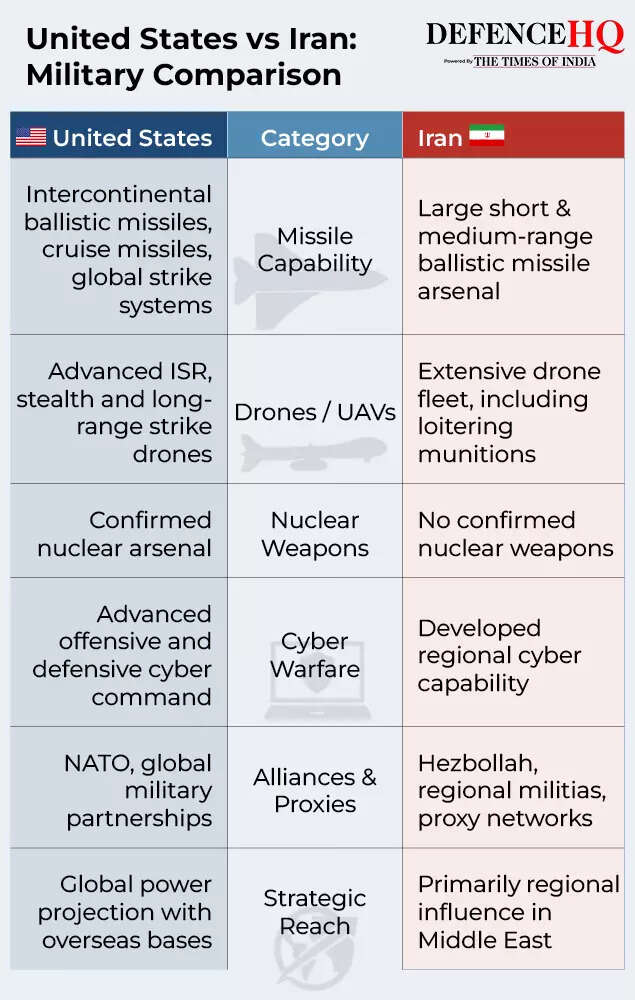
The difference between Venezuela’s quick overthrow and Iran’s grinding war is striking. In Caracas, a single well-timed commando raid in the dead of night toppled a weak administration. By contrast, Iran’s government has weathered massive hits and is still standing, its response still escalating. There are reasons why Iran is not Venezuela. Militarily, Iran is vastly stronger. It possesses thousands of missiles of varying ranges and an enormous drone fleet, whereas Venezuela had virtually no strategic deterrent.
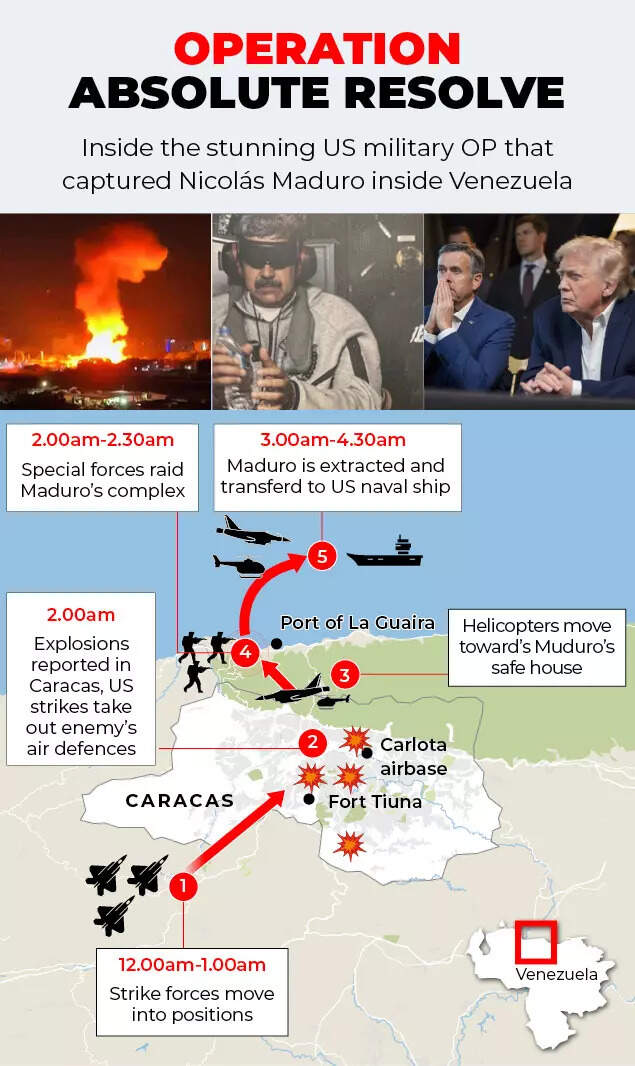
Geographically, Venezuela is a small country with open plains around the capital; Iran is the world’s 17th largest nation with rugged terrain and multiple layers of defense. Politically, Maduro’s government was already crumbling under domestic unrest and loss of army morale – Iran’s regime, in contrast, is tightly controlled by ideological forces (the IRGC) and has endured decades of foreign pressure without falling.Even the US forces and risks involved were radically different. The Venezuelan raid involved about 150 aircraft and a few thousand special forces. By comparison, the air war on Iran has involved dozens of US and Israeli jets (even B-2 bombers) backed by carrier task forces and NATO assets.
Iran’s missile and drone barrages
In response to the US-Israeli attacks, Tehran has thrown almost everything it has at its adversaries. Starting March 1, Iran launched repeated mass salvos of missiles and drones across the Gulf region and at Israel. On the first day alone Iran reported firing 137 ballistic missiles and 209 drones toward the UAE. Some of those struck Dubai and Abu Dhabi, sending plumes of smoke over landmarks like the Palm Jumeirah and Burj Al Arab.
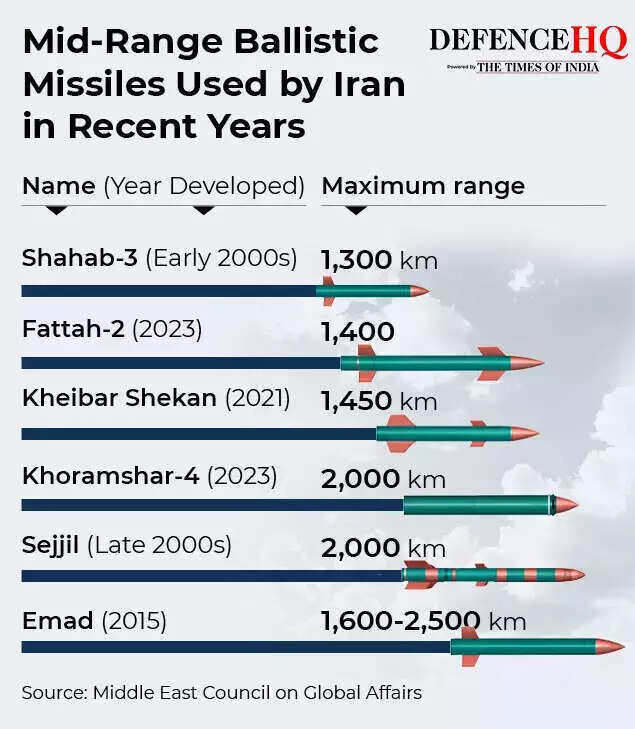
In Israel, Iranian strikes wounded civilians in Beit Shemesh and other towns. Hezbollah in Lebanon even fired rockets toward northern Israel, saying it was avenging Tehran. Military analysts note that Iran’s recent strategy is exactly about saturation: using “large salvos of ballistic missiles and loitering munitions… alongside actions by Hezbollah and other militias… to stretch Israeli and US missile defences and impose costs region-wide”.Iran has a diverse missile force of its own design, from short-range rockets to medium-range Shahab and Fateh-class missiles and beyond. It also uses “loitering munitions” (suicide drones) in large numbers – chiefly the Shahed series. The Shahed-136, for example, is a small (~2–3 m) propeller-driven drone weighing about 200 kg, with a flying range of up to 2,000–2,500 km and a 40–60 kg warhead. (Variants may carry up to 90 kg). Iran’s stock of these drones is believed to be vastly larger than its stock of ballistic missiles. As one Bloomberg analyst notes, Iran’s emphasis on drones suggests it is consciously preserving its missiles for later phases: “Tehran has launched more than 1,200 projectiles, many of them Shahed drones… analysts say this could indicate that Iran is conserving its ballistic missiles for later stages”. In other words, Iran is playing an endurance game.
Cheap Iranian Drones vs Expensive Defences
What makes Iran’s strategy particularly frustrating for its foes is the cost imbalance between its cheap munitions and Western interceptors. Those Shahed drones and similar UAVs cost on the order of $20,000–$50,000 each. By contrast, every time an allied air-defence system shoots one down, it burns one of America’s or Israel’s multimillion-dollar interceptors. For instance, a Patriot missile interceptor costs roughly $4 million apiece. As analysts point out, this mismatch has turned the conflict into a war of attrition. “It costs five times more to intercept [an Iranian drone] than it does to produce it,” Bloomberg’s Kelly Grieco observes. In practical terms, that means the United States and its partners are bleeding through expensive missiles and rockets just to stop each cheap kamikaze drone.This imbalance is the core of Iran’s strategy. A drone that costs roughly $30,000 can force an interceptor worth millions into the sky. Each engagement drains the defenders’ stockpiles faster than Tehran’s factories.
US-Israeli arsenal and air defences
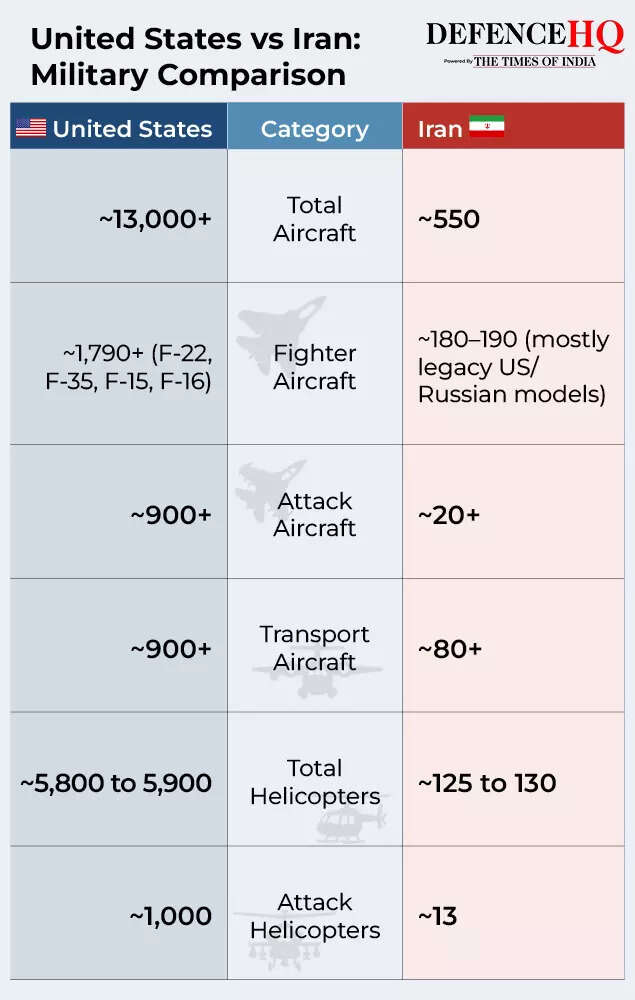
The US and Israel have countered with their best gear. American forces have deployed an unprecedented array of high-end weapons. US Central Command notes it is using “more than 20 different systems” in the campaign. That list includes B-2 Spirit stealth bombers, F-22 Raptor and F-35 Lightning fighter jets, EA-18G Growler electronic warfare aircraft, and MQ-9 Reaper attack drones. Naval forces launched Tomahawk cruise missiles from destroyers (USS Thomas Hudner, etc.) to strike fixed targets in Iran. They also fired Standard SM-2/SM-6 interceptor missiles from Aegis-equipped destroyers at incoming threats. Army units used HIMARS rocket systems to hit mobile launcher columns inside Iran. In short, every branch of the US military is engaged. Air crews fly continuous combat air patrols over the Middle East, and a US carrier strike group is in the region (the USS Gerald R. Ford and others) in support.
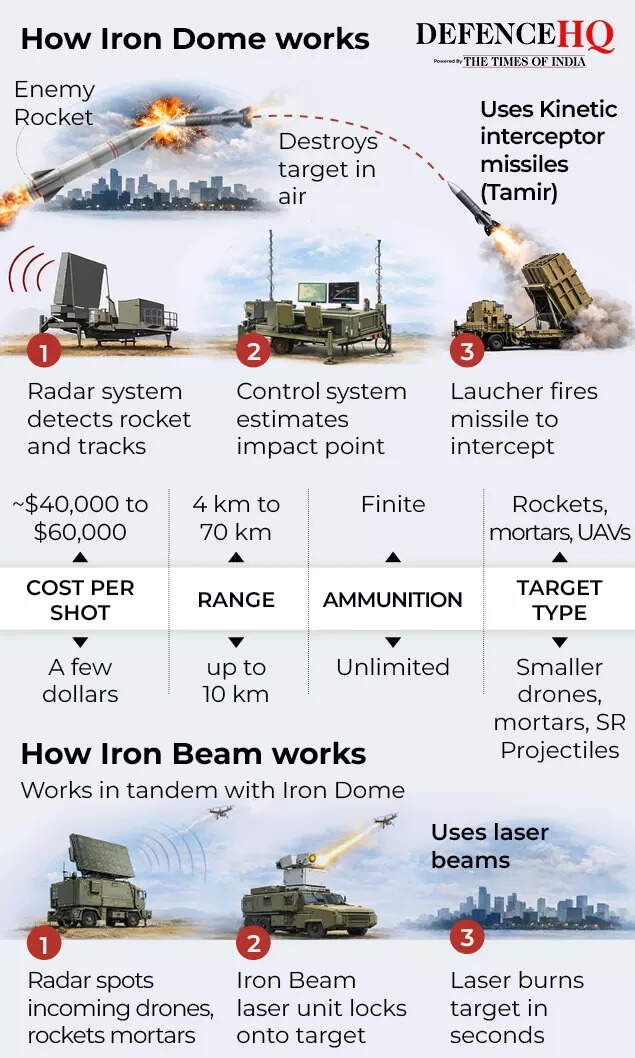
On the Israeli side, the toughest task has been air defence rather than offense. Israel is famed for its multi-tier missile shield. Short-range rockets and drones are handled by Iron Dome batteries; mid-range threats by David’s Sling; and high-altitude ballistic missiles by the Arrow system. This layered defence has mostly worked. Reuters reported on March 2 that “sirens sound across Israel as the country’s multi-layered missile defense system intercepts strikes from Iran,” noting that most incoming projectiles were shot down. Israeli leaders claim their defences have shot down nearly all barrages. Nonetheless, several missiles have slipped through – enough to cause casualties. In the two-week war of June 2025, at least one Iranian missile penetrated the Iron Dome and hit near Tel Aviv, killing over a dozen civilians. In the current war, media in Israel report about a dozen people killed so far and a hundred or more wounded, out of hundreds of rockets fired. By Israeli standards those losses are small, evidence of how robust the air-defence has been; but they also prove the shield is not impenetrable.
The US is also reinforcing Gulf allies with air-defence batteries. Saudi Arabia and the UAE field Patriot and THAAD batteries (some supplied by the US after the 2025 war) to guard their bases and oil facilities. Bahrain and Kuwait likewise rely on Patriots. These systems have so far knocked down a large fraction of Iranian missiles and drones aimed at them. Saudi air defences reported intercepting 2 ballistic missiles and 6 drones launched at its Al-Kharj base on March 6. Qatar’s leaders said they downed 9 of 10 incoming drones in another raid. But, as in Israel, some projectiles have evaded. Debris from intercepted drones has rained on Dubai and other cities, and at least one missile reached a fuel terminal in Oman, causing fires.
Straining the stockpiles: Who will run out first?
This contest is now largely one of inventories. Both sides are hoarding missiles and waiting to see whose “magazine” runs dry. The US insists that it has a near-unlimited stock of bombs and missiles, and that they will outlast Iran’s arsenal. President Trump has boasted that US forces can sustain the fight “as long as needed.” But officials quietly admit they are burning through ordnance at an extraordinary rate. As one Pentagon update reported by the Washington Post put it, in under a week of war the US has “rapidly [burned] through its stocks of precision weapons… expending sophisticated air-defense missiles at a rate that puts the US military potentially ‘days away’ from having to prioritize which targets to intercept”.
Thousands of Patriot, THAAD and ship-based Standard missiles have already been launched against Iranian drones and rockets, and each one takes months to replace. Adm. Brad Cooper of CENTCOM noted over 2,000 strikes on Iran so far; every bomb dropped and missile fired is one less in the depot.Iran’s side is also counting. The US believes Iran can sustain the current pace for only “several more days” before its supply of missiles starts to dwindle. Pentagon sources say US-Israeli airstrikes on Iran have already damaged launch sites and stockpiles, slowing down the rate of Iranian fire.
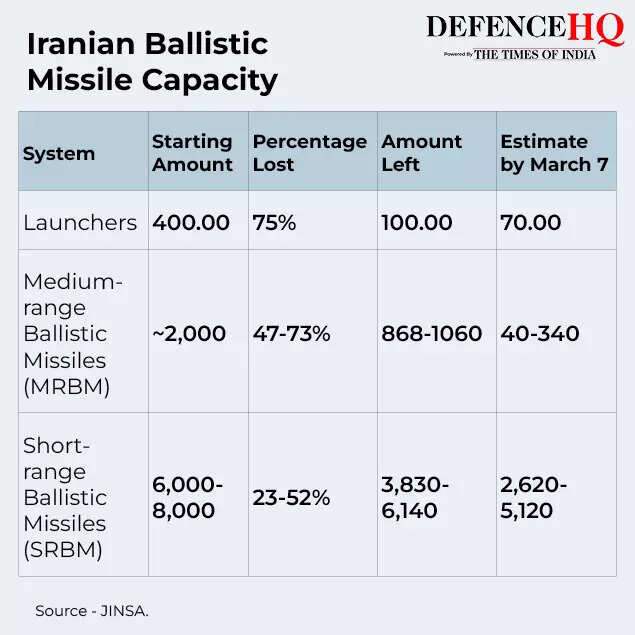
Indeed, some American analysts speculate that Tehran may begin to ration its missiles – firing fewer volleys to make its arsenal last. The war’s duration will hinge on such calculations: if Iran conserves missiles and cheap drones, it can prolong the conflict; if it keeps launching full salvos, it risks running out. As one Iran specialist cited by The Guardian said, if Iran ever runs out of missiles it might simply “have to sue for peace” and try to rebuild.So far, a tacit balance holds. For weeks US officials have insisted their own stockpiles will not run short before Iran’s do. But they are closely monitoring allies’ inventories too. Gulf countries report some shortages: in the previous clash US-supplied THAAD launchers had to use ~25% of their interceptors just defending Israel, raising concerns about resupply. Even Britain and others have been asked to send additional munitions. In Congress, lawmakers are debating whether to approve billions more for munitions aid to Ukraine and the Middle East. Every party now wonders: which side can afford to keep firing for longer?
Gulf States on the front line
Much of the current action has unfolded far from Iran’s borders – right in the Persian Gulf littoral. Countries like the UAE, Saudi Arabia, Qatar and Bahrain are hosting American bases and therefore have become targets. On multiple nights Sirens wailed across Riyadh, Abu Dhabi and Doha as Iranian missiles arced overhead. In the UAE the authorities reported 60 fires in Dubai landmarks after Iranian drones were intercepted overhead.Ad-Dhafra air base (Abu Dhabi) briefly went on alert, and Riyadh activated its missile batteries as projectiles approached. Qatar’s government said on one occasion that 98 out of 101 incoming ballistic missiles aimed at its territory were shot down. Yet Qatar’s capital endured an attack on its LNG facilities that temporarily shut down exports.
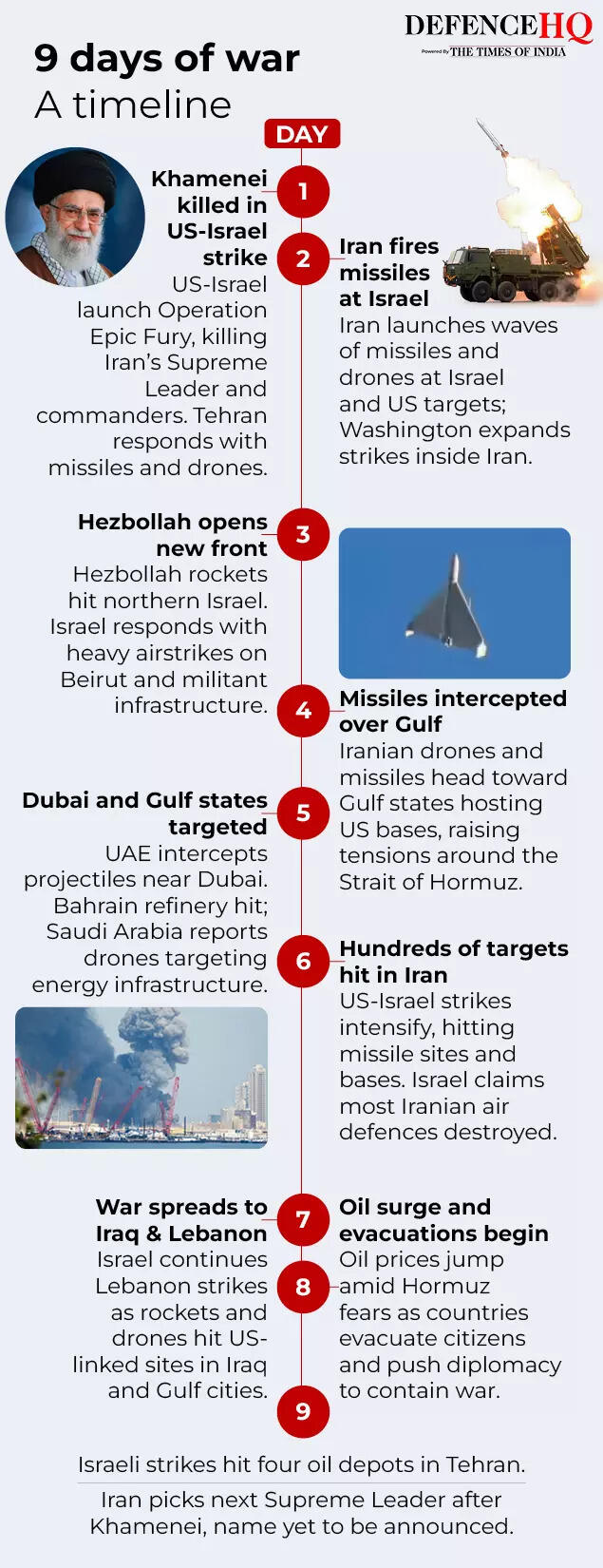
Beyond the missiles, the threat to shipping is notable. Iran has warned it could close the Strait of Hormuz – a key oil chokepoint. Tankers are already diverting or waiting outside the Gulf to avoid attacks. The risk of hitting a civilian vessel is serious: on March 2 an Iranian missile struck a Maltese-flagged tanker in international waters near Iran, puncturing its hull. While no crew was hurt, shipping insurance spiked. Oil markets are jittery about even minor disruptions in the Gulf.Civilians have been inconvenienced. Airlines temporarily halted flights from Dubai and Doha during the biggest salvos. Tourists and residents spent nights in hotels or bunkers. Markets have been volatile on the slightest hint of escalation.
What’s next?
A week into the war, one lesson is already clear: Iran is not an easy target. The opening strikes killed commanders, destroyed bases and even eliminated the country’s supreme leader, yet the system they built remains intact and fighting back. Missiles are still being launched, drones are still buzzing across the Gulf, and American and Israeli interceptors are still racing skyward every night.Washington may still believe its arsenal, alliances and technology will ultimately prevail. Tehran is betting that patience, geography and sheer volume of cheap weapons can level that advantage.For now, neither side is close to backing down. And with every intercepted missile and every drone that slips through, the same question grows louder: not who can strike harder, but who can endure longer.