
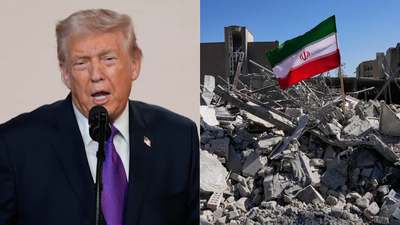
Israel launched a new wave of strikes across Iran early Wednesday, while the US military said it has hit nearly 2,000 targets inside the Islamic republic since joining the campaign.The latest Israeli assault came after Iran fired three separate missile barrages toward Israel overnight. Most were intercepted, though a woman in Tel Aviv suffered mild injuries. Israel’s military described its response as a “broad wave of strikes” targeting missile infrastructure and military facilities.
The conflict began Saturday when Israel and the United States launched a joint operation dubbed “Epic Fury.” The first strikes hit sites near the offices of Iran’s Supreme Leader, Ayatollah Ali Khamenei, in Tehran. In the days since, Washington has surged military power into the region, deploying aircraft carriers, fighter jets and guided-missile destroyers — including two of its largest warships, the USS Gerald R. Ford and the USS Abraham Lincoln.Admiral Brad Cooper, commander of United States Central Command, said American forces are targeting ballistic missiles and “all the things that can shoot at us.”“These forces bring a massive amount of firepower, representing the largest buildup by the US in the Middle East in a generation,” Cooper said, describing the opening barrage as exceeding the scale of the 2003 “shock and awe” campaign against Saddam Hussein’s Iraq. “We’ve just begun,” he added.Also read | Israel strikes building where Iranian clerics were choosing Khamenei’s successor
Strikes on nuclear and military targets
Israel said it struck Iranian missile launchers and a nuclear research site Tuesday, with explosions reported across Tehran. Residents described hearing repeated blasts throughout the night. Admiral Cooper said American forces have “severely degraded Iran’s air defenses” and destroyed hundreds of ballistic missiles, launchers and drones.Information from inside Iran has been limited because of communication disruptions, round-the-clock airstrikes and tight media restrictions.
Iran targets US embassies and Gulf states
Iran retaliated across the region, targeting US diplomatic facilities and energy infrastructure.Two drones struck the US Embassy in Riyadh, causing a limited fire, according to Saudi authorities. An Iranian drone also hit a parking lot outside the US consulate in Dubai, igniting a small blaze, Secretary of State Marco Rubio said. All personnel were accounted for.US embassies in Saudi Arabia, Kuwait and Lebanon were closed to the public, and Washington ordered the evacuation of non-emergency personnel and families from several Gulf states. Americans were urged to leave more than a dozen Middle Eastern countries, though many remain stranded because of airspace closures.Follow live updates: Consulate in Dubai, CIA station in Saudi Arabia: Iran its US assets across Middle East
Iran’s succession talks
Iran’s powerful Assembly of Experts has selected Mojtaba Khamenei, the son of the slain Supreme Leader, Ayatollah Ali Khamenei, as his successor under pressure from the Islamic Revolutionary Guard Corps, according to Iran International, which cited informed sources.However, The New York Times reported a different account, saying senior clerics tasked with choosing the next supreme leader were still deliberating. While Mojtaba had emerged as the clear front-runner, no formal announcement had been made.Israel struck a building in the Iranian city of Qom where senior clerics were reported to be gathered to appoint a successor, an Israeli security official said, as quoted by ANI. The site was linked to the Assembly of Experts, the powerful body tasked with selecting the supreme leader. The extent of damage and possible casualties was not immediately clear.
Trump weighs war aims and Iran’s future
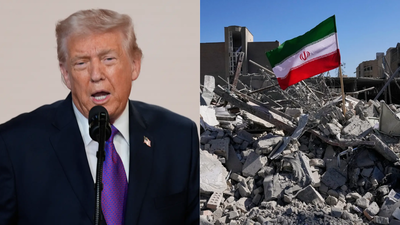
Four days into what President Donald Trump suggested could last weeks or longer, the administration has outlined multiple objectives: dismantling Iran’s missile capabilities, crippling its navy, preventing it from acquiring nuclear weapons and halting support for allied armed groups.While early strikes reportedly killed Khamenei, senior officials later insisted regime change is not the official goal. Speaking from the Oval Office, Trump said the administration had not seriously considered Reza Pahlavi, the exiled son of Iran’s former shah, as a successor.“As far as possible leaders inside Iran, the people we had in mind are dead,” Trump said, while cautioning that replacing the regime could bring unintended consequences. He suggested that “someone from within” Iran’s existing power structure might ultimately take control.
Strait of Hormuz
With global energy prices rising, Trump said the US Navy stands ready to escort oil tankers through the Strait of Hormuz, the strategic gateway to the Gulf that Iran has threatened to close.As fighting spreads across Iran, Israel and parts of the Gulf, the spiraling conflict has left the region bracing for a prolonged and unpredictable war — and raised urgent questions about how, and when, it might end.
Rising toll
At least 787 people have been killed in Iran since the conflict began, according to the Iranian Red Crescent, though the figure could not be independently confirmed. Nearly 800 deaths have been reported overall inside Iran.Iran has fired dozens of ballistic missiles toward Israel, killing 11 people since hostilities erupted.The fighting has spread beyond the two countries. In Lebanon, Israeli retaliatory strikes against Hezbollah militants killed at least 52 people, while the United Nations said more than 30,000 have been displaced.Three people were killed in the United Arab Emirates, and one each in Kuwait and Bahrain. The US military confirmed six American service members were killed, including four US Army Reserve soldiers who died in a drone strike Sunday at a command center in Kuwait.