
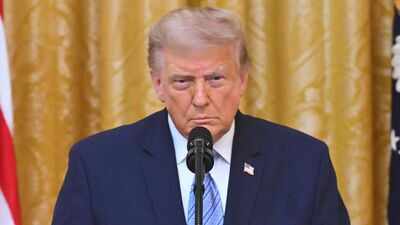
US President Donald Trump on Wednesday announced a phased tariff plan for imported generic medicines, saying they would continue to enter the United States duty-free for the next two years before attracting tariffs of up to 200%.In a post on Truth Social, Trump said generic medicines imported into the US would continue to attract zero tariffs from August 1, 2026, for two years, after which the duty would rise to 100% for one year and 200% thereafter.“Effective August 1st, 2026, all Generic Drugs being brought into the United States will continue to have a tariff of zero percent for two years, after which the tariff will be raised to 100 per cent for one year, and 200 per cent thereafter,” Trump said.“This is done in order to RESHORE Generic Pharmaceutical Production into America, with a penalty to those Companies that decide not to build Plant and Equipment within the stated period of time given to them,” he added.Trump said the policy was designed to strengthen domestic manufacturing and protect American consumers. “The Policy on Patented, Branded, or Innovative Drugs, which has been so successful, will remain as is,” he noted.
What it means for India
The announcement is significant for India, often referred to as the “pharmacy of the world” because of its large-scale production of affordable generic medicines.According to a Global Trade Research Initiative (GTRI) report, India exported $9.7 billion worth of pharmaceuticals to the US in 2025, accounting for 38% of its total pharmaceutical exports of $25.8 billion.Indian-made generic medicines are widely used in the US to treat conditions including diabetes, hypertension, cancer, infectious diseases and mental health disorders, according to news agency PTI.The US Food and Drug Administration estimates that generic medicines account for more than 90% of all prescriptions dispensed in the country.The announcement is part of Trump’s broader push to revive domestic pharmaceutical manufacturing and follows earlier tariff measures and pricing policies aimed at reducing dependence on imported medicines.It also follows earlier agreements under which branded drug manufacturers secured exemptions from tariffs by committing to lower prices or expand manufacturing in the United States.At the same time, the Trump administration is preparing another round of tariffs targeting dozens of countries, including India, as the temporary 10% blanket tariff on imports is set to expire this week.According to the Financial Times, Washington is considering fresh tariffs of 10% to 12.5% on imports from around 60 countries, citing concerns over alleged forced labour practices and unfair trade policies.Earlier on Tuesday, US Trade Representative Jamieson Greer also said that the new tariff measures could be announced soon. “The US has laws to prohibit trading goods with forced labour. Other countries, most don’t have a law; those that do don’t really enforce it,” Greer told CNBC.“We expect to see some action soon,” he added.The White House is also pursuing separate investigations into excess manufacturing capacity that could pave the way for steeper duties on imports from countries including India, China, Japan, South Korea, Vietnam, Mexico and the European Union.The latest tariff announcement comes even as Washington and New Delhi have repeatedly indicated that negotiations for a bilateral trade agreement are progressing, raising fresh uncertainty over trade ties between the two countries.