
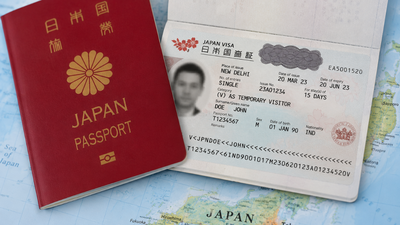
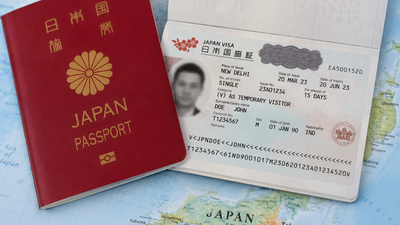
A 72-year-old South Korean man who entered Japan on a 15-day visa in 1993 is now facing arrest after allegedly remaining in the country for about 33 years. The man, identified in Japanese reports as Mun Jong-gi, entered Japan in September 1993 using his younger brother’s passport, according to police. He reportedly came to the country hoping to find better-paid work than he could get in South Korea and subsequently supported himself through day labour and casual jobs. His long stay eventually came to police attention after authorities received information about a suspected illegal resident in June 2026. He was arrested by Shizuoka Prefectural Police on August 26 on suspicion of violating Japan’s immigration laws.
South Korean man entered Japan in 1993 on a 15-day stay
Police say the man arrived in Japan in September 1993 and was granted permission to remain for only 15 days. Investigators allege that he entered using his younger brother’s passport. Rather than returning to South Korea when his authorised stay ended, he remained in Japan and continued living and working there. His reported motivation was largely economic, with police saying he had hoped to earn more money in Japan than he could in his home country. Over the following decades, he is believed to have established a life in Japan without obtaining legal long-term residency status.
His 33-year stay came to light after a police tip
The man’s unusually long stay was not discovered through a routine check dating back to the beginning of his residence, according to the available reports. Instead, police received information in June 2026 concerning a suspected illegal resident. That information prompted an investigation by Shizuoka Prefectural Police, which eventually led officers to the man in Yaizu, Shizuoka Prefecture. Police arrested him on August 26, 2026, after investigating his immigration status. He reportedly admitted to the allegations during questioning. The circumstances of how he managed to remain in Japan for so many years without being detected are still being investigated, and available reports do not establish that authorities simply failed to notice him continuously for all 33 years.
Why police refer to roughly 26 years of illegal residence
Although the man appears to have remained in Japan for about 33 years, the legal timeline is more complicated. Japan’s rules regarding overstaying changed in February 2000, when illegal residence became subject to criminal punishment under the revised immigration law. Police therefore allege that the offence covered by the current arrest dates from February 2000 rather than from the end of his original 15-day permission in 1993. This means the man is believed to have lived in Japan continuously for around 33 years, while the period covered by the alleged criminal offence is roughly 26 years. The distinction is important because describing the case simply as a “33-year criminal overstay” would not accurately reflect the legal circumstances reported by Japanese authorities.
Man reportedly survived through casual work
During his years in Japan, the man is reported to have supported himself through day jobs and other casual employment. Police say he had originally travelled to Japan because he expected to find better-paid work there. Details about his employers and the precise nature of his work over the decades have not been fully disclosed in the available reports. It is also unclear how he managed other aspects of everyday life, including accommodation and official administrative procedures, during such a prolonged period without valid residence status. Those unanswered questions are part of what makes the case unusual, but they should not be filled with speculation.
Japan had far more overstayers when he arrived
The man’s arrival coincided with a period when Japan had a much larger population of people who had remained after their authorised stays expired. Japanese Justice Ministry figures cited in reporting show that Japan had about 298,646 visa overstayers in 1993, the year he entered the country. By January 2026, the number had fallen to 68,488. The sharp decline reflects decades of changes in immigration enforcement and Japan’s immigration system. His case therefore dates back to a very different period in Japan’s immigration landscape, when the number of overstayers was several times higher than it is today.
Police investigation is continuing
The man remains at the centre of an immigration investigation following his August 26 arrest. While he has reportedly admitted to the allegation, an arrest does not itself constitute a final court finding of guilt. Japanese authorities will determine the next steps under the country’s immigration and criminal procedures. As of the latest available reporting, there had been no final court ruling or reported deportation decision.