
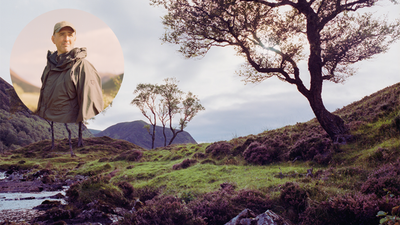
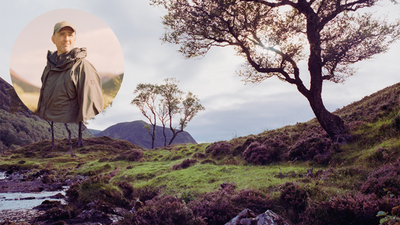
An English businessman who bought a traditional 23,000-acre Scottish hunting estate in 2003 has spent more than two decades changing its heavily grazed landscape, planting one million native trees and successfully bringing red squirrels back to the glens. Paul Lister bought the Alladale estate in Sutherland, about an hour north of Inverness, when it was mainly used for traditional activities such as deer stalking and salmon fishing. Over the past 23 years, the property has been transformed into the Alladale Wilderness Reserve, an eco-tourism retreat and a major ecological restoration project in the Scottish Highlands.When Lister bought the estate, centuries of heavy grazing by large numbers of red deer and sheep had removed much of its native woodland. Only about one per cent of Scotland’s ancient Caledonian Forest remains intact. To help the land recover naturally, reserve managers fenced off large areas to keep grazing animals out and began a major tree-planting programme. Working with local environmental groups and forestry teams, the estate has planted one million native trees, including Scots pine, birch, rowan, alder and willow. As the trees grew, the new woodland began providing the food and shelter needed by wildlife that had disappeared from the glens.
Red squirrels return to the Highlands
As native pine and broadleaf trees became established, Alladale worked with conservation charity Trees for Life to bring red squirrels back to the area. The squirrels were moved from healthy populations elsewhere in the Highlands and released into the growing woodland. Monitoring teams have since confirmed that they are breeding and expanding into new areas. The reserve has also worked on restoring peatlands. Damaged bogs are being repaired to store carbon and hold more water across the catchment. Alladale also takes part in a national breeding programme for the critically endangered Scottish wildcat. It works with the Royal Zoological Society of Scotland to maintain captive breeding animals that could eventually be released into the wild. The conservation work is mainly funded through high-end eco-tourism. The reserve has three catered lodges, including the Victorian-era Main Lodge, Eagle’s Crag and Ghillie’s Rest.Guests can take part in guided nature walks, 4×4 wildlife safaris and educational tours about the estate’s conservation work and environmental research. “If you fly from London to Istanbul, you will fly over nothing but a manifested landscape where we just literally dug, cut and plowed,” Lister said in an interview with Rewilding Magazine. “And you think to yourself, what are the Scottish Highlands being used for? Over 100 years they’ve been more used for sporting pursuits, to serve a Victorian ideal. And also sheep farming. Neither of which, really, increases or improves the biodiversity of the land, or gives much in the way of livelihood to the communities in the area.”Lister said moving away from traditional field sports could also create new economic opportunities. “Conservation restoration, rewilding, gives opportunity to tourism,” Lister told Rewilding Magazine. “That field sport pursuit, in the UK, is vanishing. I’d rather be part of the new growth industry than something that is on its last legs. Our landscape now is very different from what it was 18 years ago when I bought Alladale. You can see there’s clear evidence of lots of restorative work, and more vegetation and less deer running around.”
Debate over wolves and bears
While the tree planting and red squirrel projects have received praise, Lister’s wider plans for Alladale have caused debate among local residents, farmers and landowners. Inspired by the recovery of Yellowstone National Park after the return of top predators, Lister initially proposed placing a high fence around the 23,000-acre estate and bringing back Eurasian wolves and brown bears. The idea was to study whether apex predators could naturally reduce deer numbers and encourage vegetation growth through changes in the food chain. The plan faced strong opposition from neighbouring landowners, farmers worried about livestock attacks and outdoor access groups concerned about Scotland’s legal right to roam. As a result, the wolf enclosure plans were put on hold while the reserve focused on restoring habitats, breeding Scottish wildcats and educating visitors.“A common misconception that I encounter is that rewilding means without humans,” said Pieter-Paul Groenhuijsen, General Manager of Alladale Wilderness Reserve, in a report published by Leisure Lab. “It’s really the opposite. Rewilding is about humans. It starts with us. It’s a change of mindset. It’s about coexistence and reassessing our place among nature, as guardians, as safekeepers, and our imbalance with nature.” Groenhuijsen said restoration on this scale needs to be viewed over generations rather than short business periods. “We’d like to see results, but this is a legacy project,” Groenhuijsen told Leisure Lab. “It’s for future generations. We don’t see a mature forest here now. We planted almost a million trees so far. We want to see them when they’re mature, but it’s not for us.”According to information published by the Alladale Wilderness Reserve, the estate also plans to expand its education programmes. Local school groups are welcomed each year to learn about Highland wildlife, peatlands and how forests develop. The project has turned Alladale from a traditional sporting estate into a long-term experiment in restoring native woodland and wildlife to Scotland’s Highlands.