
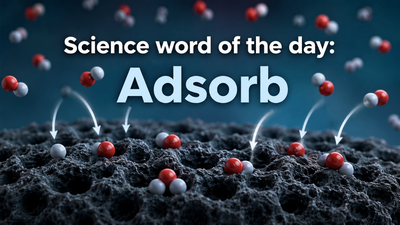
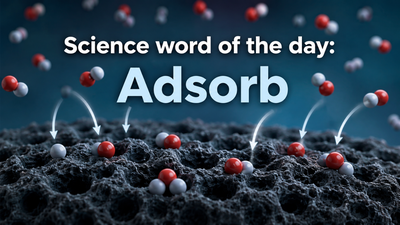
Every day, countless substances cling to surfaces around us without becoming part of the material itself. This fascinating process is known as adsorption, and the verb that describes it is adsorb. Although it is often confused with absorption, the two processes are fundamentally different. While absorption involves a substance being taken into the interior of another material, adsorption occurs only on the surface. From purifying drinking water and filtering polluted air to making gas masks, medicines and industrial catalysts more effective, adsorption plays a crucial role in science and technology. Understanding adsorption opens the door to many remarkable real-world applications.
What is the definition of the word ” adsorb “
Adsorb (verb): To attract and hold atoms, ions or molecules on the surface of a material rather than allowing them to penetrate inside it. This surface-based process is known as adsorption.Example: Activated charcoal adsorbs toxins onto its surface, helping remove harmful substances from water and the digestive system.
How to pronounce the word
Adsorb is pronounced ad-SORB.IPA: /ədˈzɔːrb/ (British) • /ədˈzɔːrb/ (American)The emphasis falls on the second syllable (“SORB”). A simple way to remember it is: “uhd-ZORB.” Be careful not to confuse it with absorb, although the words sound similar, adsorb refers to molecules sticking to a surface, whereas absorb means taking them inside a material.
Who introduced the word adsorb
The word adsorb was introduced in the late 19th century by German physicist Heinrich Kayser in 1881. He coined the term by combining the Latin prefix ad- (meaning “to” or “towards”) with sorbere (meaning “to suck in”). The new word distinguished adsorption (surface attachment) from absorption, where substances are taken into the entire volume of another material.
Where is adsorption used
Scientists commonly use adsorption in chemistry, environmental science, materials science and medicine.Examples:
- Carbon filters adsorb impurities from drinking water.
Silica gel adsorbs moisture, keeping packaged products dry.- Catalysts adsorb reactant molecules onto their surfaces, allowing chemical reactions to occur more efficiently.
Practical application of adsorption
Adsorption plays a vital role in everyday life and modern technology. Activated carbon filters adsorb pollutants from air and water, gas masks adsorb toxic chemicals, silica gel packets adsorb humidity inside packaging, and many industrial purification systems rely on adsorption to separate chemicals. The process is also used in chromatography for laboratory analysis, gold extraction in mining, and advanced medical treatments such as haemoperfusion, where specialised adsorbent materials remove toxins directly from the bloodstream.