
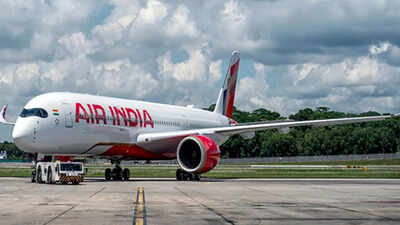
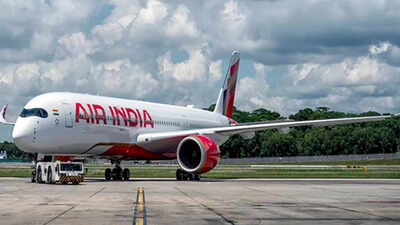
MUMBAI: The preliminary investigation into the August 4 Air India Phuket-Delhi accident has found that the aircraft’s three hydraulic systems, green, blue and yellow, lost pressure within seconds while the A320 was cruising at 36,000 feet, triggering an autopilot disengagement, stall warning and an altitude upset. Alongside the technical findings, the Aircraft Accident Investigation Bureau (AAIB) has recommended that the DGCA take action against the Pilot-in-Command, who tested non-negative for psychoactive substance use following the flight.“The confirmation of use of psycho-active substance is a serious concern, and AAIB recommends appropriate actions by DGCA on priority,” the report said. The interim safety recommendation asked the regulator to “take appropriate actions as deemed fit to prevent abuse of psycho-active substance.” Post-flight, both pilots underwent a breath analyser test, which came back satisfactory. But the subsequent psychoactive substance detection test returned a non-negative result for the PIC, a finding confirmed by a follow-up laboratory blood test. The co-pilot tested negative on both counts.The hydraulic failure itself, the more immediate cause of the injuries onboard, unfolded within a five-second window. VT-EXO, an eight-year-old A320neo carrying 145 people, had just been cleared to climb from FL340 to FL360 after entering Kolkata Flight Information Region. At 04:02:43 UTC, the flight control system “detected loss of green hydraulic system.” Four seconds later, the flight control (F/CTL) system detected loss of Blue and Yellow hydraulic systems. With all three systems compromised simultaneously, the autopilot disengaged, a continuous repetitive chime sounded, and the stall warning triggered for two seconds. The aircraft “encountered altitude upset,” gaining 372 feet before falling 292 feet from its assigned level, the report said.The co-pilot, who was Pilot Flying, responded first to the upset before the captain took over the controls. Recovery was swift. “At around 04:02:52 UTC, the Blue hydraulic system was recovered, and a few seconds later, the Yellow hydraulic and the Green hydraulic systems were also recovered,” the report said. It restored normal flight control surfaces within seconds of the failure.But with seatbelt signs off during cruise, the sudden upset threw passengers and crew around the cabin. Twenty-four people, including four cabin crew, needed medical attention on landing; four were hospitalised with serious injuries. The cabin damage was extensive: cracked ceiling panels across multiple rows, dislodged overhead bins, a broken emergency exit handle, a lavatory commode “uprooted from its original location,” and a bent crew seat. Despite the injuries, the flight crew chose not to divert, opting instead to continue to Delhi while requesting medical priority from ATC. The aircraft landed safely on runway 11L at 05:30 UTC, around ninety minutes after the failure.Investigators have already flagged one detail for closer scrutiny: the aircraft was dispatched from Phuket under an active Minimum Equipment List item for the Power Transfer Unit, invoked a week earlier on July 28. The PTU serves as an auxiliary hydraulic source shared between the green and yellow systems, and its status at the time of the failure is expected to be a focus of the ongoing probe. Flight recorder data has been downloaded and is under analysis, and a technical team from Airbus and France’s BEA inspected the aircraft in Delhi in mid-August, after which hydraulic components and fluid samples were removed for further testing.“The Airbus A320 aircraft has three hydraulic systems. They are identified as the green, blue and yellow systems. Together they supply hydraulic power at 3000 psi (206 bar) to the main power users. Services which are not used during flight are isolated from the main supply. Hydraulic fluid cannot be transferred from one system to another. Each system has its own hydraulic reservoir,” the report said, explaining the hydraulics on the aircraft.
Share your thoughts in the comments
Be respectful · TOI community guidelines
On the green system, the normal source of pressure is the Engine Driven Pump (EDP) located on the left engine and, as an auxiliary source, the Power Transfer Unit (PTU). On the blue system, the normal source of pressure is the electrical pump (E-Pump) and, as an auxiliary source, the Ram Air Turbine (RAT). On the yellow system, the normal source of pressure is the EDP located on the right engine and as auxiliary sources the PTU and the electric pump (E-Pump). “Each hydraulic system pressurisation information is available for the aircraft systems through one pressure transmitter (numerical value of the pressure), two pressure switches (discrete value indicating if there is a loss of pressure). Relevant Hydraulic components were removed from the aircraft for further analysis,” the report said. The PTU is an auxiliary pressure supply for either the green or yellow systems without transfer of fluid between the two systems. It operates automatically if there is a delta pressure of 500 psi between the green/yellow or yellow/green hydraulic systems, it addedThe said report is preliminary, and a detailed technical investigation is still underway.