
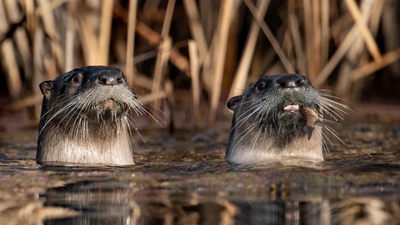
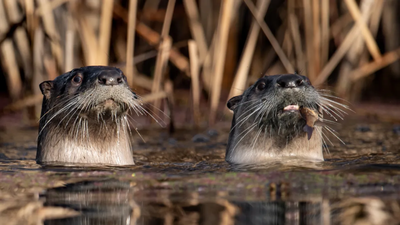
Wildlife researchers checking the shores of Abbotts Lagoon on California’s Point Reyes peninsula found 73 dead brown pelicans killed by river otters over 19 visits. Recent observations show that the large seabirds may finally be learning to fly away when otters come near.The findings, published in a study in the IUCN Otter Specialist Group Bulletin and reported by Discover Magazine, show a rare hunting relationship between two animal groups that are recovering in numbers in Northern California.Researchers Terence Carroll and Megan Isadore, co-founders of the River Otter Ecology Project, led the study. They first saw an attack at Abbotts Lagoon in October 2021, watching an otter drag a pelican with a six-foot wingspan underwater to drown it. Visitors, photos, and videos had shown similar attacks since late 2018, but no formal study had measured how often they happened.
Regular counts show high pelican deaths
To measure the hunting, Carroll and Isadore walked the shoreline every 7 to 10 days from June to November 2023. On each trip, they mapped where they found dead pelicans and marked their bones so no bird was counted twice.The team found fresh dead birds on 17 out of their 19 visits, counting as many as 11 dead pelicans in one trip. The researchers noted that the true number of deaths was likely higher, as scavengers often carry away bodies and parts of the shore are hard to reach.According to the study, river otters leave a clear mark on the birds they hunt. Otters usually bite off the pelicans’ heads and necks to get to the meat on the chest. This feeding style helped Carroll and Isadore confirm otter kills even when they did not see the attack happen.Data from the bird-watching website eBird showed that dead bird numbers went up during weeks when larger groups of pelicans gathered at Abbotts Lagoon, likely leaving lone birds exposed along the edges of the flock.
High energy needs lead to surprising food choice
While river otters eat fish and smaller water birds all year, hunting a large bird that weighs 3 to 4 kilograms takes a lot of work.The researchers noted that an earlier report on similar attacks at Rodeo Lagoon thought bad water quality had reduced fish numbers, forcing otters to hunt pelicans instead. However, Carroll and Isadore found no water quality problems at Abbotts Lagoon.Instead, the study suggests this hunting is a natural extension of how otters usually find food. Swimming in cold water makes otters burn energy and lose body heat quickly, making big, slow-moving birds sitting on the water an easy meal. A pelican gives the otter plenty of food that it can pull onto dry land to eat.Both species are conservation success stories in the area. Brown pelicans were taken off the US federal endangered species list in 2009, while river otters have been returning to their old habitats across Northern California.
Pelicans start showing signs of escape
Early survey results from 2023 showed that pelicans made no effort to stay away from dangerous spots. Groups kept resting in areas where fresh dead birds lay along the shore.However, visits in late summer 2024 showed a possible change in how the birds react to the swimming predators. While checking a spot where they found about 20 dead birds in 2023, Carroll and Isadore found only three.During these later trips, the researchers watched resting pelicans fly away as soon as an otter swam towards them. Another watcher recorded the exact same escape behaviour at Rodeo Lagoon in August 2024.
Field observations reveal ecological impact
Beyond the direct mortality count, the study published in the IUCN Otter Specialist Group Bulletin details how otter attacks ripple through the local coastal food chain.When otters kill brown pelicans, they eat only specific body parts, mainly the breast muscle, and leave behind substantial portions of the heavy bird carcasses on the banks. Researchers noted that these leftovers act as a new food supply for local land-based scavengers.Field data recorded coyotes repeatedly visiting the lagoon banks to feed on the remains left behind by otters. In several instances, cameras captured coyotes actively taking pelican carcasses straight from otters.This interaction shows that river otters are moving energy and nutrients from marine and lagoon waters onto dry land, creating a fresh nutrient link between aquatic and terrestrial wildlife at Point Reyes National Seashore.Survey records also show that these attacks happen during specific times of the year. Pelican deaths peak between late summer and autumn, matching the seasonal migration pattern when brown pelicans travel north along the Pacific coast to gather in Northern California estuaries.Despite the high death toll of 73 birds recorded in 2023, wildlife surveys confirm that the overall population of brown pelicans at Point Reyes remains stable.The attacks do not threaten the species as a whole, but they represent a rare, documented case of two recovering native species adapting to each other in shared waters.