
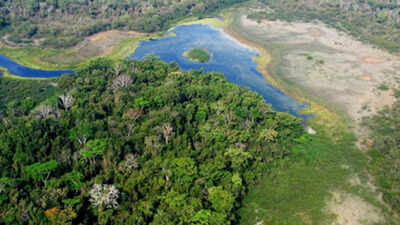
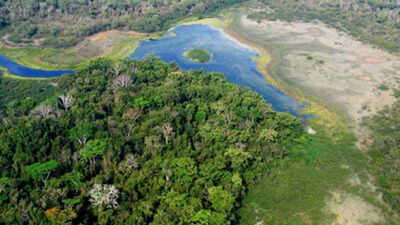
Logging is one of the biggest reasons forests are disappearing. When trees are cut faster than they can grow back, wildlife loses its habitat, and local communities are impacted. But in northern Guatemala, one protected forest is showing that logging does not always have to lead to deforestation.Inside Guatemala’s Maya Biosphere Reserve, local communities are legally harvesting a small number of trees under strict rules while protecting the rest of the forest, according to a report by The Guradian. Instead of clearing large areas, they cut only selected mature trees, allow the forest to recover naturally and return to the same area only after several years.
CJP Jantar Mantar Protest Updates
The system has helped some parts of the reserve maintain almost no deforestation while also creating jobs and income for local people.The experience of these community-managed forests shows that conservation can work when the people living in and around forests have a direct role in protecting them and earning a livelihood from them.
A protected forest
The Maya Biosphere Reserve covers about 2.1 million hectares in Guatemala’s northern PetEn province. The Guatemalan government created the reserve in 1990, and it later received UNESCO recognition. It forms the largest natural forest in Central America.According to Jose Roman Carrera, forestry director at the Rainforest Alliance, the reserve was designed with different purposes for different areas.About 23% of the reserve serves as a buffer zone to protect the forest from encroachment. Around 39% forms the core conservation area, where national parks and protected areas are located. The remaining 38% is a multiple-use zone where communities are allowed to earn a living from the forest, provided they follow sustainable management practices.This balance between conservation and responsible use has become one of the reserve’s defining features.
Community concessions
The multiple-use zone contains 12 community forestry concessions. These are long-term agreements that allow local communities to manage sections of the forest under strict conditions.The first concession was established in 1997 after Guatemala’s long civil war ended. Together, the concessions cover around 400,000 hectares.According to Guatemala’s National Council of Protected Areas (Conap), while the reserve as a whole has lost nearly 13% of its natural forest cover over the past 24 years, the community concessions have maintained almost zero deforestation. Because they remain surrounded by areas facing greater pressure, officials describe them as “green islands”.
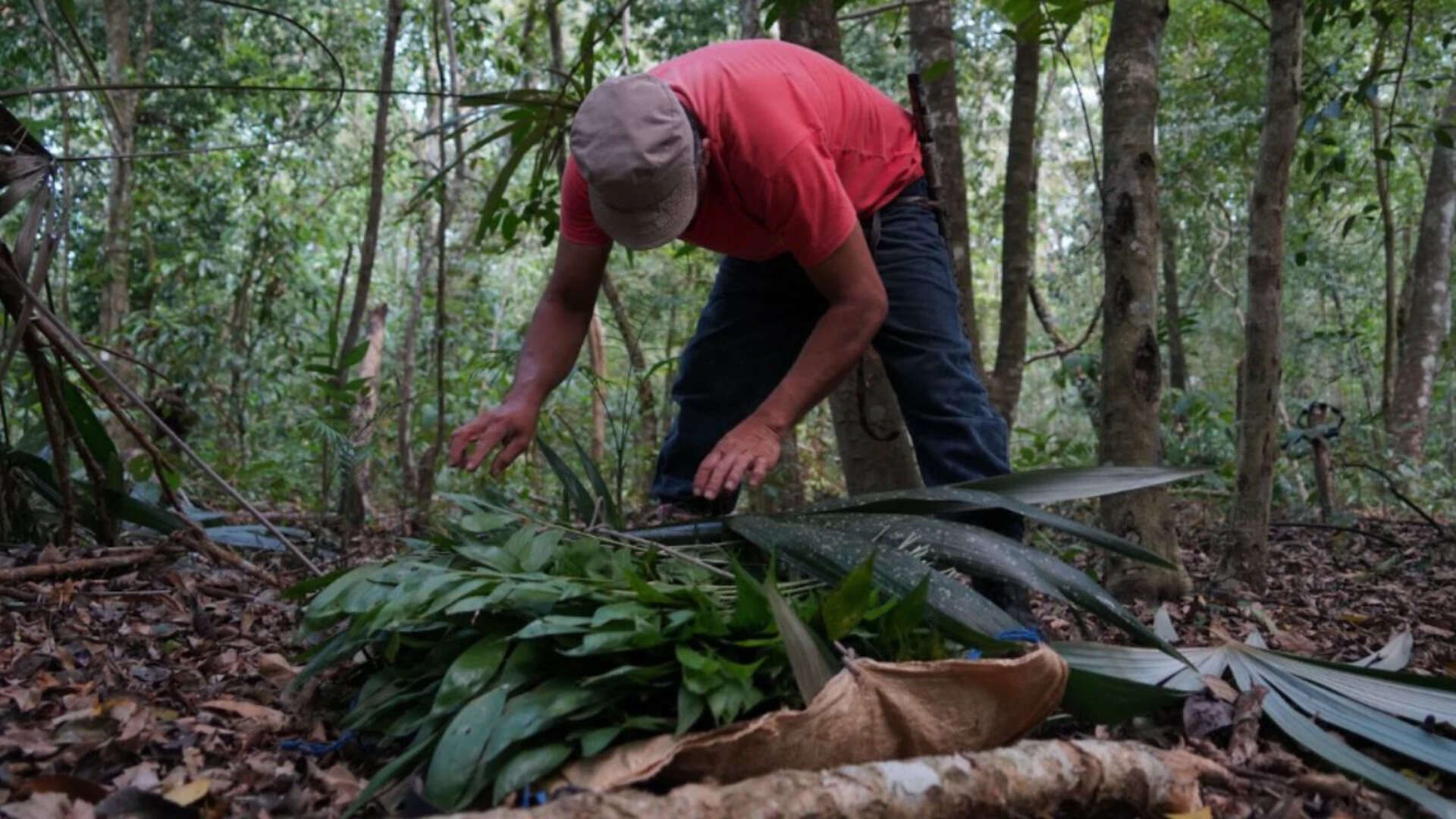
Each year, workers from the Carmelita cooperative harvest only two trees from every 1,000 hectares
Logging follows planning
At first sight, the logging operation looks like any commercial timber site. Heavy machinery pulls giant mahogany trunks through the forest before they are transported to sawmills.However, what happens behind the scenes is very different. Each year, workers from the Carmelita cooperative harvest only two trees from every 1,000 hectares selected for that year’s rotation inside their 43,000-hectare concession.Every tree is identified, mapped and recorded before it can be cut. Forestry experts decide which trees are suitable based on their size, age and the number of younger trees growing nearby.Forestry engineer Hedy Godinez Pulido explained that young trees determine how many older trees can safely be removed. “The young trees define how many old trees you can cut,” he said.This approach helps ensure enough mature trees remain while giving younger trees room to grow. When a few large trees are removed, sunlight reaches the forest floor, allowing seeds to germinate naturally.
Careful cutting
The way a tree is cut also matters. Forestry technician Bayron Chub said logging in the past was carried out without planning. “Before, it was chaos,” Chub said.He explained that private companies used to choose trees randomly. If a tree appeared healthy, it was cut without much consideration for the surrounding forest. “They cut the easy way and left huge wasted stumps in the ground. There was no planning,” he said.Today, all concessions must meet Forest Stewardship Council (FSC) standards. Independent auditors inspect every tree stump after harvesting.They check whether the tree was cut correctly, whether it fell in the planned direction and whether nearby trees were protected. If mistakes are found, the community can face financial penalties.For local people, these rules reflect practices they already valued. “Our fathers taught us to live with the forest without causing damage,” Chub said.
Trees alongside crops
The restoration programme also combines farming and forestry. Young cedar and mahogany trees are planted together with maize and beans during the first two years.The crops provide food for local families while improving soil quality. Once the trees become established, farming gradually reduces and the forest continues growing.Cardona said the project has benefited the whole community. “We’re very grateful for the restoration that has taken place in our community,” he said.“There has been a lot of participation from women and youth, generating social benefits and bringing income back to their homes, which did not happen before. This has been a massive project for us.”Cardona believes one reason the nursery has been so successful is the quality of the seedlings. “The secret of the success is the nursery,” he said.The community is also planting species such as cantemo, a type of acacia that provides nesting sites for scarlet macaws, in the hope of encouraging the birds to return.
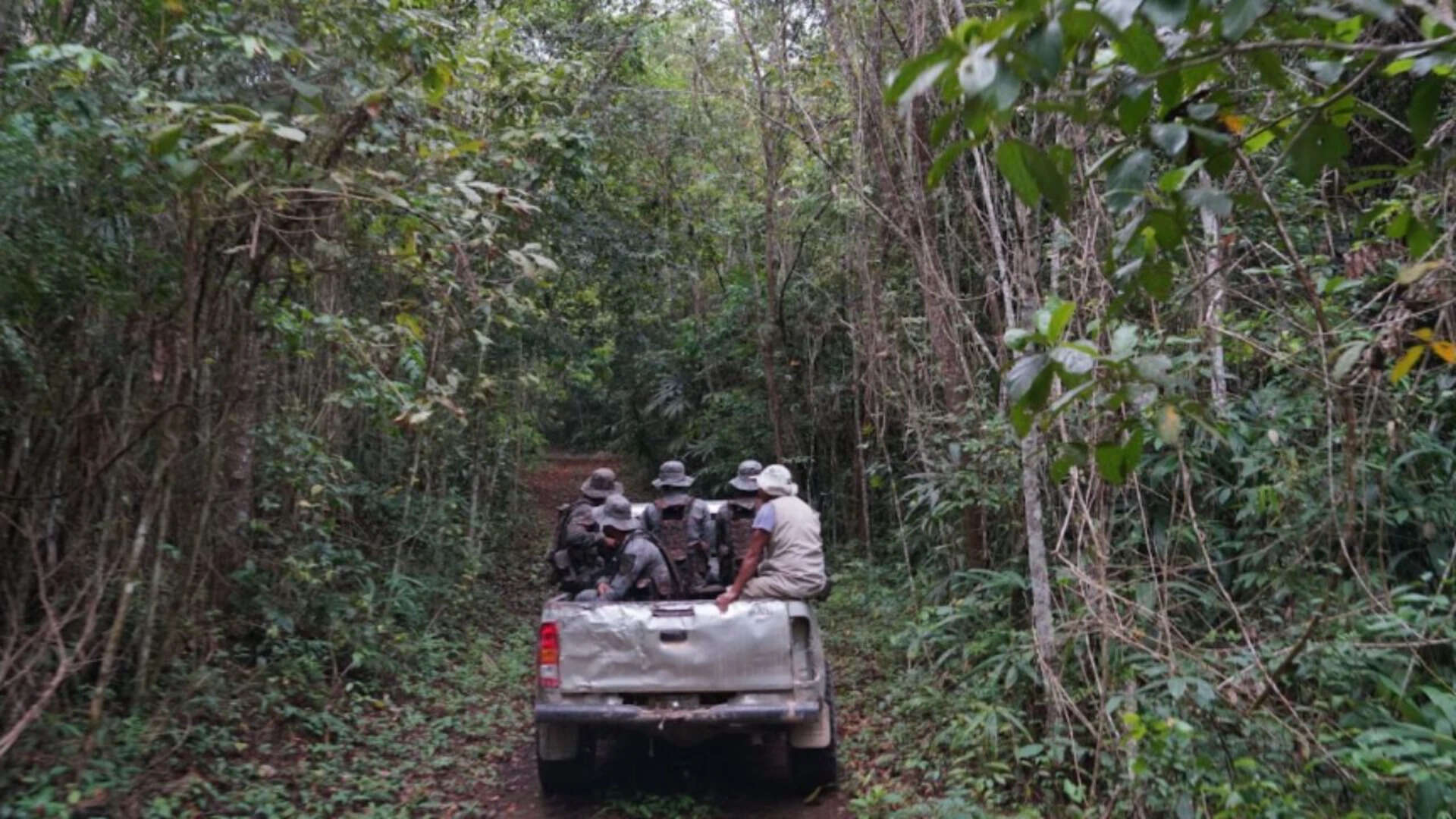
Various areas that formerly lacked governance in the MBR are now being guarded.
Income beyond timber
Another successful concession is Uaxactun, where Conap says forest cover has increased by 113 hectares.The community does not rely only on timber. Residents also harvest xate palm leaves under sustainable guidelines. These leaves are exported mainly to the United States for use in religious ceremonies.According to village vice-president Francisco Aldana, once the community took over managing sales, annual earnings from the business increased from only a few hundred dollars to about $60,000. The income supports local employment and reduces dependence on logging alone.The village is also investing in tourism. Local carpenters are building cabins for visitors interested in nearby Maya ruins, trekking routes and mountain biking.Back in Carmelita, the community has moved beyond simply selling rough timber. Instead, it now operates four sawmills and woodworking workshops where local workers produce furniture, guitar necks and prefabricated wooden house kits.Jesus Barrera, president of the cooperative, said the investment has changed employment in the community. “Workers used to come from outside, now 95% are local people because we have invested in training. That’s a big change,” he said.The income also helps fund services such as health and education that are not fully provided by the government. Reports show that household incomes in these community concessions are up to three times higher than Guatemala’s national poverty level.Carrera said the system was not popular when it was first introduced because many people wanted complete freedom over how forests were used.Over time, however, communities adapted to the rules. The Carmelita cooperative is now expected to generate around $3 million this year through controlled and sustainable timber harvesting.For Carrera, the experience offers an important lesson. “The forest is best protected by those whose livelihoods depend on it.”