
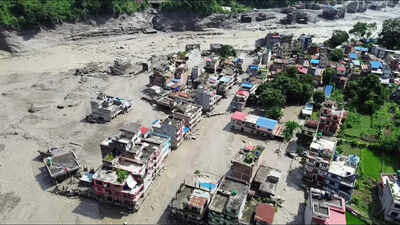
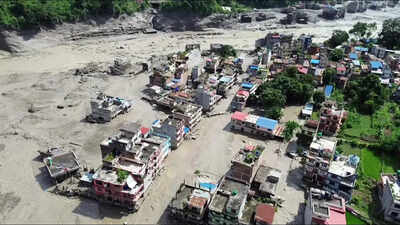
Floods battered Nepal on Wednesday after a sudden surge in the Bhote Koshi River swept through the Rasuwa district near the China border, killing over 30 people and leaving hundreds of people, including foreign nationals, reported missing.The cause of the devastating flash flood is now being investigated, with an initial assessment suggesting that an ice avalanche may have blocked the Lhende River, causing water to build up before suddenly bursting downstream.According to The Kathmandu Post, Rijan Bhakta Kayastha, a professor at Kathmandu University and climate researcher, said the preliminary assessment was based on discussions with scientists in Nepal and China. He said an ice avalanche from the Nepal side appeared to have fallen into the Lhende River and blocked its flow.“There is information that an ice avalanche from the Nepal side blocked the Lhende river,” Kayastha said, according to The Kathmandu Post. “An earthquake also occurred on the Tibetan side around the same time.”The US Geological Survey recorded a magnitude 4.4 earthquake in Tibetan territory at 8:37am, around 47 kilometres north of Gosainkunda. However, it remains unclear whether the earthquake played any role in triggering the flood.Scientists are also investigating whether a glacial lake outburst contributed to the disaster. Kayastha said it could take several days to establish whether a glacial lake had burst, noting that the region contains several large glacial lakes.A similar disaster struck the area on July 8, 2025, when a sudden flood in the Lhende River was attributed to a glacial lake outburst. Satellite imagery at the time indicated that a glacial lake had burst near the Nepal-China border.The latest flooding struck the Bhote Koshi River at around 8:30am, damaging settlements and infrastructure and sweeping away people and vehicles.Nepal Tourism Board said 384 travellers, including 291 foreign nationals and 93 Nepali nationals, had been reported missing based on preliminary information. Around 105 Indians were among those reported missing, while 37 non-resident Indians were reported missing from the Himalayan Glacier area.Rescue operations continued through Wednesday, with authorities urging residents along the Trishuli River to move to safer areas as floodwaters moved downstream.India has also offered assistance. Prime Minister Narendra Modi spoke to Nepal Prime Minister Balendra Shah and said India was ready to provide “all possible humanitarian assistance”, adding that teams from both countries were coordinating rescue and relief efforts.