
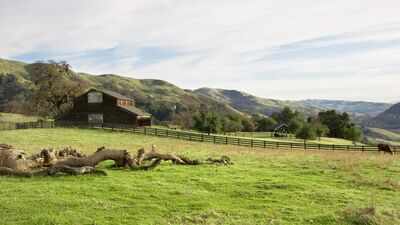
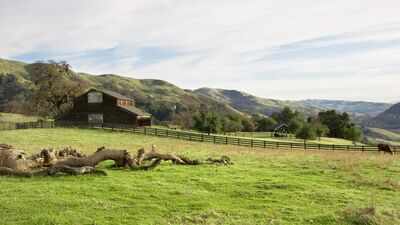
When the federal government stepped in to buy the Stewart family’s 890-acre ranch in 1974, most people assumed a century of family cattle operations had reached its end. The acquisition was part of a major initiative to build out California’s Point Reyes National Seashore, setting up an obvious conflict between public land preservation and private agricultural traditions. But the result was unexpected, according to official records from the National Park Service (NPS). Instead of vacating their generational homestead, the Stewarts negotiated a unique life estate agreement. This deal granted them the legal right to stay on the property and run their working ranch for nearly five additional decades. By the time the family officially retired in 2021, closing out roughly 150 years of continuous stewardship, they had demonstrated how agricultural heritage and modern park management can successfully coexist on public land.Deep roots along the Northern California coastLong before government planners mapped out Point Reyes as a national park, the Stewart family was busy building a life along the rugged California coastline. Their ancestors originally arrived on the peninsula during the mid-19th century, clearing pastures, establishing homestead buildings, and introducing livestock to the coastal climate. In the decades that followed, the operation became a foundation for the region’s agricultural economy. Ranching in this coastal locale demanded constant effort and a deep understanding of weather, soil, and vegetation. For generations, the family regarded the land as more than a commercial asset or a place of work: it was a living legacy that required daily care and careful stewardship.The buyout and the life estateBy the early 1970s, shifting national priorities around land preservation brought the federal government right to the family’s front gate. The National Park Service was actively securing acreage across the peninsula to safeguard its natural ecosystems and scenic views from commercial development. Many nearby landholders sold their properties and moved elsewhere, assuming that federal ownership automatically meant the end of private farming. The Stewarts took a different approach during negotiations. They understood that the agency wanted to protect the coastal environment, but they argued that working farmers could actually help maintain those open spaces.Their negotiation produced a life estate agreement, a rare legal arrangement allowing the family to live on the land and continue raising cattle while title ownership transferred to the public domain.The reality of working inside a national seashoreOperating a working cattle ranch inside a high-visibility national park came with constant responsibilities. For nearly fifty years after the agreement, the Stewarts had to adapt their daily operations to meet strict environmental protections. Living next to protected coastal environments required the family to think carefully about how and when to graze cattle so as not to damage native flora or overgraze the land. The family was careful to monitor water sources, prevent soil erosion in local creeks, and work directly with park rangers and environmental specialists to schedule chores. These rules were not considered as a hindrance but rather became part of the Stewarts’ routine, showing the reality that responsible cattle management can be an active part of the local ecological health. Adapting to modern pressures and public interest As the decades went by, the environment surrounding the ranch changed dramatically. California’s population swelled, tourism on the coast burgeoned and millions of people began passing through Point Reyes every year to check out the beaches and hiking trails. Ranch life was no longer hidden away; it was happening right before the eyes of curious tourists and outdoor lovers. The Stewarts embraced this change by reaching out to the public. They talked with hikers, hosted school groups and helped visitors learn about West Marin’s agricultural history. Meanwhile, environmental laws kept changing, meaning the ranch had to keep updating its facilities.The family consistently found practical ways to modernize their work while preserving the traditional character of the landscape.A lasting blueprint for public and private cooperationIn 2021, after nearly a century and a half of continuous stewardship, the Stewart family decided it was time to step back from the heavy physical demands of daily ranching. Their retirement marked the close of a historic chapter for Point Reyes, but their physical and operational footprint remains visible throughout the seashore.Visitors to the park today can still walk past the historic barns, wooden fences, and rolling pastures that fed generations of cattle. Interpretive displays tell the story of the family’s unusual pact with federal regulators, proving private citizens and government agencies can work together toward shared goals. The Stewart ranch remains a potent symbol for today’s conservationists, showing that preserving natural landscapes doesn’t mean erasing the human history and traditions that created them.