
Snow-capped for much of the year and often wrapped in mist, Mount Olympus has been watching over Greece for as long as anyone can remember. For ancient Greeks, it wasn’t just a mountain – it was home. Home to Zeus and the 12 Olympian gods, the place where thunder was thrown, fates were decided, and myths were born.Today, modern Greeks are hoping this same mountain will be recognised in another powerful way: by being added to UNESCO’s World Heritage List as a site of both cultural and natural significance. The nomination, years in the making, is now being discussed by the World Heritage Committee in Busan, South Korea – and for people who live in its shadow, the outcome feels deeply personal.
A mountain that is part myth, part daily life
Mount Olympus rises to 2,918 meters (9,573 feet), lifting almost straight from the sea to its jagged peaks. The highest of these, often cloaked in clouds, was imagined as the throne of Zeus, king of the gods. For people in the nearby town of Litochoro, that mythology is not just something in books; it’s part of the landscape they see every day.“Olympus is our life. It is the place we grew up in,” says Evagelos Geroliolios, mayor of Dion-Olympus, based in Litochoro. For him and many others, the mountain is at once familiar and immense – a backdrop to ordinary routines, and at the same time a place loaded with stories, history, biodiversity and “extraordinary beauty.”It’s no surprise that Olympus keeps returning to the cultural foreground. Even now, interest in Greek myth is being refreshed by new works, including a major film adaptation of Homer’s Odyssey, where the mountain again appears as the home of Zeus and the gods shaping Odysseus’ journey.
Sacred ground: From pagan rites to chapels in the clouds
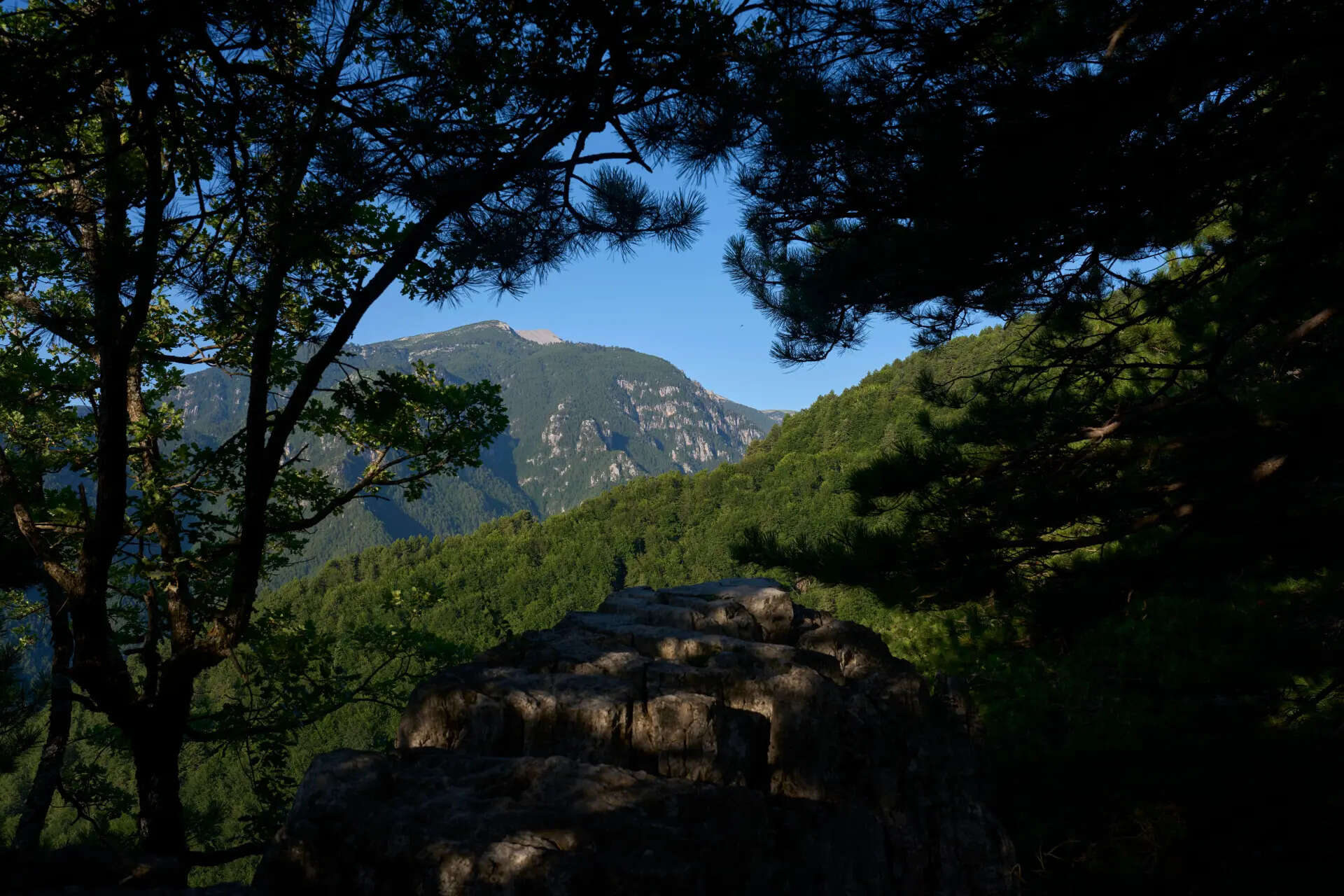
Mount Olympus is seen from the lower slopes of the mountain near Litochoro in northern Greece, Wednesday, July 15, 2026. (AP Photo/Petros Giannakouris)
Few places sit as centrally in Greek mythology as Mount Olympus. According to legend, Zeus established his court there after overthrowing his father, Cronus, in a 10-year war that ended the age of the Titans. That story alone stitched Olympus into the fabric of Greek identity.But the mountain’s sacred role didn’t end with myth.On one of its lower peaks, archaeologists have uncovered an open-air sanctuary, with finds dating back to the Hellenistic period (323–30 B.C.). Ancient texts suggest this might be the site Plutarch wrote about, where processions climbed to offer animal sacrifices to Zeus. People weren’t just telling stories about Olympus; they were walking its slopes, performing rituals, and treating it as a place where the divine felt close.Centuries later, with Christianity spreading across Greece, the spiritual connection evolved rather than disappearing. On the peak of Prophet Elias, at 2,803 meters, a chapel was built – believed to be the highest Christian Orthodox chapel in the world. Lower down, the Enipeas Gorge hides the remains of a monastery founded in 1542. A short walk from there leads to the Holy Cave of St. Dionysios, where a small chapel is carved into the rock and a spring flows, its water considered holy.In this way, Olympus holds layers of faith: ancient sacrifices to Zeus, Byzantine monastic life, modern pilgrimages. The mountain has been a seat of gods, a refuge for monks, and a destination for hikers seeking something larger than themselves.
A living mountain: Forests, cliffs, and fragile ecosystems
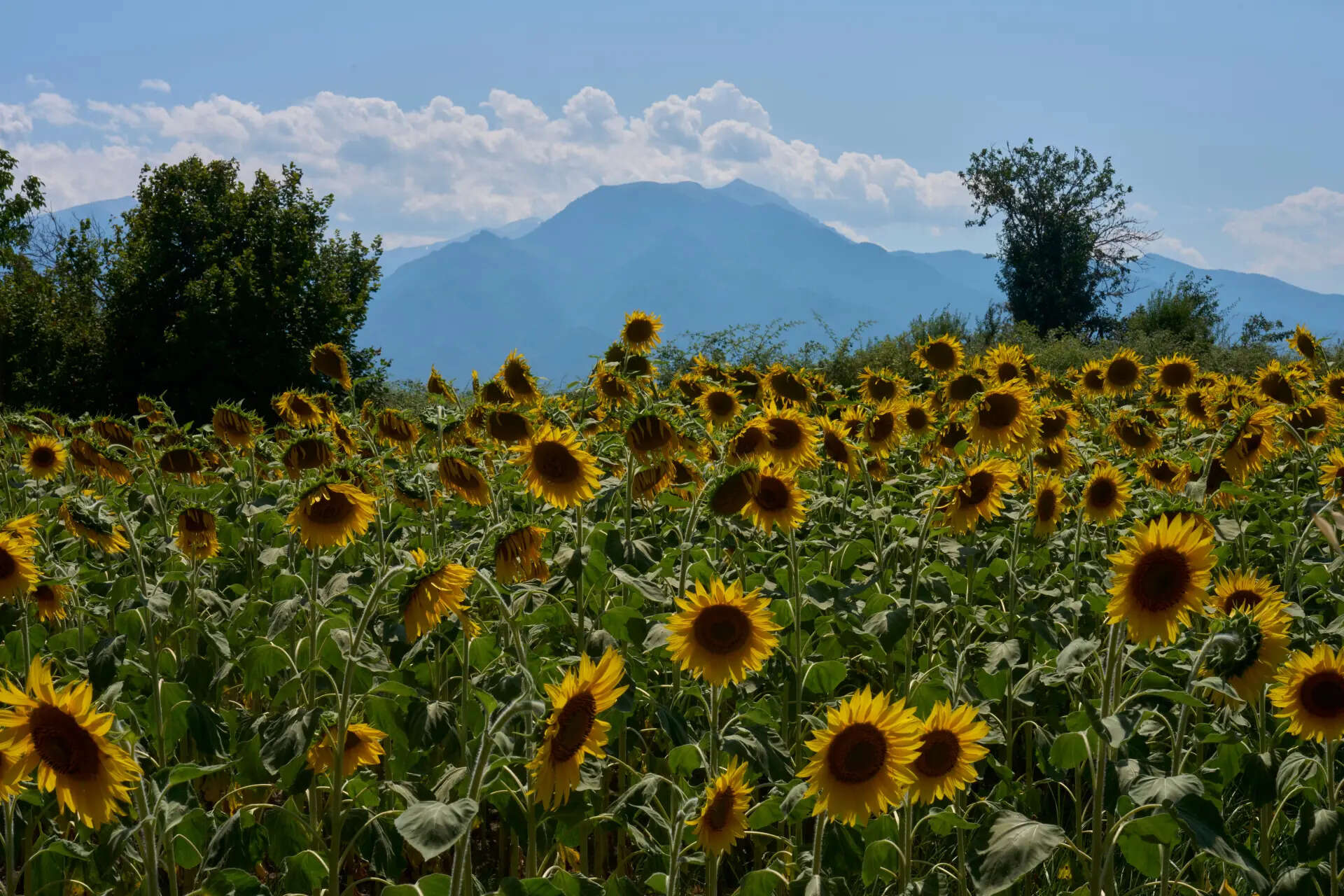
Sunflowers bloom in Kalyvia Varikou, near Litochoro in northern Greece, backdropped by Mount Olympus, Wednesday, July 15, 2026. (AP Photo/Petros Giannakouris)
Olympus is not only a cultural symbol; it’s a living ecosystem.Its slopes stretch almost all the way down to the shoreline, creating a dramatic transition from sea to forest to bare rock. Along that rise, the mountain shelters a rich variety of plants and animals, including species found nowhere else. This blend of myth, history and biodiversity is why Greece is pushing for Olympus to be listed as a “mixed” World Heritage site – one that recognises both cultural and natural value.Locals see the mountain’s global recognition as a way to honour and protect it.
The path to UNESCO: Hopeful, but not guaranteed
Greece began the formal journey to World Heritage recognition in 2014 by adding Mount Olympus to its Tentative List. This is the first step every country must take before nominating a site. From there, the process becomes careful and lengthy:A preliminary assessment gauges whether the site could meet UNESCO’s criteria.A full nomination file is prepared, detailing cultural significance, natural features, history, management plans and threats.Advisory bodies like ICOMOS (for cultural heritage) and the IUCN (for nature) review the file over about 14 months.Their recommendations go to the World Heritage Committee, made up of representatives from 21 countries, who discuss and vote during their annual meeting.For Olympus, the outcome is still uncertain. Draft agenda documents from the Busan meeting indicate the committee may refer the nomination back to Greece for more details rather than approving it outright. That means more work, more evidence, and more time before any final decision.Even so, people in the region remain hopeful. They believe the mountain’s unique combination of myth, history, chapels, monasteries, and natural beauty will eventually secure it a place on the list – and help drive stronger protection.
Protection and pressure: Loving a place without loving it to death
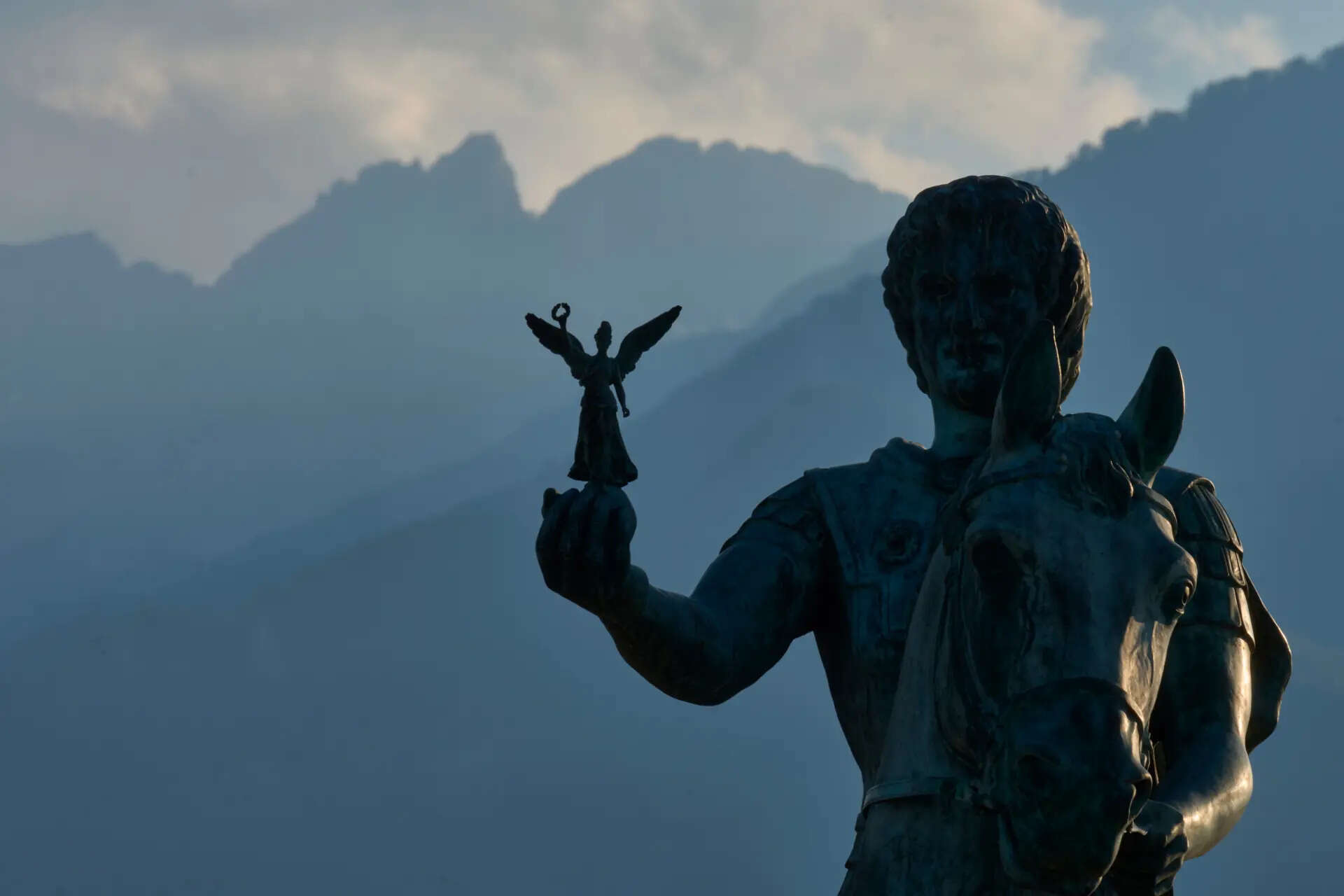
A statue of Alexander the Great holding Nike, the Greek goddess of victory, stands near Litochoro in northern Greece, Tuesday, July 14, 2026, backdropped by Mount Olympus’ highest peaks, Mytikas and Stefani. (AP Photo/Petros Giannakouris)
Recognition brings responsibilities. As mayor Geroliolios points out, being listed as a World Heritage site “places some greater obligations on our part to protect this environment.”This is something that weighs heavily on people who work directly with the mountain, like mountain guide Babis Marinidis, president of the Alpine Club of Litochoro. Olympus already attracts visitors from around the world: hikers, climbers, nature lovers, and mythology enthusiasts. UNESCO status would almost certainly bring more.“How many people can this mountain, this ecosystem, bear?” Marinidis asks.While large parts of Olympus have long been designated as a national park, not all regulations are respected. Marinidis sees visitors ignoring “no swimming” or “no camping” signs, sometimes leaving waste or damaging sensitive areas. The growing numbers are forcing local authorities to consider measures like entrance fees or visitor registration.“I used to be against that,” he admits. “But now with so many people, I believe some limit must be imposed.”The challenge is to welcome people without overwhelming the mountain they’ve come to admire.
Beauty and danger: A mountain that demands respect
For many, Mount Olympus is a dream hike: a chance to stand where myths say gods once lived. Technical climbing isn’t always necessary to reach the summit, but that doesn’t mean the mountain is gentle.Weather can change quickly. Trails can be steep, rocky and exposed. Snow and ice linger late into the year at higher altitudes. Over the years, Olympus has claimed many lives.In July 2024, a 64‑year‑old Greek hiker died after collapsing on a trail. In May, rescuers found the body of a 25‑year‑old Spanish climber days after he went missing while trying to reach the summit in snowy conditions. Stories like these are reminders that even familiar mountains demand care.In Litochoro, hotel owner Stavroula Vourou sees many hikers setting out with excitement and ambition. Her message to them is simple and grounded: “Everyone sets off to go up and conquer a mountain that needs respect. You respect this mountain, it respects you too.”
A mountain for the world, and for those who live beneath it
Whether or not UNESCO grants Mount Olympus World Heritage status this year, the mountain’s meaning is already vast. It holds:– Ancient stories of gods and wars that shaped Western imagination.– Physical traces of rituals, chapels and monasteries that reveal centuries of belief.– Forests, cliffs and endemic species that make it a sanctuary for life.Daily views and personal memories for the people who wake up under its watch.For locals, Olympus is not just a site to be managed; it’s part of who they are. For visitors, it’s a reminder that places can be both mythic and real—demanding not only wonder, but responsibility.When you picture Mount Olympus now, does it strike you more as a legendary home of the gods, or as a living, fragile mountain that depends on human respect and care to stay wild and whole?(With inputs from AP)