
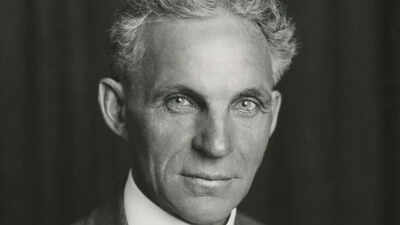
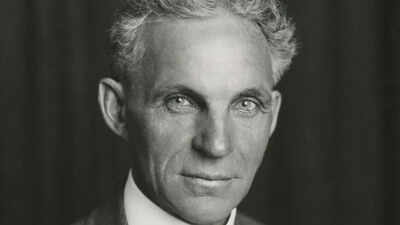
Quote of the day by Henry Ford: “Most people think that faith means believing something; oftener it means…”A woman in her forties spent nearly a decade talking about learning to play the piano. She admired music, watched performances online and occasionally stopped to look at keyboards displayed in shop windows. Whenever friends encouraged her to begin, she had the same answer. She would start once she was sure she had enough time. Once she was sure she would be good at it. Once she was sure the effort would be worthwhile.Then, one winter afternoon, she bought a second-hand keyboard from a neighbour. It was not expensive, and she had no clear plan. She simply decided to stop wondering and start playing. The first few months were frustrating. Her hands felt awkward. Progress came slowly. Yet something unexpected happened. The question that had occupied her for years: “Should I learn the piano?” disappeared. She no longer needed to speculate because she was experiencing the answer for herself.That small story captures an idea that Henry Ford expressed in a single sentence. People often imagine faith as a state of certainty. They think faith means knowing in advance that something will work. Ford saw it differently. He believed faith frequently begins when certainty ends. It appears when someone is willing to test a possibility rather than endlessly analyse it from a distance.
Quote of the day by Henry Ford
“Most people think that faith means believing something; oftener it means trying something, giving it a chance to prove itself.”
The powerful message behind Henry Ford’s quote
The quote challenges a common assumption about belief and action.Many people think they need confidence before they begin. They assume successful individuals possess a special certainty that removes fear and doubt. Reality is usually far messier.A person launching a business rarely knows exactly how customers will respond. A writer starting a novel cannot predict whether readers will embrace it. Someone moving to a new city has no guarantee that the decision will improve their life.Yet people make these choices every day.Ford’s point is that faith often reveals itself through action. Instead of waiting for complete proof, a person decides that an idea deserves an opportunity to stand on its own feet. The outcome remains uncertain, but the experiment begins.In this sense, faith is less about believing and more about participating.
Why people spend so much time waiting
Human beings are remarkably skilled at postponing things they care about.A person dreams of opening a restaurant but keeps refining the business plan. Another imagines writing a book but spends years researching rather than writing. Someone considers changing careers but delays the decision until every possible risk has been eliminated.The problem is that life rarely provides perfect conditions.Questions remain unanswered. Risks remain visible. Doubts remain present. Many opportunities disappear not because people lack talent but because they keep waiting for a feeling that never arrives.Ford understood this tendency. He recognised that some questions cannot be solved through thinking alone. They require experience.A swimming instructor can explain every movement involved in staying afloat, but eventually the student has to enter the water.
Henry Ford’s own experience with uncertainty
Looking back, it is tempting to imagine Ford as a man who always knew exactly where he was heading.Historical reality paints a different picture.Before his name became associated with one of the world’s most famous companies, Ford experienced disappointments, failed ventures and moments when success looked far from certain. The automobile industry itself was unproven. Many people regarded motor cars as luxuries or curiosities rather than products that would transform daily life.No spreadsheet could fully predict the future Ford imagined. No expert could offer guarantees.Like many innovators, he moved forward without complete certainty because he believed the idea deserved further testing.The confidence people associate with success often develops afterwards. At the beginning there is usually only effort, persistence and a willingness to continue.
What is the meaning of the quote in modern life?
The quote remains relevant because modern life encourages endless analysis.People compare options, read reviews, watch tutorials and seek advice from countless sources. Information has become easier to access than at any other point in human history.Paradoxically, all that information can make decision-making harder.Someone considering a new hobby can spend months researching equipment. Someone interested in starting a business can devote years to studying entrepreneurship without ever serving a single customer.Knowledge is valuable, but there comes a point where additional preparation produces diminishing returns.Experience begins where research ends.Ford’s observation reminds us that some forms of understanding can only be gained by doing.
How to apply this quote in daily life
One practical way to use this idea is to replace major life questions with smaller experiments.Instead of asking whether you should become a writer, spend a month writing regularly. Instead of debating whether you would enjoy photography, borrow a camera and take photographs. Instead of wondering whether a particular career interests you, seek a short project or internship connected to it.Experiments produce information. Speculation often produces anxiety. The difference may sound simple, but it changes how people approach uncertainty.Rather than demanding certainty before taking action, they gather evidence through experience.
The hidden cost of never trying
People usually focus on the risks associated with action.A business could fail. A project could disappoint. An effort could produce mediocre results. These possibilities are real.What receives less attention is the cost of inaction.Years later, many people regret opportunities they never explored more than mistakes they made along the way.Failure can be painful, but unanswered questions often linger much longer.The entrepreneur whose business fails usually gains experience, stories and lessons. The entrepreneur who never begins is left only with assumptions about what might have happened.Ford’s quote quietly acknowledges this reality.Trying something creates the possibility of disappointment, but it also creates the possibility of discovery.
Why action changes perspective
There is a noticeable difference between imagining an experience and living through it.Someone considering mountain climbing may picture adventure. After the first climb, they understand the exhaustion, discipline and satisfaction involved. A person thinking about teaching may imagine standing in front of a classroom. The reality includes preparation, unpredictability and constant adaptation.Action replaces fantasy with knowledge. That knowledge is often more valuable than success itself because it brings clarity.Once people engage directly with an experience, they no longer rely solely on assumptions.
Final thoughts
Henry Ford’s quote endures because it captures a truth that reaches far beyond business or invention. Much of life unfolds without guarantees. Important decisions are rarely accompanied by certainty, and opportunities seldom arrive with detailed instructions.People often believe they must feel confident before taking the first step. Experience suggests the opposite. Confidence frequently grows after the first step has been taken.The person learning an instrument, launching a venture, changing careers or pursuing a long-held ambition rarely begins with all the answers. What they possess is something simpler: a willingness to find out.Perhaps that is the deeper lesson in Ford’s words. Faith is not always a declaration that something will succeed. Sometimes it is a decision to stop standing at the edge of the field and finally enter the game. Only then does an idea get the chance to reveal what it can become.