
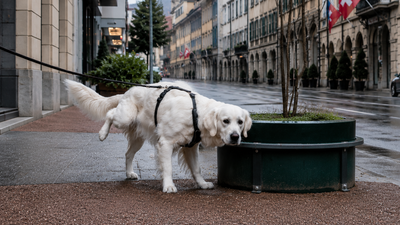
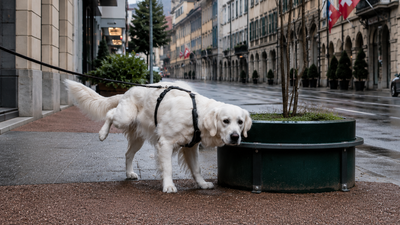
Dog owners visiting the Swiss border town of Chiasso will soon have one more responsibility besides picking up after their pets. From mid-August 2026, anyone whose dog urinates on pavements or building facades in the town centre must rinse the area with water or risk a fine for repeat offences. The unusual regulation, believed to be the first of its kind in Switzerland, was introduced after residents complained about persistent foul odours caused by dog urine, particularly during hot and dry summer weather. Officials say the measure is intended to improve public hygiene, preserve the appearance of public spaces and encourage greater civic responsibility rather than punish pet owners. The move has attracted global attention for extending clean-up duties beyond solid waste.
Why Chiasso fining dog owners for not washing away their pets’ urine?
Chiasso, located in Switzerland’s southern canton of Ticino near the Italian border, introduced the new by-law after receiving numerous complaints about unpleasant smells in the town centre. Authorities said dog urine left on pavements and building facades had become a growing nuisance, especially during prolonged periods of hot, dry weather when there was little rain to naturally wash away the residue. With around 500 registered dogs in the town, officials believe the measure will help improve hygiene and make public spaces cleaner and more pleasant for residents and visitors alike.
What does the new rule require?
Under the regulation, dog owners must carry a bottle or container of water while walking their pets through Chiasso’s town centre. If a dog urinates on a pavement or building facade, the owner is expected to immediately rinse or dilute the urine with water. The requirement applies specifically to public areas covered by the municipal by-law and complements the existing obligation to pick up dog faeces.
What are the penalties for breaking the rule?
The municipality has adopted a warning-first approach. Anyone caught violating the rule for the first time will receive a warning instead of an immediate penalty. However, repeat offenders can be fined 100 Swiss francs (CHF 100), equivalent to about $122. Municipal police will enforce the regulation during their regular patrols, with officials hoping education and public awareness will encourage compliance before fines become necessary.
Is this the first rule of its kind in Switzerland?
According to Chiasso officials, yes. While municipalities across Switzerland already require dog owners to collect and properly dispose of dog waste, Chiasso is believed to be the first to introduce a rule specifically requiring owners to rinse away dog urine from streets and building facades. The measure has already sparked interest from other municipalities, with nearby Locarno reportedly considering a similar policy if Chiasso’s initiative proves successful.The regulation has gone viral because it expands the traditional responsibilities of pet owners beyond cleaning up solid waste. Many social media users were surprised that dog owners may now have to carry water bottles specifically to rinse away urine, while others praised the town’s efforts to improve cleanliness and reduce unpleasant odours. The story has also sparked wider conversations about responsible pet ownership, public hygiene and how cities can better maintain shared urban spaces.
Could other towns follow Chiasso’s example?
Although it remains too early to know whether the policy will spread widely, Chiasso’s approach has already generated discussion in other parts of Switzerland. Officials maintain that the objective is not to discourage dog ownership but to encourage residents to take greater responsibility for shared public areas. If the initiative successfully reduces complaints and improves cleanliness, similar regulations could eventually be considered by other towns facing the same problem.