
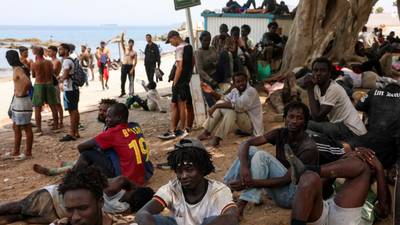
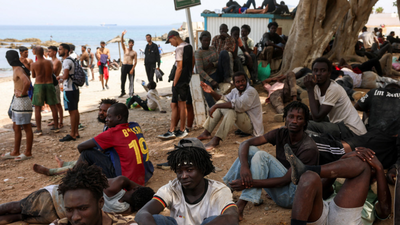
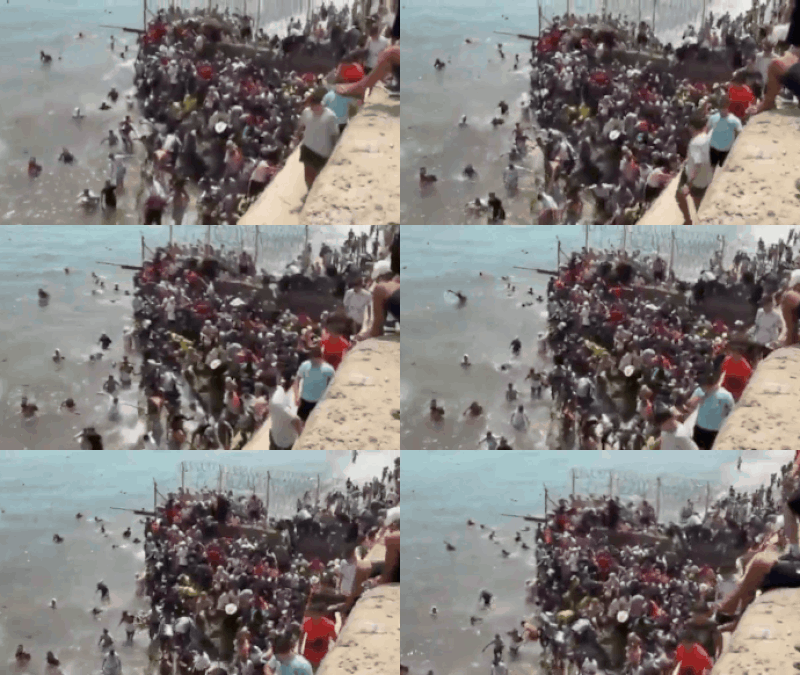
Thousands of people braving rough seas, clinging to rubber tubes and makeshift flotation devices, trying desperately to swim barely 100 metres into Europe. These extraordinary scenes which unfolded at Spain’s North African enclave of Ceuta recently have become one of the defining images of the global migration crisis this year.But behind the viral visuals lies a much bigger story — one that stretches far beyond poverty and illegal migration into geopolitics, diplomacy and Europe’s dependence on Morocco to guard its southern frontier.For two days, thousands of migrants streamed into Ceuta, the tiny Spanish territory on Morocco’s Mediterranean coast. Between 50,000 and 60,000 people attempted the crossing, with many swimming around the Tarajal and Benzú coastal barriers using inner tubes and improvised flotation devices. The sea separating Morocco from Ceuta is barely 100 metres wide at its narrowest point, making it one of the shortest—and most dangerous—routes into the European Union.72 people lost their lives during the crossings, turning what appeared to be a mass migration into a humanitarian tragedy.The dramatic visuals have prompted a question that extends well beyond Spain’s borders: Why are so many Moroccans suddenly willing to risk death for a chance to enter Europe?The answer lies at the intersection of economics, migration networks, regional politics and international diplomacy.Morocco has been grappling with rising unemployment, especially among young people, persistent inflation, repeated droughts affecting agriculture, and widening inequality despite years of economic growth. For many educated young Moroccans, stable jobs remain scarce, making migration increasingly attractive.Spanish authorities have also pointed to misinformation circulating on social media after the country’s Supreme Court ruling was widely misinterpreted by migrant smuggling networks. Videos on TikTok and encrypted messaging platforms reportedly suggested that those reaching Ceuta would be allowed to remain in Spain, encouraging thousands to attempt the crossing.A third explanation focuses on border management. Many migrants crossed because Moroccan security forces appeared to have reduced surveillance at several crossing points, allowing unprecedented numbers of people to reach the Spanish territory.But many analysts argue they do not fully explain the scale, timing and apparent ease with which tens of thousands crossed into Ceuta within such a short period.
Not merely a migration crisis
For geopolitical analyst Robinder Sachdev, president of The Imagindia Institute, the events at Ceuta represent something much larger than a spontaneous migration surge.“All three explanations are valid. But none fully accounts for the scale, timing and extraordinary ease of the crossing. The central explanation, in my view, is geopolitical: Morocco appears to have deliberately relaxed its border controls to send a message to Spain—perhaps in coordination with the United States and Israel.”Sachdev argues that understanding the crisis requires looking beyond migration and towards the complicated geopolitical relationships among Morocco, Spain and Algeria.
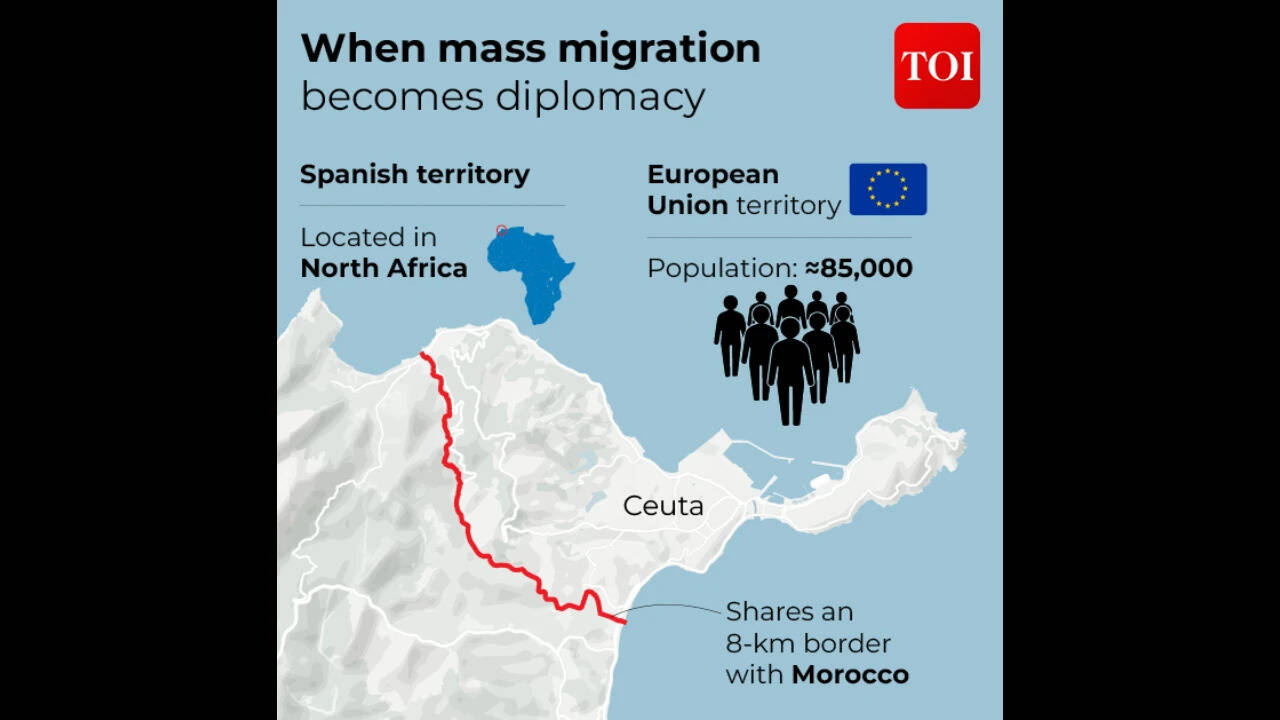
What is the significance of Cueta?
The Western Sahara factor
At the centre of Morocco’s foreign policy lies Western Sahara, a disputed territory claimed by Morocco but contested by the Algeria-backed Polisario Front, which seeks independence.For decades, Western Sahara has shaped Morocco’s diplomatic relationships with Europe. According to Sachdev, the timing of the Ceuta crisis is significant.Just ten days before the migration surge, Spanish Prime Minister Pedro Sánchez travelled to Algeria to strengthen bilateral relations and secure long-term gas supplies. Algeria currently provides around one-third of Spain’s natural gas, making the relationship strategically important.What concerned Morocco was not what Sánchez said during the visit, but what he omitted. “While in Algeria, Sánchez made no explicit reaffirmation of Spain’s support for Morocco’s position on Western Sahara. For Morocco, that omission raised doubts about whether Madrid was recalibrating its regional policy and drifting closer to Algiers,” said Sachdev, who added that Morocco may have interpreted the visit as a diplomatic signal—and responded with one of its own.
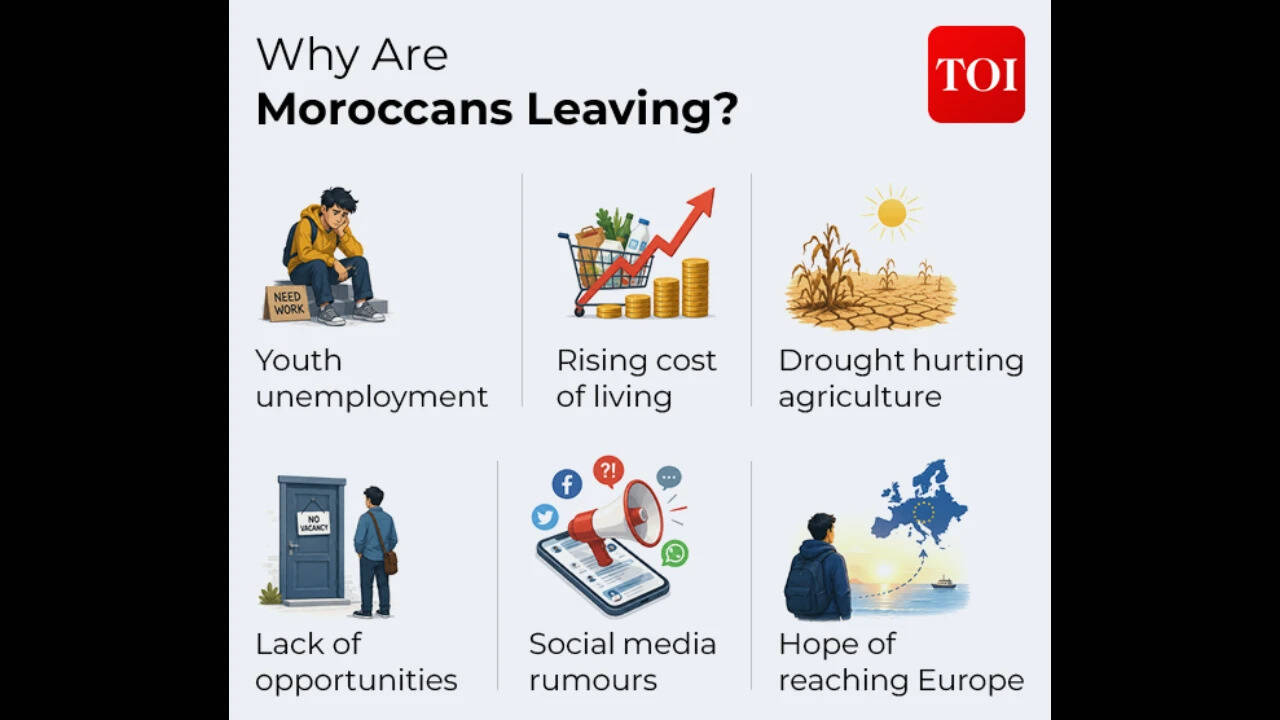
What is driving illegal Moroccan migrants to Europe?
8,000 had entered Ceuta back in 2021
This is not the first time migration has become part of diplomatic pressure. (or discourse?)In May 2021, around 8,000 migrants entered Ceuta within two days after Morocco similarly relaxed border controls following Spain’s decision to admit Brahim Ghali, leader of the Polisario Front, for Covid-19 treatment.That episode ended only after Spain shifted its longstanding neutral position and publicly backed Morocco’s autonomy proposal for Western Sahara.“The sudden opening of the migration route into Ceuta in July 2026 was therefore not simply a Moroccan border-management failure. It was an instrument of coercive diplomacy,” said Sachdev.
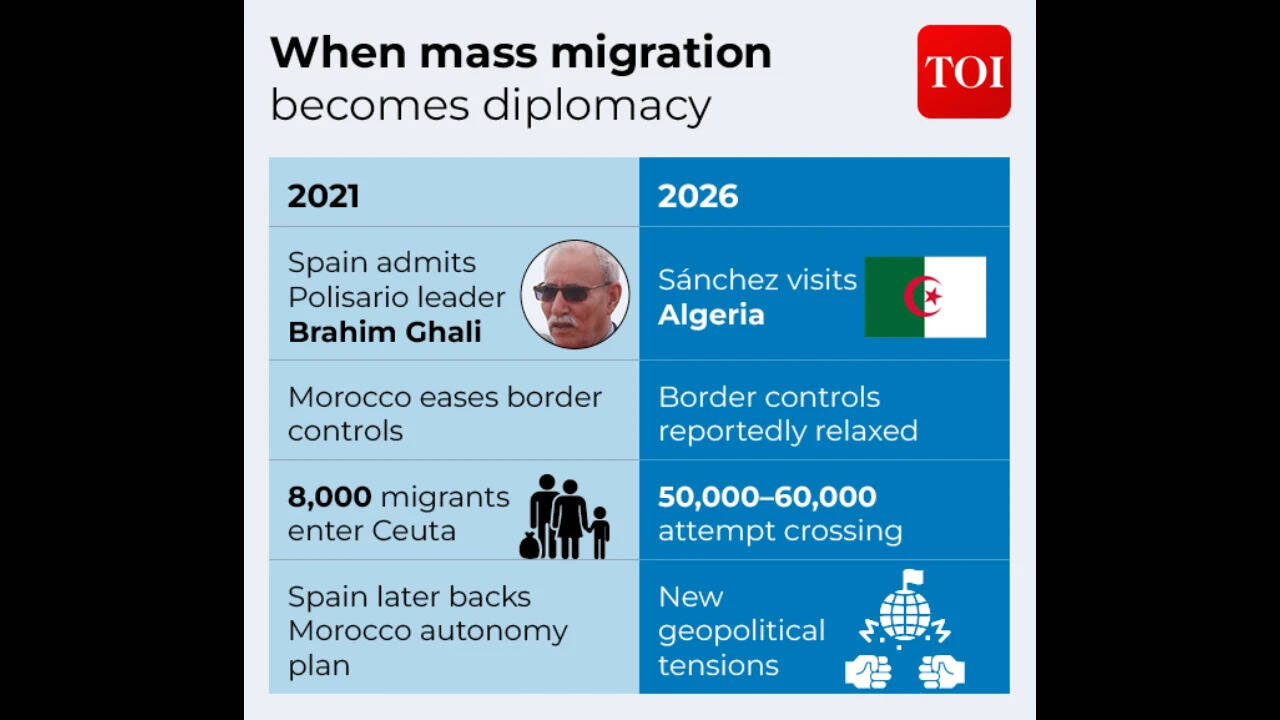
The last time this happened was in 2021 when around 8,000 migrants entered Ceuta.
Why Ceuta matters so much
Although geographically located in Africa, Ceuta is Spanish territory and therefore part of the European Union.That makes it Europe’s only land border with Africa.For migrants, entering Ceuta means reaching European soil.For Europe, Ceuta represents one of the continent’s most sensitive external frontiers.Whenever large numbers of migrants enter Ceuta, the consequences extend far beyond Spain.European governments fear secondary migration through the Schengen Area, humanitarian pressures and political backlash.As Sachdev pointed out, the images themselves carry political consequences. “When large numbers of migrants enter Spain from Morocco and the wider North African hinterland, the issue quickly becomes a broader European crisis.”He says such events provide fresh ammunition to anti-immigration and far-right political parties across Europe.
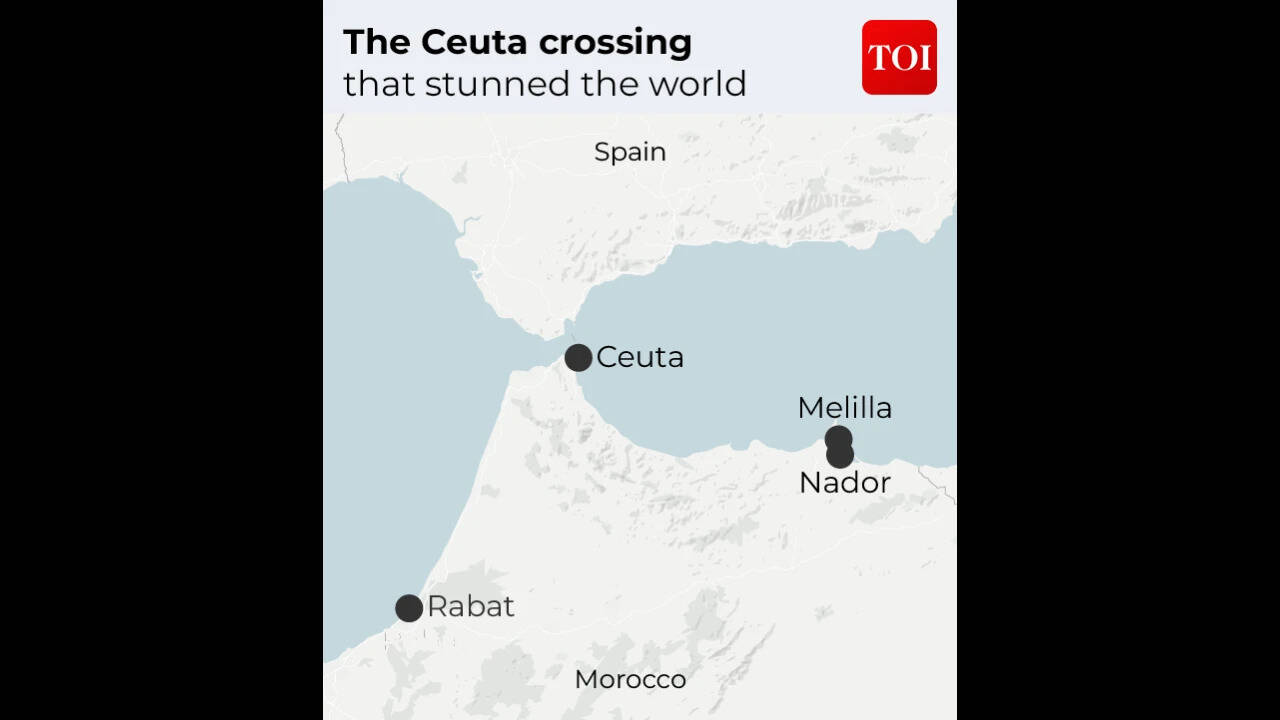
Cueta is one of EU’s only two land borders with Africa.
How Morocco became Europe’s migration gatekeeper
Over the past decade, the European Union has increasingly outsourced migration control.Rather than processing migrants after they reach Europe, Brussels has invested billions of euros in helping countries such as Morocco, Tunisia, Libya and Turkey prevent migrants from leaving in the first place.Morocco occupies perhaps the most critical position in this strategy.It patrols coastlines, intercepts migrant boats, works with European agencies to dismantle smuggling networks, accepts returned migrants and controls access to Ceuta and Melilla. The arrangement has led many observers to describe Morocco as Europe’s “migration gatekeeper.”Whenever Morocco eases this enforcement — even temporarily — the impact is felt almost immediately on Europe’s borders. The latest crisis has once again demonstrated how dependent Europe has become on Morocco’s cooperation.
What is the role of the US, Israel?
Morocco’s normalisation of relations with Israel under the Abraham Accords in 2020, brokered by the United States, alongside Washington’s recognition of Moroccan sovereignty over Western Sahara, plays an important role when it comes to geopolitics.“Israel and the United States would both like to settle scores with Spain. Spain has been one of Europe’s most vocal critics of Israel’s actions in Gaza. It recognised the State of Palestine in 2024, while Spanish leaders have described Benjamin Netanyahu as a war criminal and accused Israel of committing genocide in Gaza. The United States, meanwhile, has been angered by Spain’s refusal, despite being a NATO member, to support its military operations against Iran or permit the use of Spanish bases and airspace for those operations,” said Sachdev.He adds that Sánchez’s visit to Algeria may have provided “a convenient trigger.”
A crisis that will recur?
The scenes from Ceuta are unlikely to be the last.North Africa continues to grapple with youth unemployment, climate stress, food insecurity and growing inequality.Europe, meanwhile, faces labour shortages while simultaneously hardening its migration policies.The result is an increasingly fragile equilibrium in which countries like Morocco occupy an outsized strategic role.Whenever diplomatic relations sour or border enforcement changes, the consequences are visible almost instantly—not just in Morocco or Spain, but across Europe.The haunting images of thousands of people swimming toward Ceuta have captured global attention because they condense one of the world’s most complex challenges into a single frame.On the surface, they tell the story of desperate migrants chasing opportunity.Look closer, and they reveal something larger: the intersection of economics, diplomacy, energy security, territorial disputes and migration policy.Whether viewed as a humanitarian crisis, a failure of border management or, as some experts argue, a calculated geopolitical pressure tactic, the events at Ceuta underscore one reality. Europe’s southern border is no longer just a line on a map—it is a bargaining chip in regional politics, and Morocco has become one of its most influential gatekeepers.