
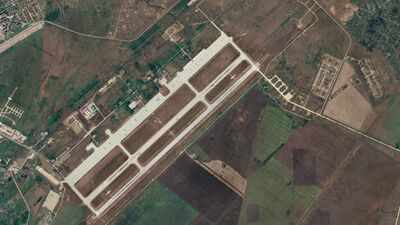
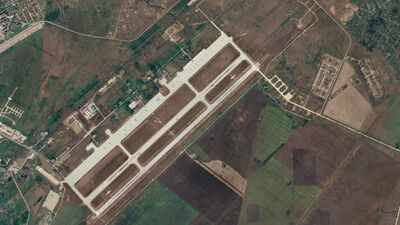
Russia has begun construction of large protective shelters for its strategic bombers at Engels Air Base Satellite images obtained by The War Zone from Planet labs shows at least 17 oversized shelters under construction as of June 20.Located on the banks of Volga River in Russia’s Saratov region, Engels air base is the most important base of the Russian Aerospace Forces’ Long-Range Aviation branch and serves as the country’s primary strategic bomber hub. The base hosts only operational regiment of Tu-160 ‘Blackjack’ supersonic strategic bombers as well as Tu-95 bombers.
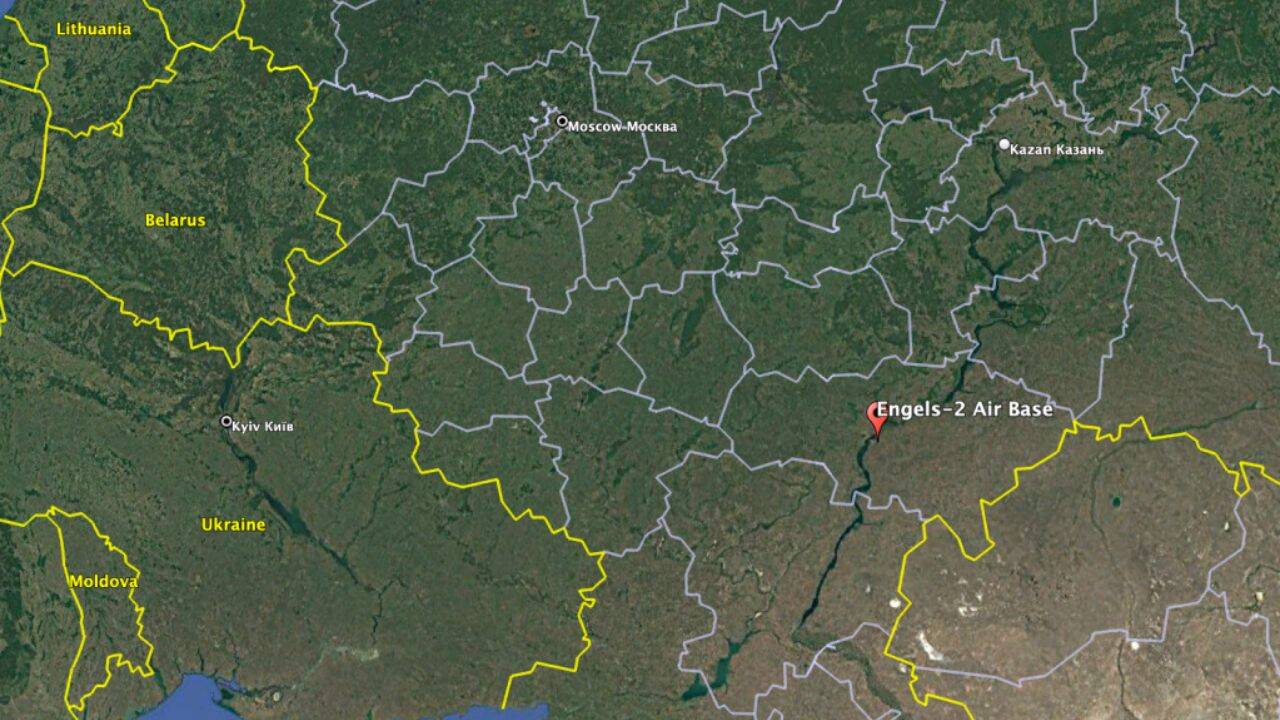
Location of Engels within Russia/ Google earth
Since the start of the war in Ukraine, bombers operating from Engels have repeatedly launched Kh-101 and other long-range cruise missiles against targets in Ukraine while remaining within Russian airspace.Need of the hour:Throughout the Cold War and well into the post-Soviet period, Moscow kept its long-range bombers parked in open across the country. This is because of various reasons, most importantly arms-control transparency measures between Moscow and Washington.Under the Strategic Arms Reduction Treaty (START I), signed in 1991, both sides agreed not to use concealment measures that could hinder verification by national technical means such as reconnaissance satellites. The treaty encouraged a level of visibility that allowed United States and the soviet union, and later Russia to monitor key nuclear delivery systems and verify treaty complianceAs a result, strategic bombers were often visible on airfield aprons, unlike many tactical aircraft that operated from hardened shelters.The War in Ukraine has changed this decade old equation for Russia. The emergence of long-range drones has effectively ended the era in which Russia could assume its strategic bombers were safe simply because they were based far from the battlefield.This was seen in the Ukraine Operation Spiderweb on June 1, 2025. Ukraine security services used drones that covertly transported into Russia to strike multiple airbases, hosting strategic bombers.Satellite imagery released after the attack showed damage to a number of aircraft, including Tu-95MS strategic bombers and other long-range aviation assets.The operation highlighted a vulnerability that had long been overlooked.Russia’s bomber fleet:For Russia, every strategic bomber represents a critical and increasingly scarce asset. According of Global Military, Russia currently operates around 47 Tu-95MS, 55 Tu-22M3 and 18 Tu-160 strategic bombers in his fleet.The Tu-95MS and Tu-22M3 fleets are Soviet-era bombers that are no longer in production, meaning every aircraft destroyed permanently reduces the size of the force. While only Tu-160 being in production and can be replaced if destroyed but it is among the most complex and expensive platform requiring years to manufacture new ones.For Russia, whose bomber fleet includes aging aircraft that are difficult or impossible to replace, preventing losses has become a strategic necessity.The growing threat posed by long-range drones has made the protection of strategic bombers more important than ever.The new shelters at Engels underscore the changing dynamics of the war and has forced Russia to rethink about its airpower and strategic deterrence.Protecting these increasingly scarce aviation assets has become an important strategic objective. The construction underway at Engels is therefore about more than safeguarding aircraft. It is a recognition that in modern warfare, survivability on the ground can be just as important as firepower in the air.